
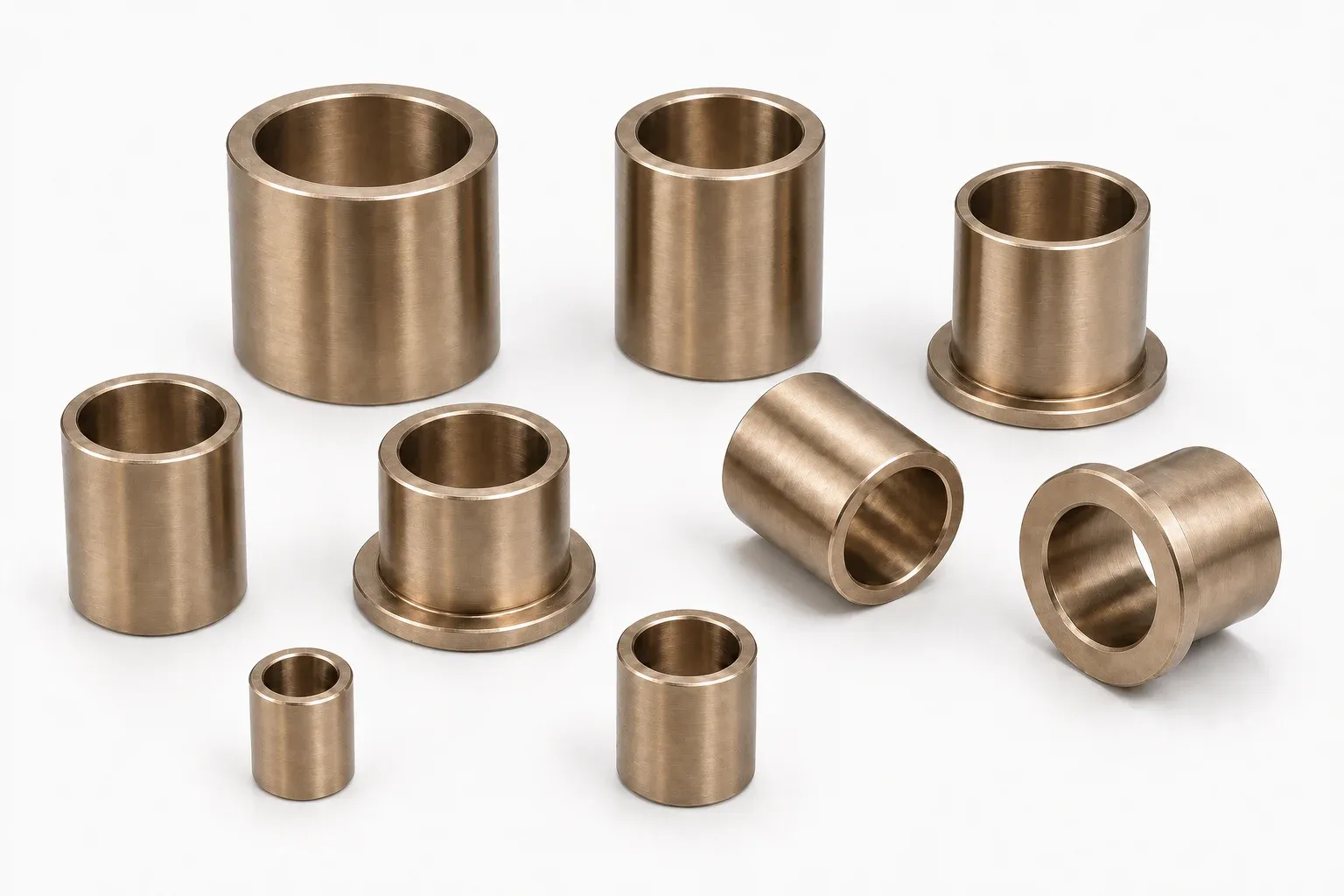
Bronze bushings
Plain bearings machined from bearing bronze for lubricated, loaded pivots and slides: continuous-cast C93200 / SAE 660 (JBM-600) as standard, tin and aluminium bronzes for heavier duty, and sintered, graphite-plugged and wrapped constructions where the joint cannot be greased. Sleeves, flanged bushings and thrust washers, Ø3–1000 mm, to ISO 4379 or to your drawing.
- 45 N/mm²Static load, greased
- 0.5 m/sSliding speed, greased
- −40 – 250 °CWorking temperature
- Ø3–1000 mmMachining range
A bronze bushing is a sleeve, flanged sleeve or washer of copper–tin alloy that carries a steel shaft on a lubricated sliding surface. Tin bronze embeds dirt, tolerates short lubrication gaps and does not weld to steel, which is why it is the reference material for slow, heavy plain bearings.
- Machined solid copper alloys are the JBM-600 series: JBM-600 C93200 / SAE 660 (standard), JBM-610 tin bronze, JBM-620 aluminium bronze, JBM-630 C86300 high-strength brass, JBM-640 free-cutting brass
- Greased cast bronze: 25 N/mm² moving, 45 N/mm² static, 0.5 m/s, −40 to +250 °C
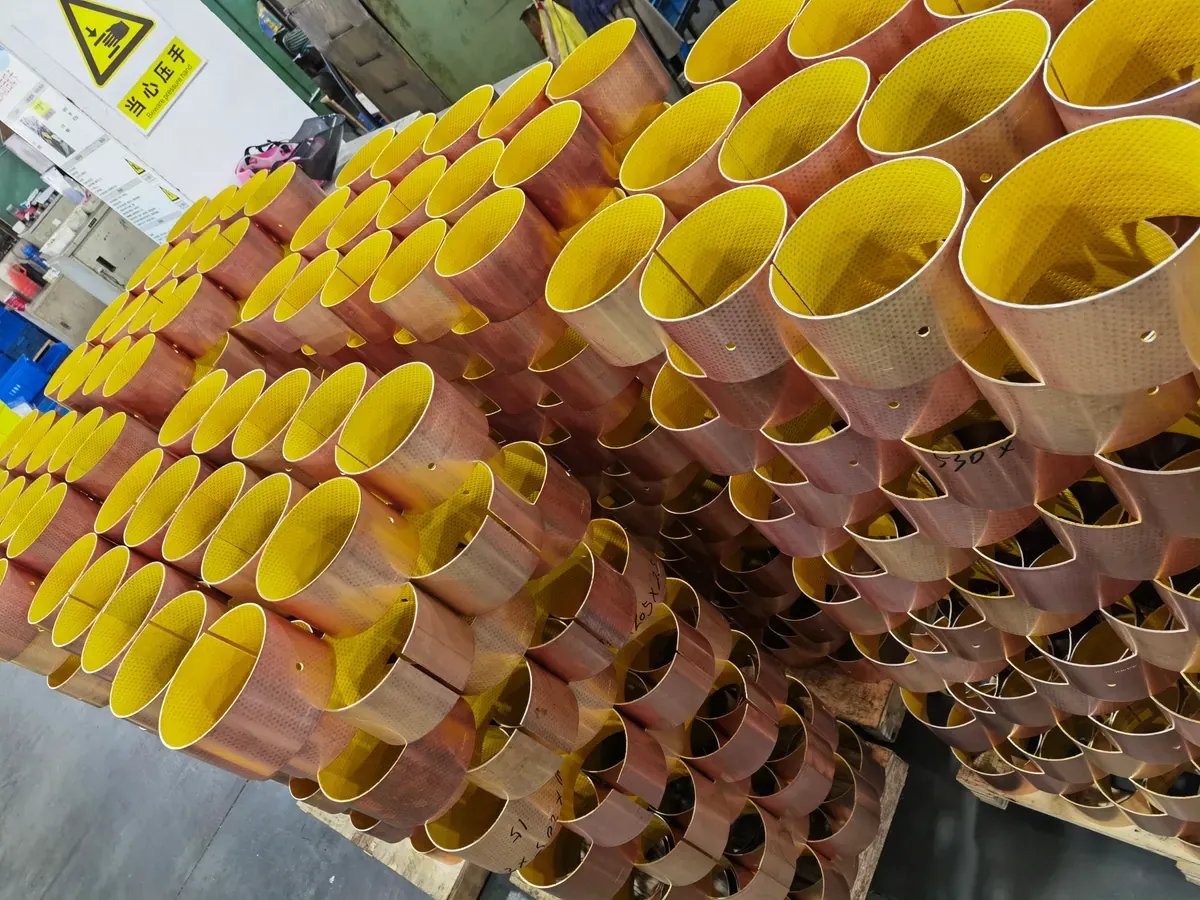
- Constructions: machined cast bronze, sintered oil-impregnated, graphite-plugged, wrapped bronze strip
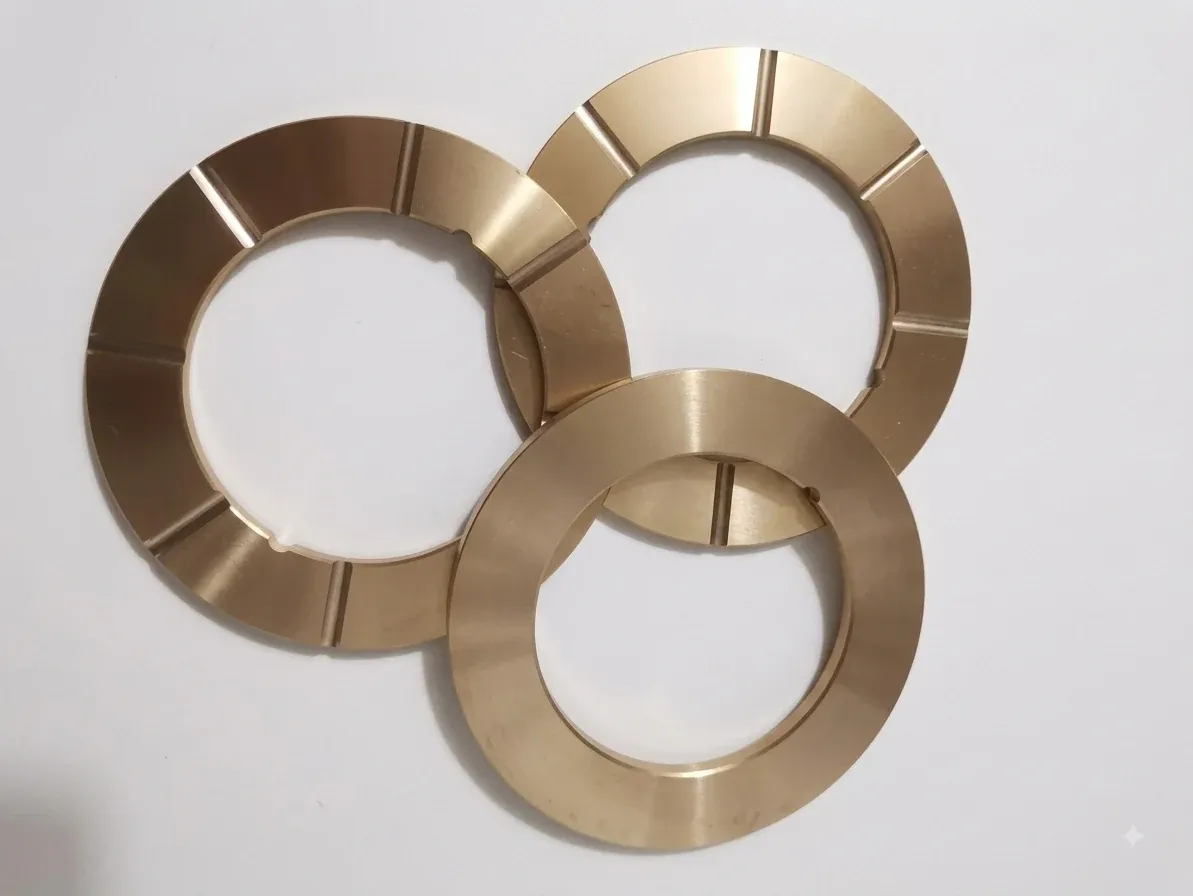
- Sleeves, flanged bushings, thrust washers and wear plates; ISO 4379 series and sizes to drawing
- Machining range Ø3–1000 mm; oil holes, grooves and flange drilling at quotation
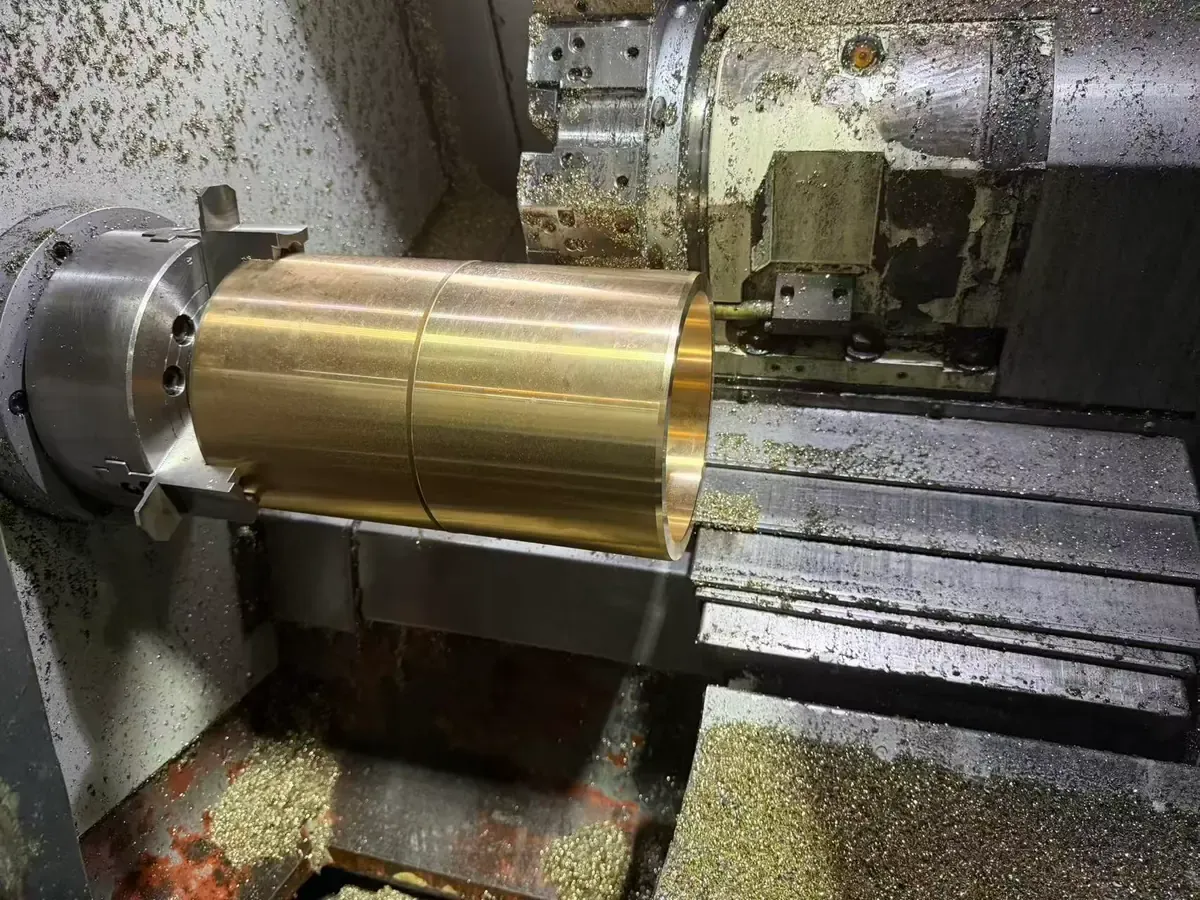
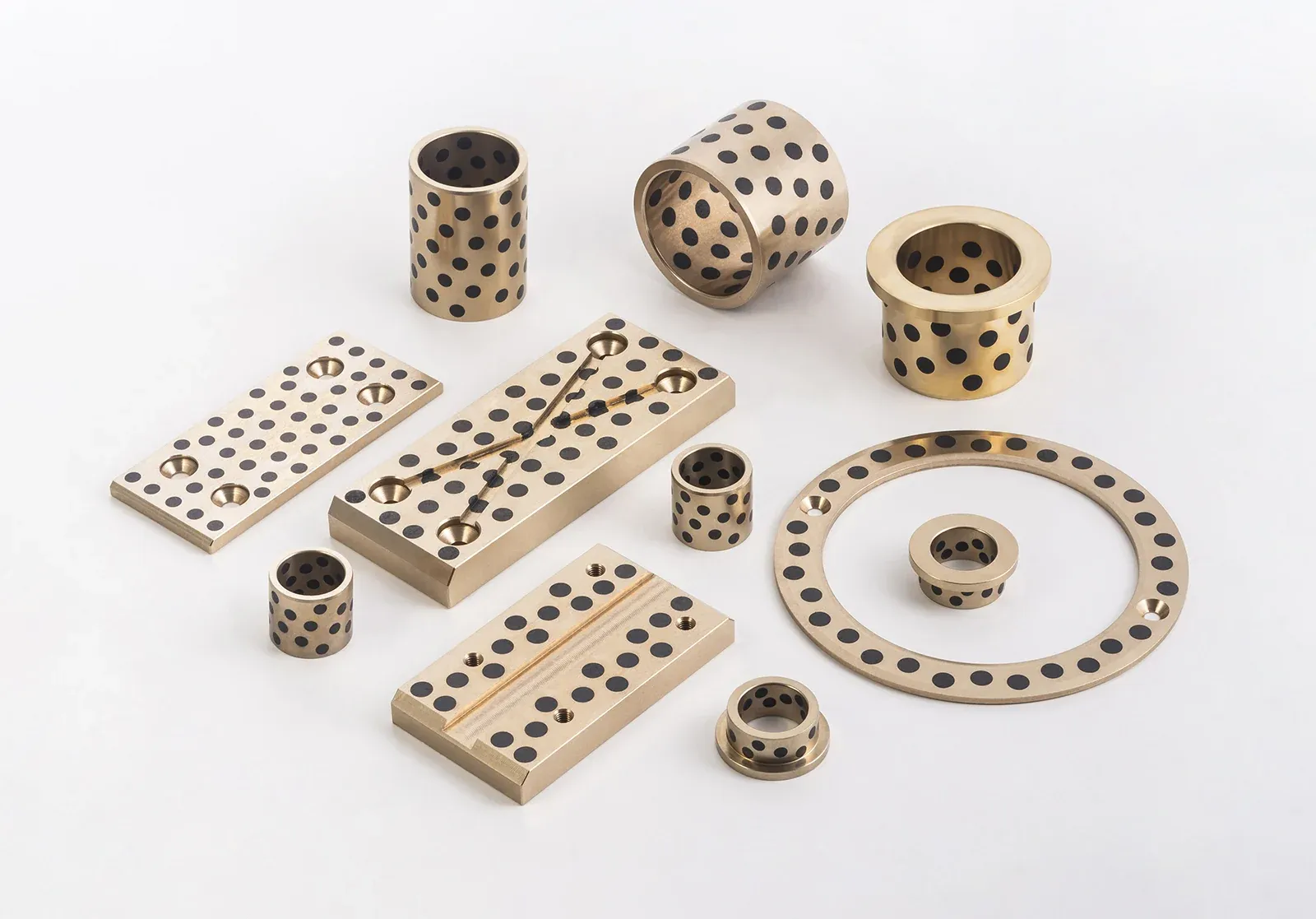
Four bronze constructions
The alloy sets how much load the surface carries; the construction sets how it is lubricated. Choose the construction from the lubrication regime first, then the alloy from the load.
Machined cast bronze
JBM-600 series. Turned from continuous-cast bar; any size, alloy and groove pattern. Greased or oil-lubricated.
JBM-600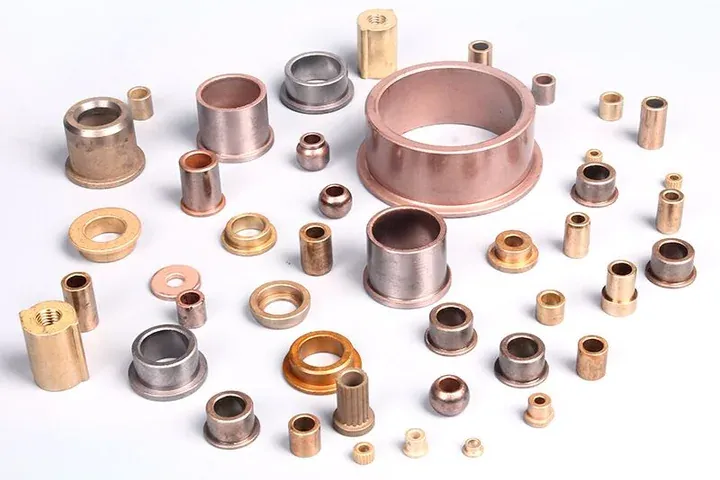
Sintered bronze
JBM-700. Pressed and sintered powder, pores filled with oil. Small, light-duty, self-lubricating.
JBM-700Graphite-plugged bronze
JBM-650. Cast bronze with solid-lubricant plugs for dry or high-temperature running.
JBM-650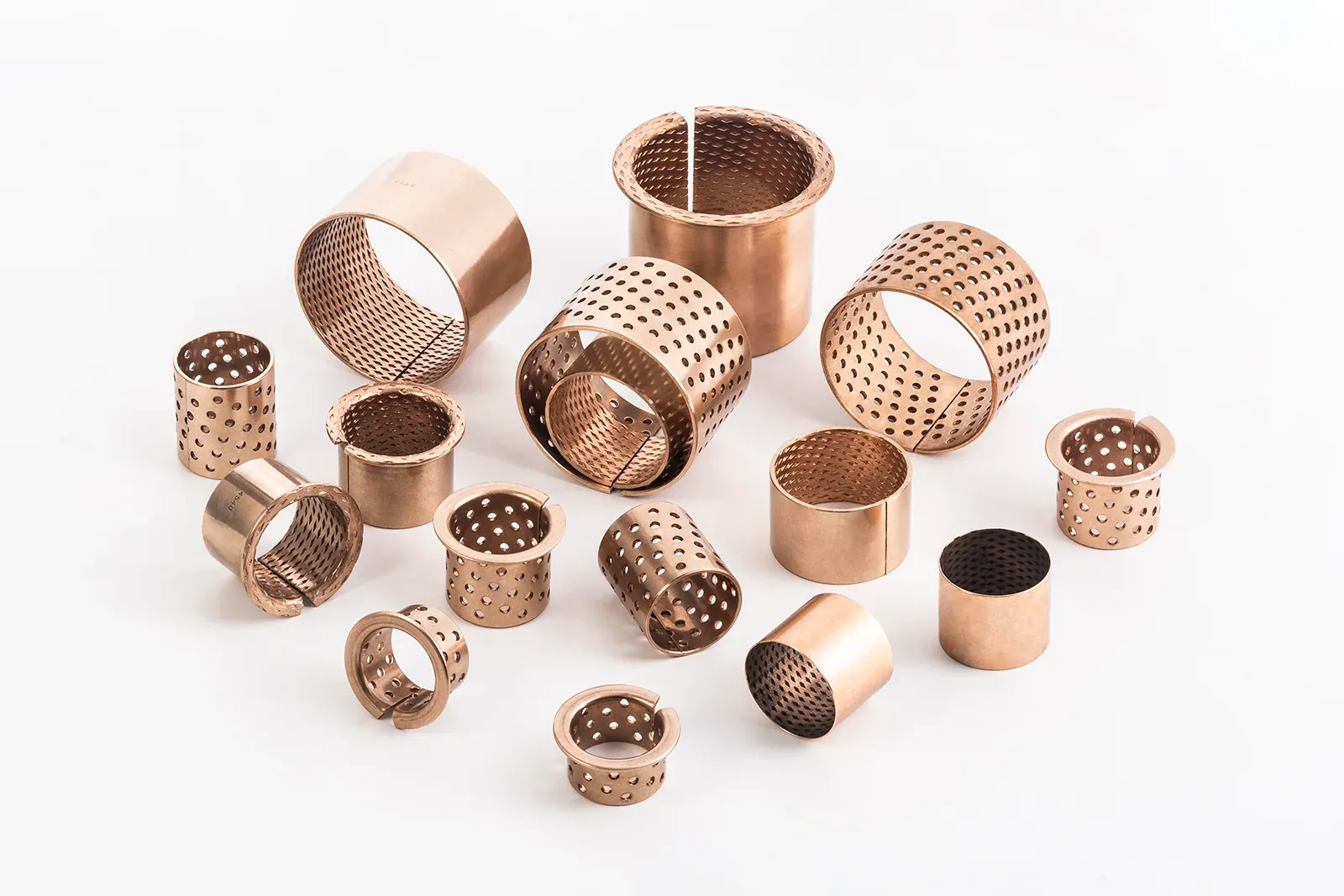
Wrapped bronze
JBM-090 / 092. Rolled from CuSn8 strip with lubricant pockets or holes; thin-walled and economical in volume.
JBM-090
Bearing bronze alloys
Bronze bushings are specified by alloy number, not by the word bronze. C93200 / SAE 660 is the general-purpose grade: 7 % tin for wear resistance, 7 % lead for conformability and emergency lubrication, machinability rating 70. The higher-lead C93700 tolerates dirty or intermittent lubrication; C90500 and the other unleaded tin bronzes carry more load and are the choice where lead is restricted; aluminium bronze C95400 and the high-strength brass C86300 are for very heavy, slow loads against a hardened shaft.
Machined solid copper-alloy bushings carry the JBM-600 series number, with the second digit standing for the alloy group; the alloy number on the drawing remains the specification. Values below are the published standard minimums and typical as-cast values (ASTM B505 / EN 1982). They are material properties, not bearing limits; the operating limits of the bushing are in the next table.
| JBM series | Alloy | EN / SAE | Nominal composition | Hardness HB | Tensile (typ.) | Use |
|---|---|---|---|---|---|---|
| JBM-600 | C93200 | CuSn7Zn4Pb7-C · SAE 660 | Cu 83 · Sn 7 · Pb 7 · Zn 3 | 65–75 | 240 N/mm² | General-purpose bushings, greased or oiled |
| JBM-600 | C93700 | CuSn10Pb10-C · SAE 64 | Cu 80 · Sn 10 · Pb 10 | 60–70 | 240 N/mm² | Poor or intermittent lubrication, dirt, shock |
| JBM-610 | C90500 | SAE 62 (gunmetal) | Cu 88 · Sn 10 · Zn 2 | 75–85 | 310 N/mm² | Higher load, good lubrication; lead-free |
| JBM-620 | C95400 | CuAl10Fe2-C | Cu 85 · Al 11 · Fe 4 | 160–180 | 585 N/mm² | Heavy load, slow speed, hardened shaft, seawater |
| JBM-630 | C86300 | CuZn25Al5Mn4Fe3-C · SAE 430B | Cu 63 · Zn 25 · Al 6 · Mn 3 · Fe 3 | 225 | 758 N/mm² | Extreme load, very low speed |
| JBM-640 | C36000 | CuZn39Pb3 · CW614N | Cu 61.5 · Zn 35.5 · Pb 3 | 80–130 | 340–500 N/mm² | Light-duty guides, spacers, washers |
Nominal values from the alloy standards. JBM-600 covers the leaded tin bronzes (C93200 standard; C93700, C93800 on request), JBM-610 the unleaded tin bronzes (C90500, CuSn12-C), JBM-620 the aluminium bronzes (C95400, C95500). Part number: series + bore-OD-length in mm, e.g. JBM-600 40-50-40.
Machined, sintered, graphite-plugged or wrapped
Machined cast bronze is the default: continuous-cast bar is turned, bored and grooved to size, so any diameter, wall, alloy and lubrication feature is available and the wall is solid metal that can be re-bored in service. It needs grease or oil, fed through holes and distributed by grooves in the bore.
Sintered bronze bushings are pressed from powder and vacuum-impregnated with oil that bleeds to the surface as the bearing warms; they suit small, light-duty, high-cycle bearings in motors, appliances and office machinery where nobody will ever grease the joint. Graphite-plugged bronze keeps the strength of cast bronze but adds solid-lubricant plugs across the loaded arc, for dry running, high temperature and washdown environments. Wrapped bronze bushings are rolled from CuSn8 strip with diamond or perforated lubricant pockets; the thin wall saves space and cost in volume, at lower load than a solid casting.
| Construction | JBM series | Lubrication | Typical size | Strength | Where it wins |
|---|---|---|---|---|---|
| Machined cast bronze | JBM-600 – 640 | Grease or oil, grooved bore | Ø3–1000 mm | Highest; solid wall, re-machinable | Heavy, slow pivots; any drawing |
| Sintered bronze | JBM-700 | Oil in the pores, maintenance-free | Small bores, to drawing | Low to moderate | Small motors, appliances, high cycles |
| Graphite-plugged bronze | JBM-650 | Solid lubricant, dry or greased | Ø8–160 mm standard | High | Dry, hot, washdown, no relubrication |
| Wrapped bronze (CuSn8 strip) | JBM-090 / 092 | Grease in diamond pockets or through holes | Ø10–300 mm, 1–2.5 mm wall | High static (120 N/mm²), 40 N/mm² dynamic | Thin wall, volume production |
Operating limits
The limits below apply to greased or oil-lubricated cast bronze bushings on a steel shaft under boundary lubrication, which is how almost all bronze bushings actually run. Load, speed and temperature are separate limits, not a working point; the PV product ties them together and is reviewed for each enquiry. Grade-specific limits and hydrodynamic (full oil film) ratings are given on request.
| Parameter | Unit | Greased cast bronze |
|---|---|---|
| Specific load, moving | N/mm² | 25 |
| Specific load, stationary | N/mm² | 45 |
| Sliding speed | m/s | 0.5 |
| Coefficient of friction, greased | — | 0.08–0.15 |
| Working temperature | °C | −40 to +250 |
| Housing / shaft fits | ISO | H7 / e7–e8 |
| Shaft hardness | HB | ≥ 150–200 (soft alloys) · ≥ 300 hardened (C95400, C86300) |
General limits confirmed by the manufacturer for greased cast bronze bushings; they are not simultaneously achievable.
Grooves, oil holes and fits
A bronze bushing is only as good as the grease reaching its loaded arc. A radial oil hole aligned with the housing lubrication point and a groove pattern (straight, spiral or figure-eight) carrying the lubricant across the bore are machined at quotation; the groove ends stop short of the end faces so the grease is not pumped out.
ISO 4379 sets the fits: outside diameter s6 (r6 above Ø120) for a press fit in an H7 housing, bore E6 before pressing which closes to about H8 after, and an e7 shaft for general duty. The result is a 0.05–0.11 mm running clearance at Ø40, widening with size. Specify a g7 shaft for precision pivots in oil, or a wider clearance for dirty grease and hot housings.
For the recommended fit of a specific size, see the tolerance table on the bronze bushing size chart or use the press-fit calculator.
Sizes
Standard metric sleeves and flanged bushings follow ISO 4379 (formerly DIN 1850): Ø6–200 mm bore, three wall thicknesses per bore, lengths 6–250 mm. Outside the series, bronze is machined from Ø3 to Ø1000 mm in any wall the bar allows, in metric or inch, including flanged, stepped and grooved forms, thrust washers and wear plates. Every size is made to order; there is no minimum quantity and samples are free.
What to put in the enquiry
Five items let us quote within 12 hours and machine a sample without a second round of questions.
Dimensions
Bore × outside diameter × length, flange if any, with tolerances or the drawing.
Alloy
C93200 unless you specify otherwise; or state load, speed and lubrication and we propose one.
Shaft and housing
Shaft diameter, tolerance and hardness; housing bore and material. Fits are set against these.
Lubrication
Grease, oil, dry; oil-hole position and groove pattern, or the housing feed point.
Quantity and programme
Sample, batch and annual quantity. Samples are free; there is no minimum order.
Where bronze bushings are used
Greased or oiled pivots and slides at low to moderate speed, from farm machinery to hydraulic cylinders and machine tools.

Agricultural machinery
Linkage pins, header pivots and augers in dirt and weather.
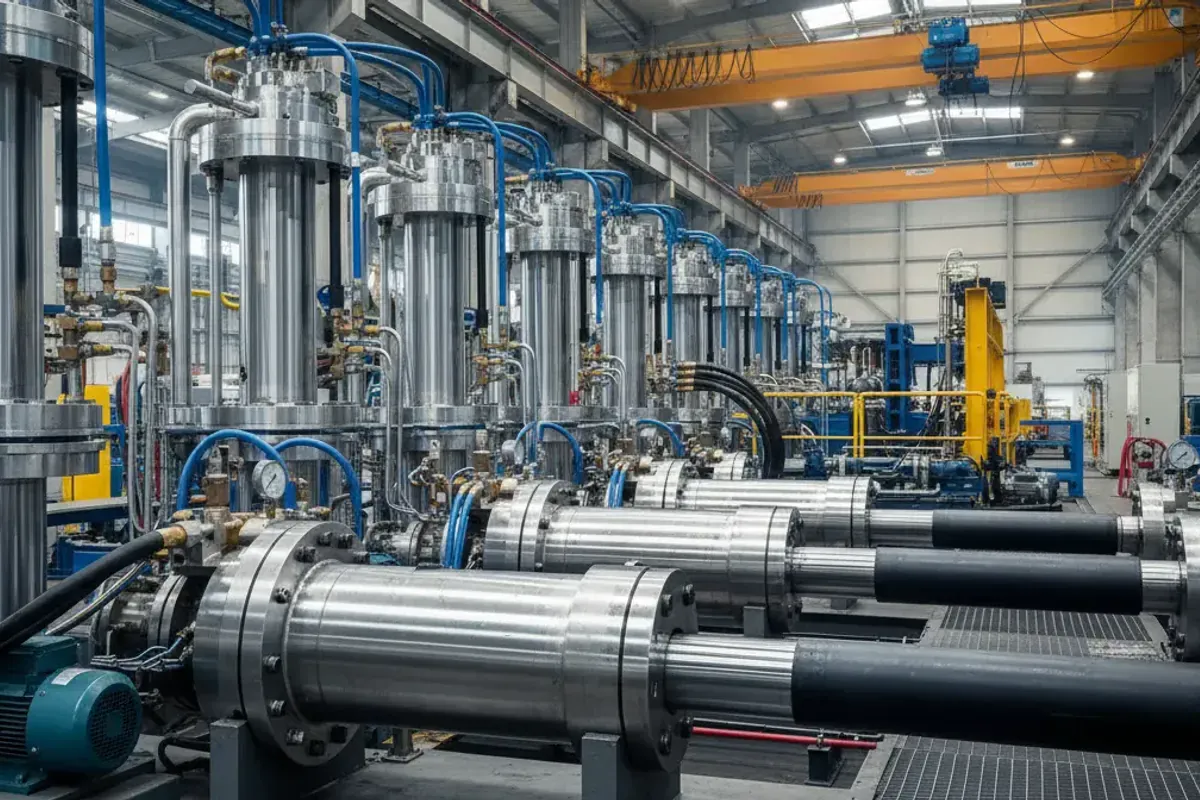
Hydraulic cylinders
Rod-eye and clevis bushings, gland bearings and piston wear rings.
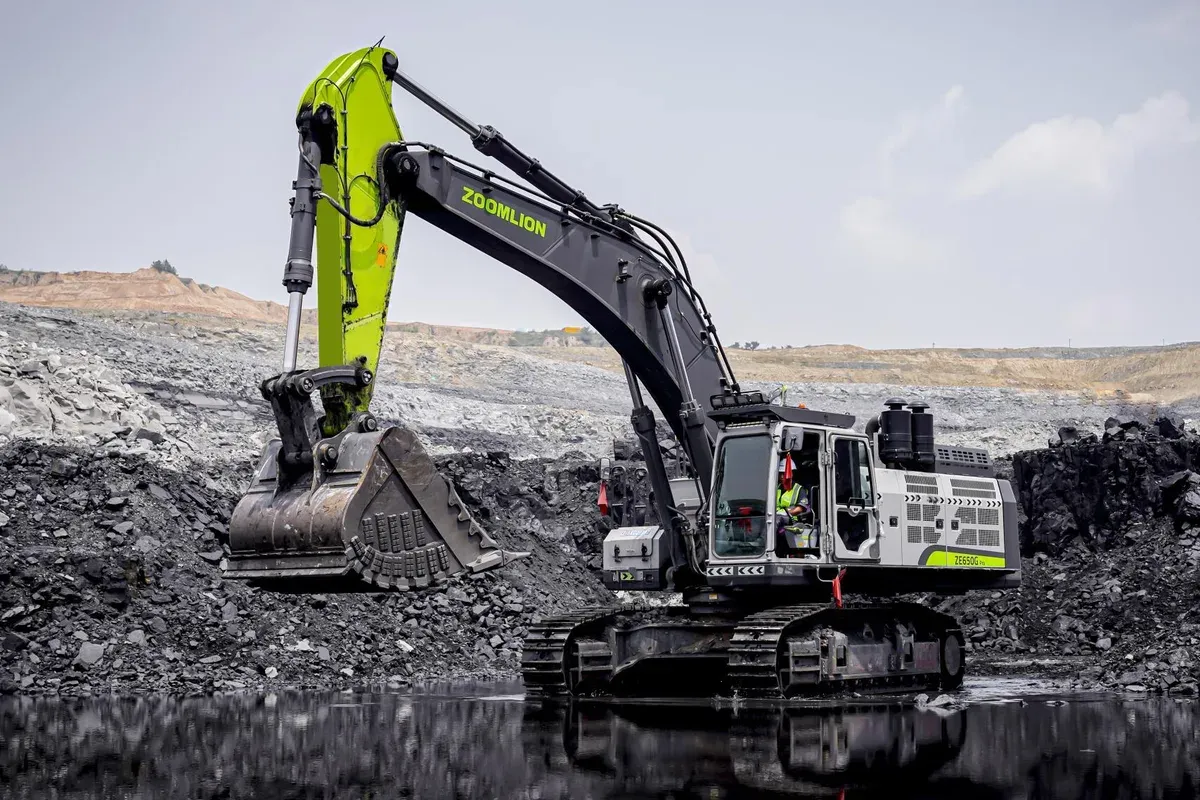
Construction machinery
Slow, heavy joints on loaders, cranes and drilling rigs.
Custom bushings to drawing
Large diameters, special alloys, stepped and flanged forms.
Frequently asked questions
What is the best bronze for bushings?
C93200 / SAE 660 for general duty with grease or oil. Move to C93700 for dirty or intermittent lubrication, C90500 or another unleaded tin bronze for higher load or lead-free requirements, and C95400 aluminium bronze or C86300 for very heavy, slow loads against a hardened shaft.
How much load can a bronze bushing carry?
Greased cast bronze bushings are rated 25 N/mm² of projected area (bore × length) in motion and 45 N/mm² stationary, at up to 0.5 m/s sliding speed. Aluminium bronze and C86300 carry more at lower speed; specific figures are given with the quotation.
Do bronze bushings need lubrication?
Machined cast bronze does: grease or oil through a hole and grooves. If the joint cannot be relubricated, use sintered oil-impregnated bronze for light duty, graphite-plugged bronze for heavy or hot duty, or a PTFE-lined composite bushing.
Bronze or brass bushing?
Bronze for any loaded sliding surface. Brass is cheaper and machines faster but wears quickly against steel and dezincifies in water, so it is limited to light guides and spacers. See the brass vs bronze comparison for the alloy data.
What sizes can you make?
Ø3–1000 mm bore in cast bronze, metric or inch, to ISO 4379 or to drawing. Graphite-plugged bronze is standard from Ø8 to Ø160 mm and wrapped bronze from Ø10 to Ø300 mm. Sizes are made to order, samples are free and there is no minimum quantity.
Are lead-free bronze bushings available?
Yes. C90500, CuSn12-C and CuSn10-C are unleaded tin bronzes, and aluminium bronze C95400 is lead-free by nature. They carry more load than C93200 but are less forgiving of poor lubrication.
Send the size, the alloy and the shaft.
Our engineers confirm the alloy, fits and groove pattern and quote within 12 hours. Samples are free and there is no minimum order.