
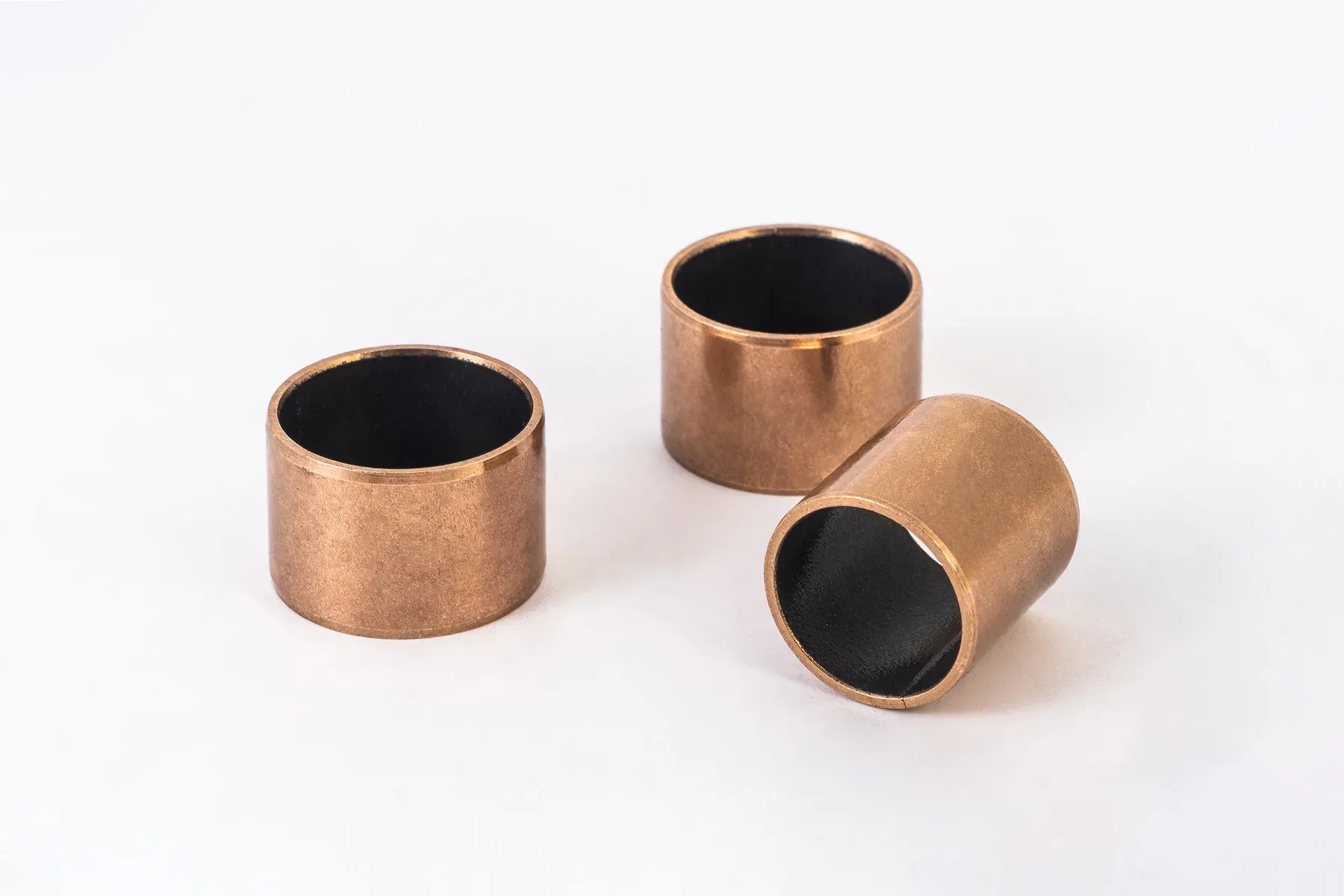
Sleeve bearings
Cylindrical plain bearings in every construction we make, from oil-impregnated sintered bronze for fan motors to steel-backed bimetal for gearboxes and hardened steel for excavator pins. This page explains how a sleeve bearing carries its load, which construction suits which duty, and how to size one.
- 250 N/mm²Max. static load
- 8 m/sMax. speed, in oil
- −195…+400 °CTemperature, across lines
- Ø3–1000 mmDiameter range
A sleeve bearing is a cylindrical plain bearing: the shaft turns or slides in its bore on an oil film, a grease film or a self-lubricating layer, with no rolling elements. It carries shock and high load in little radial space and runs quietly, but it needs the right clearance and lubrication.
- Bronze: cast C93200 45 N/mm² static greased; wrapped CuSn8 120 N/mm² static; oil-impregnated sintered ≈ 14 N/mm² with no relubrication
- Steel-backed: bimetal 150 N/mm² dynamic in grease or oil; PTFE composite 250 N/mm² static running dry
- Hardened steel sleeves: 250 N/mm² at 0.1 m/s for greased pins under shock
- Speed: 2 m/s dry (PTFE composite), 6 m/s at light load (sintered), 8 m/s in oil (bimetal)
- Diameters Ø3–1000 mm, metric and inch series or to drawing
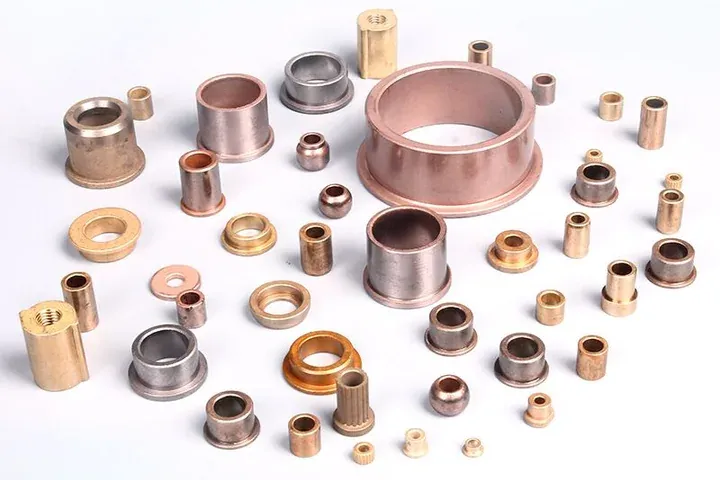
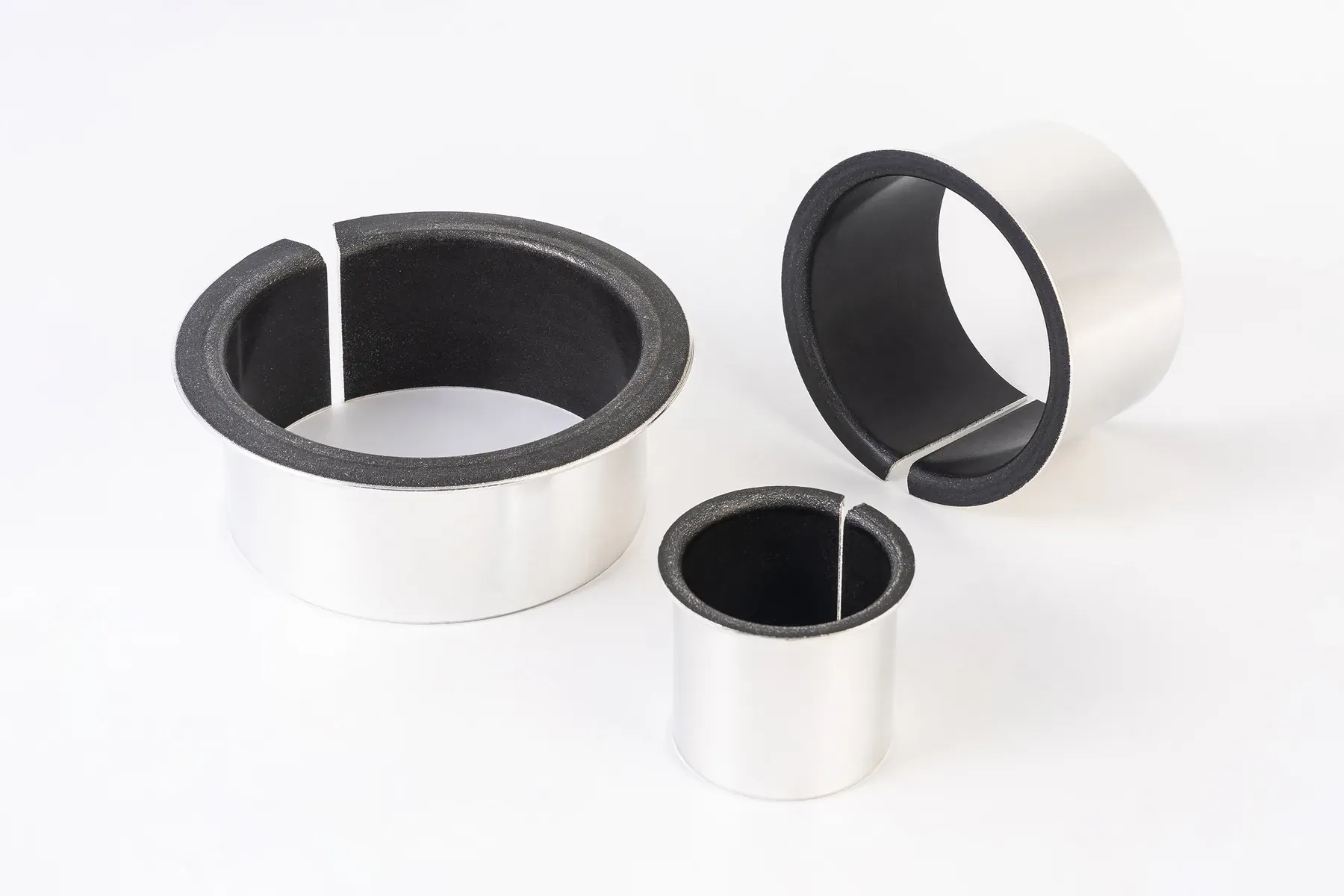
Sleeve bearings by lubrication
How the bearing is lubricated narrows the choice fastest. Each card leads to the full data of that line.
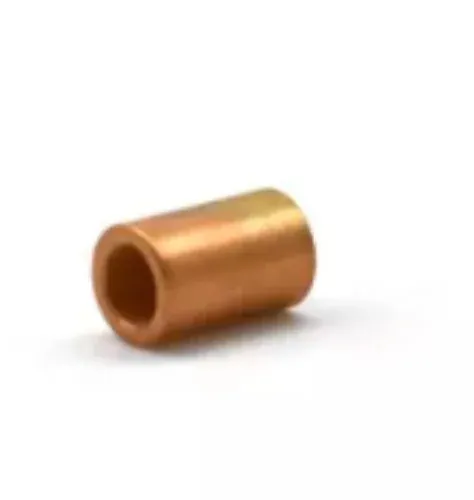
Oil-impregnated sleeve bearings
Oil held in 18–25 % pores feeds the shaft for life: motors, fans and appliances.
JBM-700Greased bronze sleeve bearings
Machined C93200 and harder alloys for heavy, slow, greased duty in any size.
JBM-600Dry-running sleeve bearings
250 N/mm² static with no lubricant; thin wall, ISO 3547 sizes.
JBM-10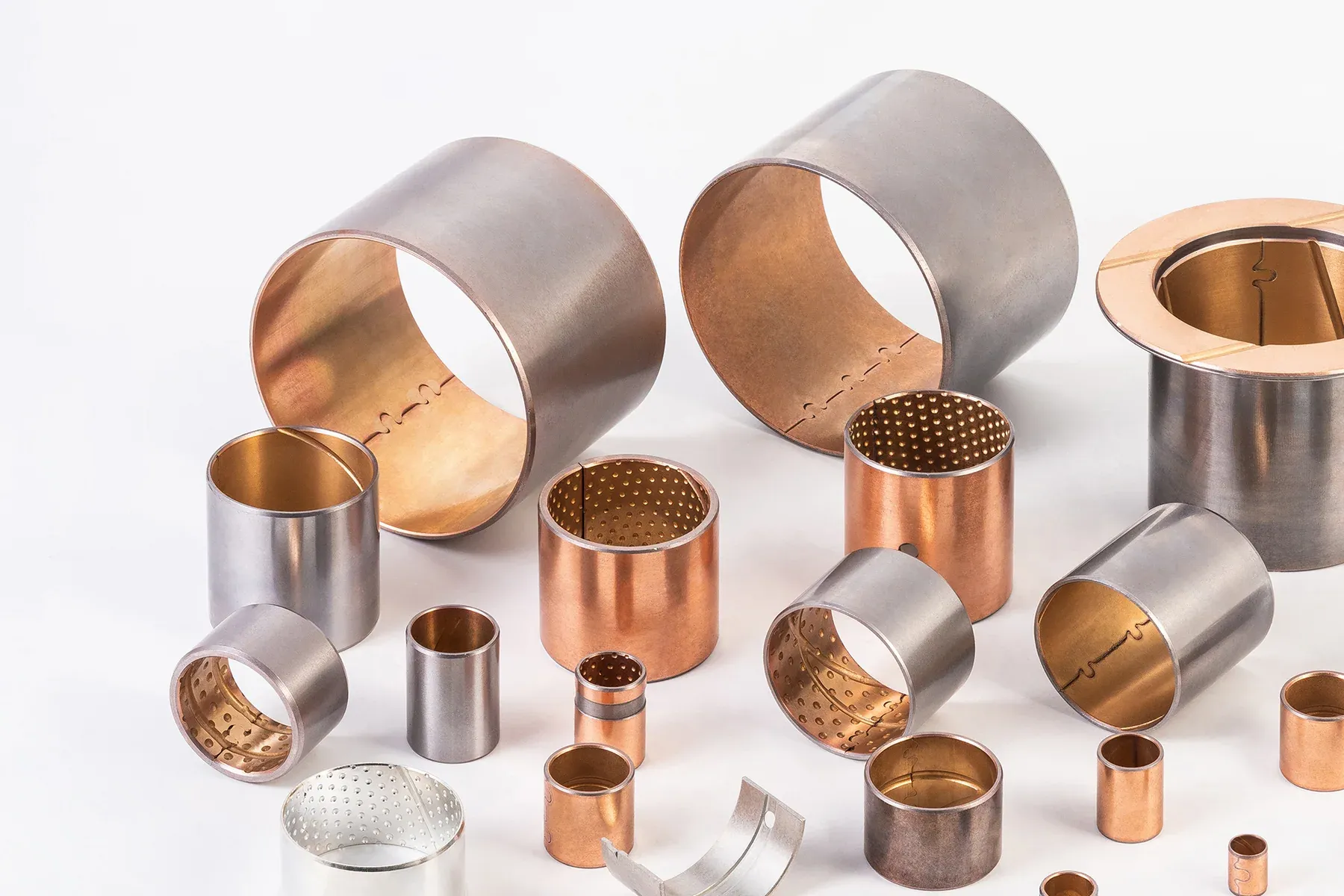
Oil-lubricated sleeve bearings
Steel back with a bronze lining: 8 m/s in oil for gear pumps, gearboxes and hydraulics.
JBM-800
How a sleeve bearing carries the load
A sleeve bearing works in one of three regimes, and the regime decides almost everything else. In oil at speed, the turning shaft drags oil into the converging gap on the loaded side and lifts itself on a full film: there is no metal contact, wear is close to zero and friction falls to about 0.01–0.05 for a bronze bushing. This is how bimetal bearings run in gear pumps and transmissions, and how a sintered bearing runs once its oil film has formed.
Slow, oscillating or stop-start joints never build that film. They run in boundary lubrication, metal against metal through a thin layer of grease, which is why heavy greased pivots use bronze or hardened steel with grooves that spread the grease. Where no lubricant can be supplied at all, the running surface has to carry its own: a PTFE layer that transfers a film to the shaft (friction 0.02–0.20), graphite plugs, or oil stored in sintered pores.
| Regime | Typical duty | Sleeve bearing | Friction, typical |
|---|---|---|---|
| Full oil film (hydrodynamic) | Continuous rotation in oil | Bimetal JBM-800, sintered bronze once run in | ≈ 0.01–0.05 |
| Boundary, greased | Slow, oscillating, shock-loaded pivots | Cast or wrapped bronze, hardened steel JBM-ST | Higher; set by the grease |
| Self-lubricating, dry | No lubricant possible, intermittent motion | PTFE composite JBM-10, graphite bronze JBM-650 | 0.02–0.20 (PTFE composite) |
Friction values are typical ranges for the regime; the product pages give each line’s own data.
Bronze sleeve bearings
Most searches for a bronze sleeve bearing mean one of four constructions. They share the alloy family and almost nothing else: a machined cast bushing, a sleeve rolled from strip, a pressed and oil-filled powder bearing and a cast bushing filled with solid lubricant are bought for different joints.
| Construction | JBM series | Load | Speed | Temperature | Lubrication | Typical joint |
|---|---|---|---|---|---|---|
| Machined cast bronze, C93200 | JBM-600 | 45 N/mm² static, 25 moving | 0.5 m/s greased | −40 to +250 °C | Grease or oil | Heavy slow pivots, any size |
| Wrapped bronze, CuSn8 | JBM-090, JBM-092 | 120 N/mm² static, 40 dynamic | Low | −100 to +200 °C | Grease in pockets or holes | Thin-wall pins in agricultural and construction machines |
| Sintered bronze, oil-impregnated | JBM-700 | ≈ 14 N/mm² continuous | To 6 m/s at light load | −10 to +90 °C | Oil in the pores | Small motors, fans, appliances |
| Graphite-plugged bronze | JBM-650 | 50–100 N/mm² | 0.5 m/s dry | −40 to +400 °C | Solid lubricant plugs | Hot, slow or inaccessible joints |
Headline limits from the product pages. Load, speed and temperature are separate limits, not one operating point.
Sleeve bearings in electric motors and fans
Small motors, fans, pumps and appliances use oil-impregnated sintered bronze sleeve bearings because they are quiet, cheap in volume and need no service. The bearing runs on an unhardened shaft finished to Ra ≤ 0.8 µm, and spherical versions, clamped in a stamped housing, align themselves to the shaft so the bore does not edge-load when the end shields are slightly out of line. See self-aligning bronze bearings for that form.
The limit is the oil. A standard sintered bearing is rated −10 to +90 °C; above that the oil thins and evaporates faster and the bearing dries out, so hotter motors use a high-temperature oil (suffix -H), cold ones a low-temperature oil (-L), and food machinery a food-grade oil (-FG). Where a motor runs continuously at high temperature for years, a ball bearing is often the better choice; where it must stay quiet and cheap, the sleeve bearing wins.
Sizing a sleeve bearing: length, clearance and PV
Start from the specific load: radial force divided by bore × length. Compare it with the line’s load limit, then multiply it by the sliding speed to get PV and compare that too; the plain bearing PV calculator does both. If the load is too high, lengthen the bearing before changing material, but keep the length between about 0.5 and 1.5 times the bore: a longer sleeve loads its edges as soon as the shaft bends or the housings are out of line.
Clearance follows the construction. A machined bronze sleeve to ISO 4379 on an e7 shaft runs with 0.05–0.11 mm at Ø40 mm. Wrapped bimetal and composite sleeves reach their clearance when pressed into an H7 housing and are not machined afterwards. Oil-lubricated journal bearings are commonly given about 0.1–0.2 % of the diameter so the film can form; plastic sleeves need several times the clearance of bronze because they expand and, in nylon’s case, swell.
Sleeve bearing or ball bearing?
A sleeve bearing wins on shock, oscillation, dirt, load in a small radial space, noise and price. A ball bearing wins on starting friction, high speed with little lubrication and life without attention: its friction is about 0.001–0.005 against 0.02–0.20 for a sliding bushing. The comparison for machinery, with when to switch from one to the other, is in bushing vs bearing; for fans and small motors, where the two compete most directly, see sleeve bearing vs ball bearing.
Where our sleeve bearings run
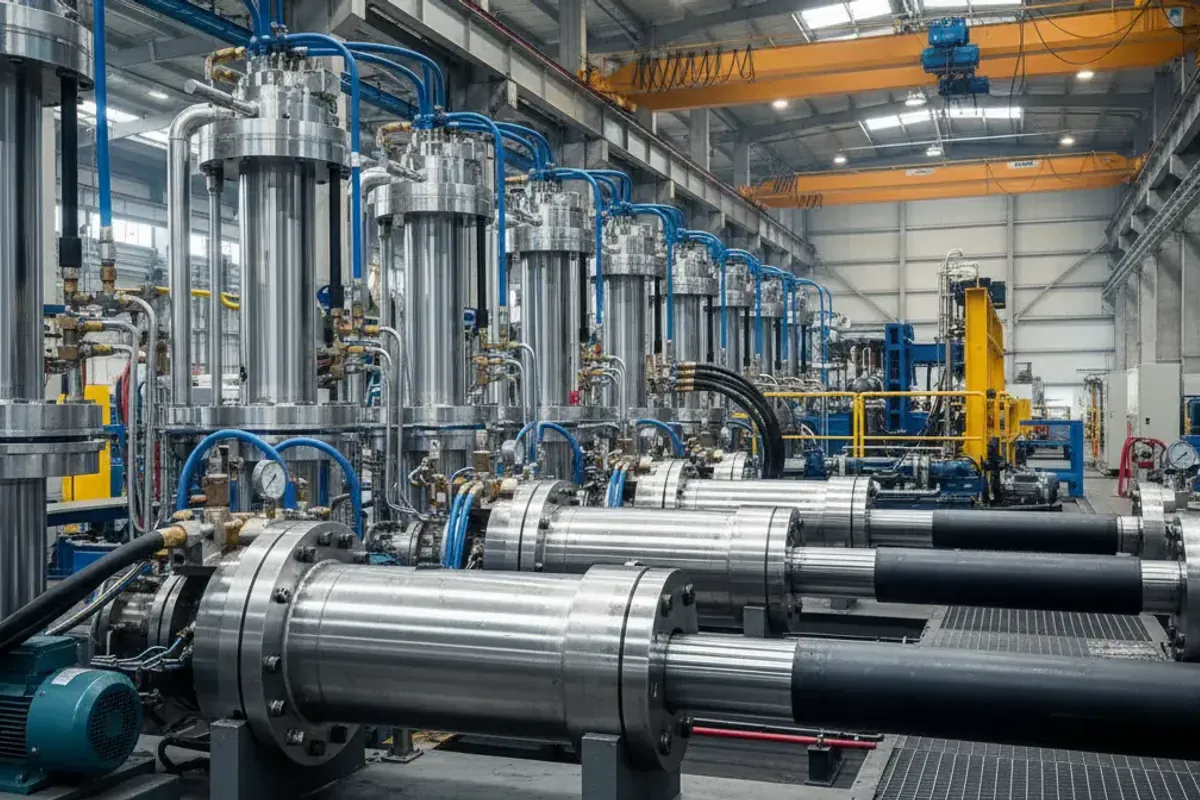
From fan motors to gear pumps to excavator pins: the construction changes with the duty.


Frequently asked questions
What is a sleeve bearing?
A plain bearing in the form of a cylindrical sleeve. The shaft rotates or slides in its bore on an oil film, a grease film or a self-lubricating layer, without balls or rollers.
Is a sleeve bearing the same as a bushing?
Yes. Sleeve bearing, bushing (or sleeve bushing), bush and plain bearing name the same component; sleeve bearing stresses the shape, plain bearing the absence of rolling elements.
What is the best material for a sleeve bearing?
It follows the lubrication. In oil at speed, steel-backed bimetal. Greased, heavy and slow, cast bronze or hardened steel. With no lubricant, PTFE composite or graphite-plugged bronze. Small motors and fans, oil-impregnated sintered bronze.
Do sleeve bearings need oil?
Some carry their own: sintered bronze holds oil in its pores and PTFE composite runs dry. Cast bronze, wrapped bronze, bimetal and hardened steel sleeves need grease or oil in service.
How much clearance does a sleeve bearing need?
For a machined bronze sleeve on an e7 shaft, 0.05–0.11 mm at Ø40 mm. Pressed thin-wall sleeves reach their clearance in an H7 housing. Oil-film bearings are commonly given about 0.1–0.2 % of the diameter, plastics several times that of bronze.
Can you make sleeve bearings to drawing?
Yes, in every construction on this page, metric or inch, from Ø3 mm. Send the drawing with the load, speed and lubrication; we quote within 12 hours and samples are free.
Send the load, the speed and the lubrication.
We propose the construction and the clearance and quote within 12 hours. Samples are free and there is no minimum order.