
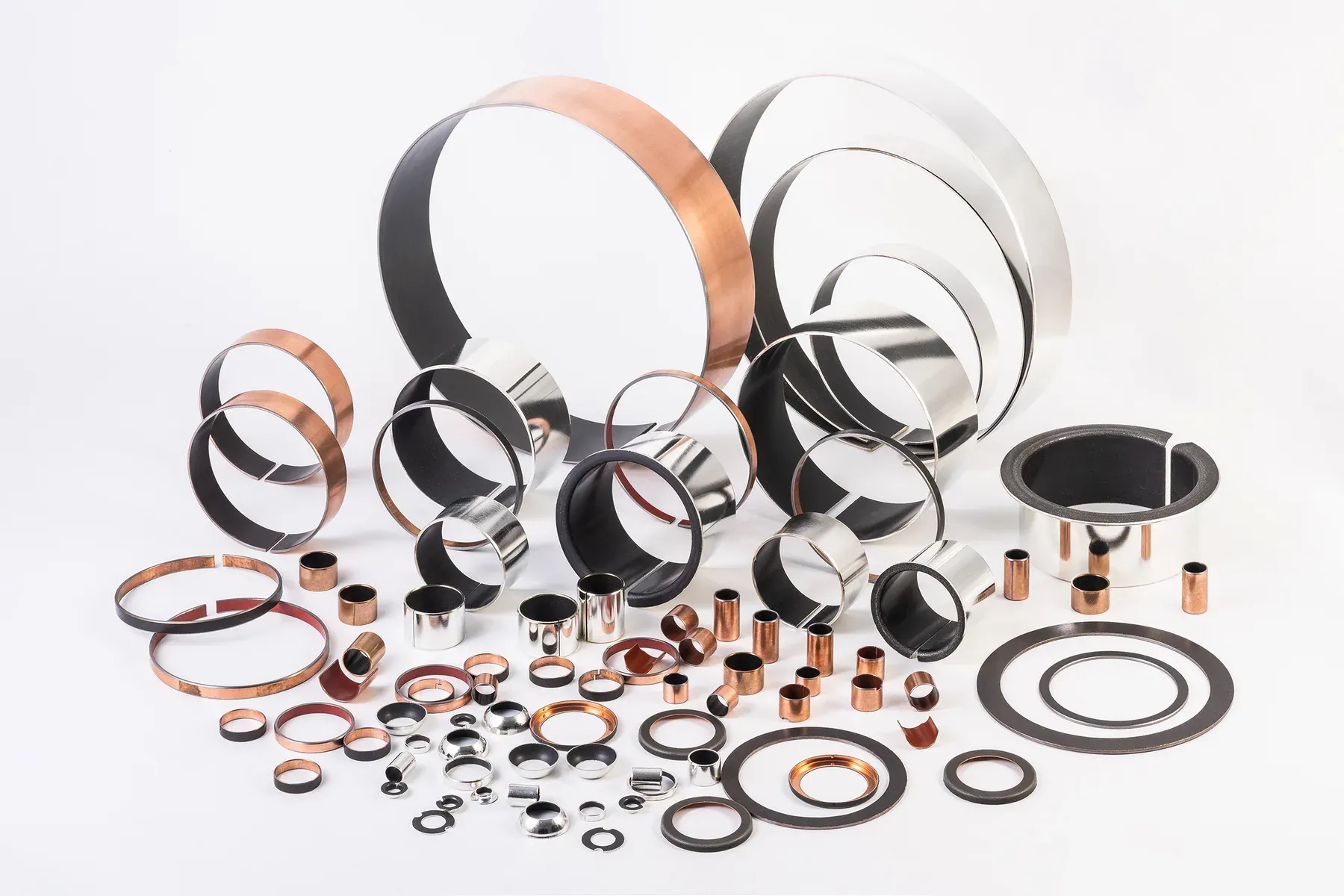
Composite bushings
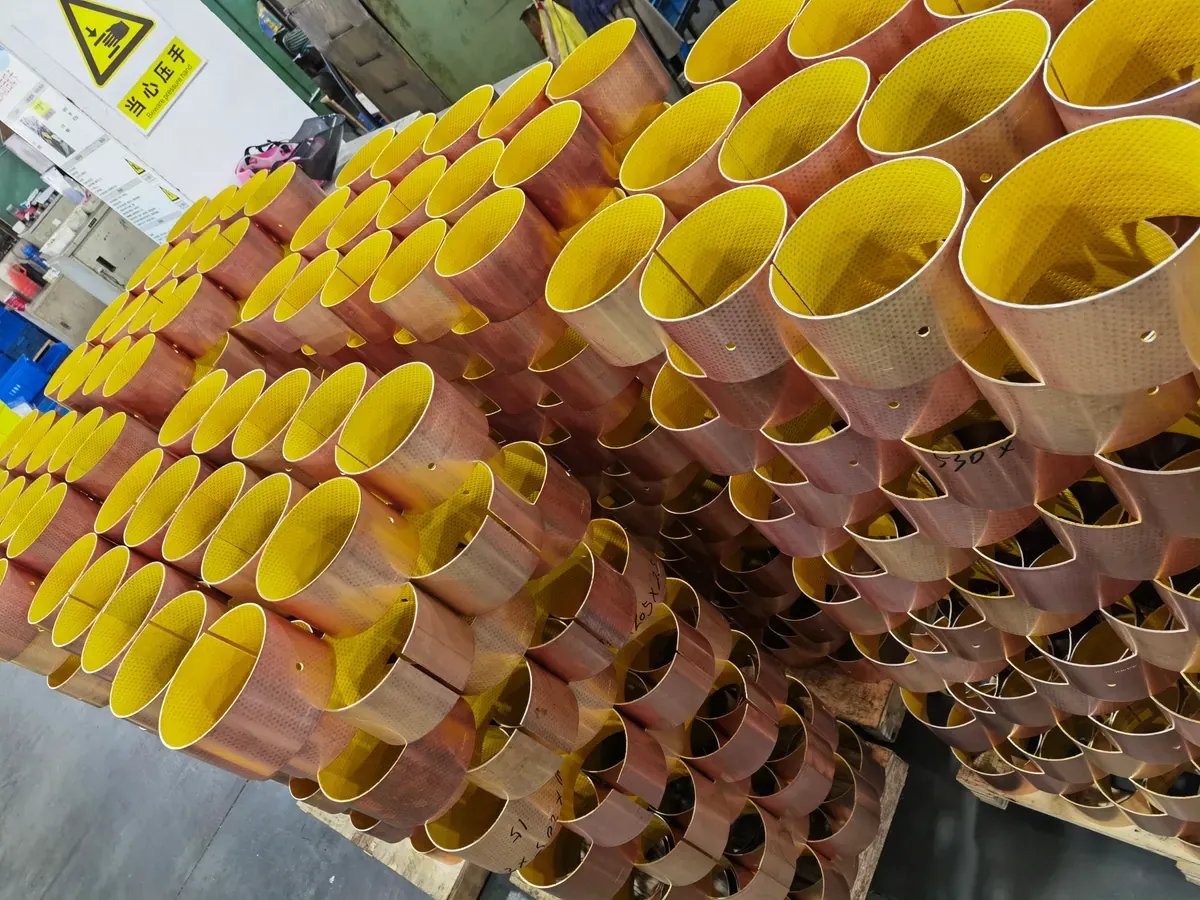
Metal-polymer plain bearings: a steel back for strength and fit, a porous bronze interlayer for bonding and heat flow, and a polymer running layer that does the sliding. Two running layers cover almost every duty: PTFE for maintenance-free dry running across −195 to +280 °C, and POM (acetal) for high loads with grease. Made on 20 automated lines in Jiaxing at 2 million pieces a month.
- 250 N/mm²Static load, both types
- 2 m/sPTFE, dry
- 22 N/mm²·m/sPOM, PV oil lubricated
- 2 M / monthProduction capacity
A composite bushing is a plain bearing built from layers of different materials, each doing one job. The steel back carries the load and gives the press fit; the sintered bronze interlayer bonds the polymer and conducts heat; the thin polymer layer provides low friction and, in the PTFE type, its own lubrication. The layered construction carries far more load than a solid plastic bushing of the same size and far more than the polymer alone could.
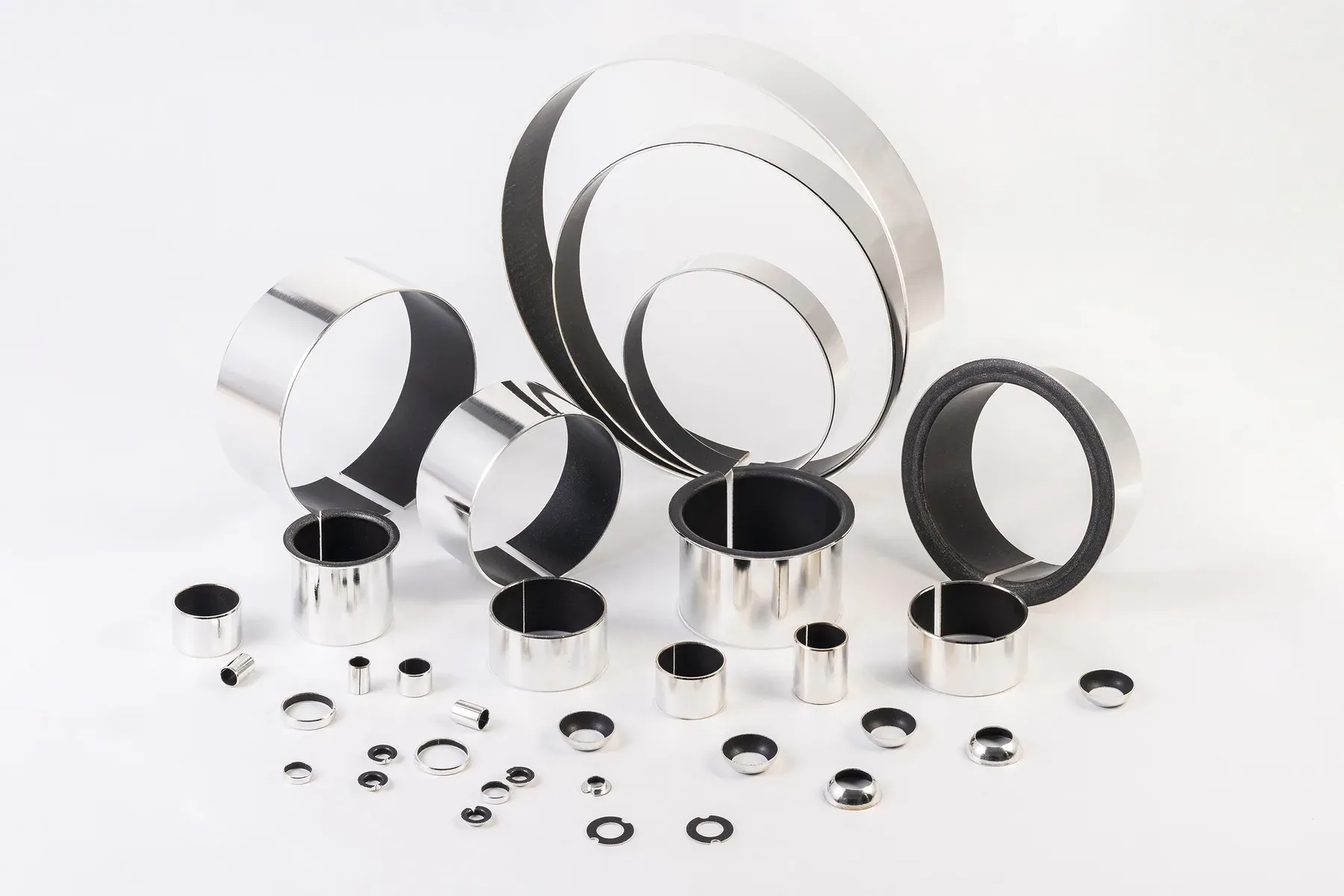
- PTFE composite JBM-10: dry running, 250 N/mm² static, 2 m/s dry, −195 to +280 °C, friction 0.02–0.20
- POM composite JBM-20 (DX / SF-2 type): greased at assembly, 250 N/mm² static, 140 dynamic, PV 2.8 dry / 22 oiled, −40 to +130 °C
- Bronze-mesh PTFE JBM-FR: bronze wire mesh carrier with PTFE layer for reciprocating and oscillating motion
- Backings: steel (standard), bronze and stainless steel 304 / 316 for corrosive service
- Sleeves, flanged bushings, thrust washers, strip and plates; ISO 3547 series Ø10–280 mm, and to drawing
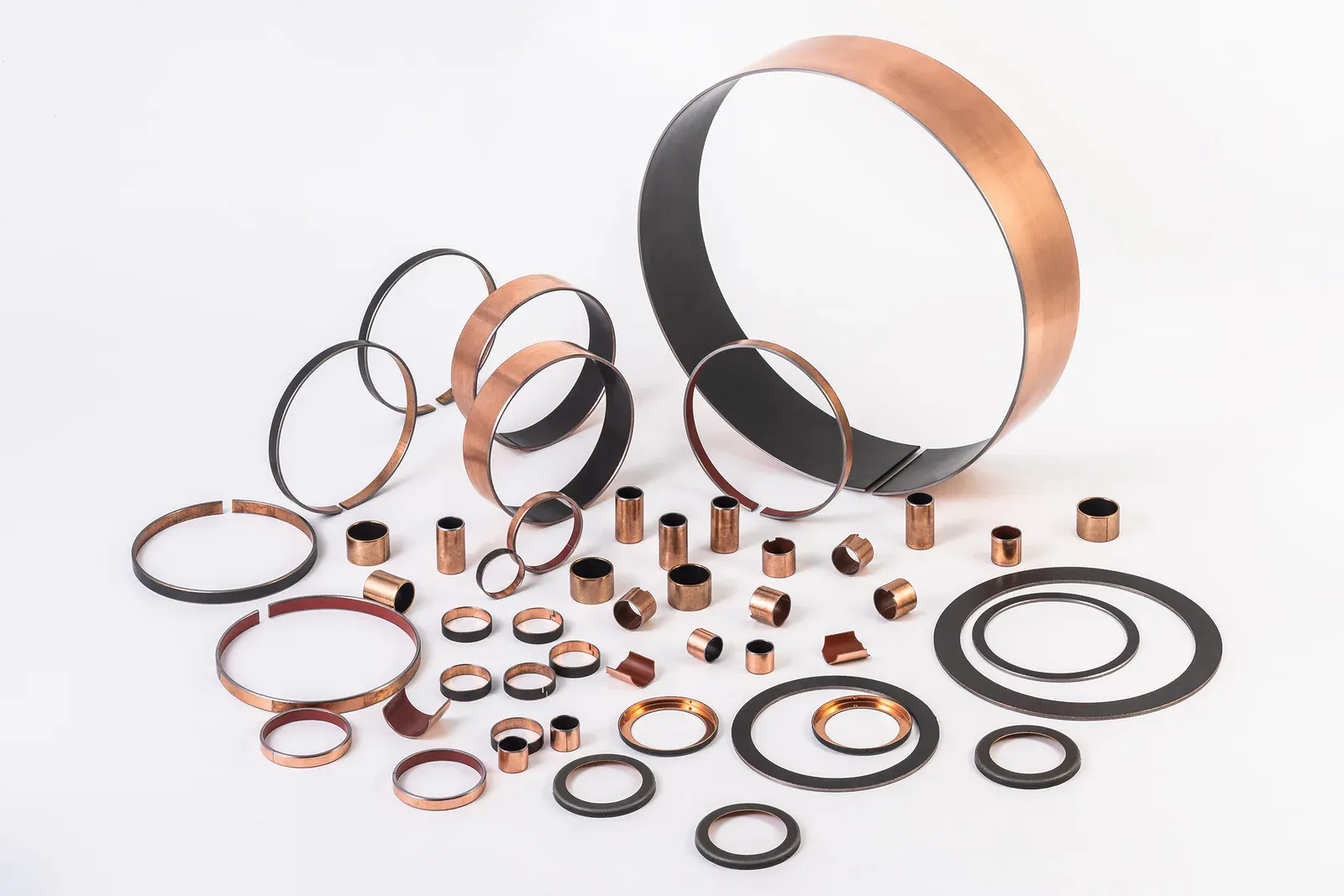
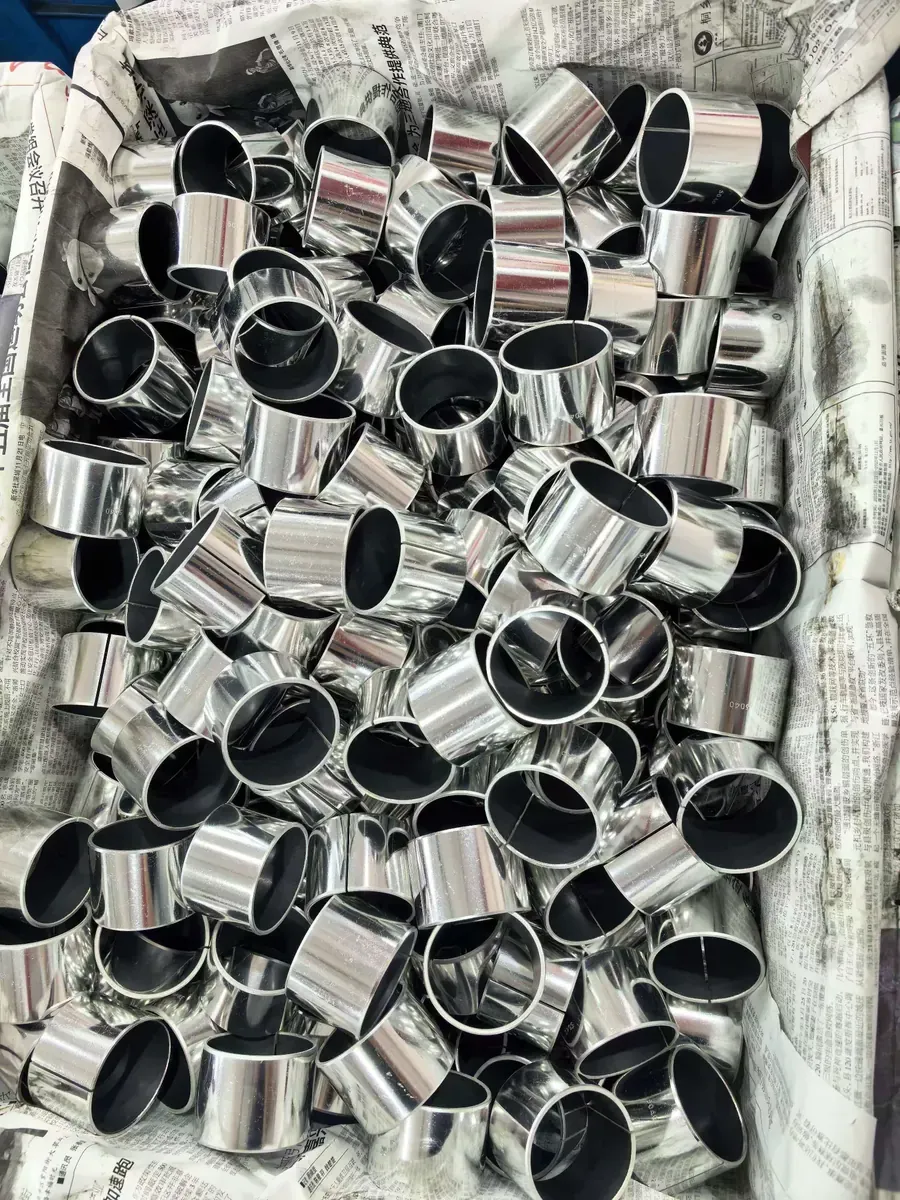
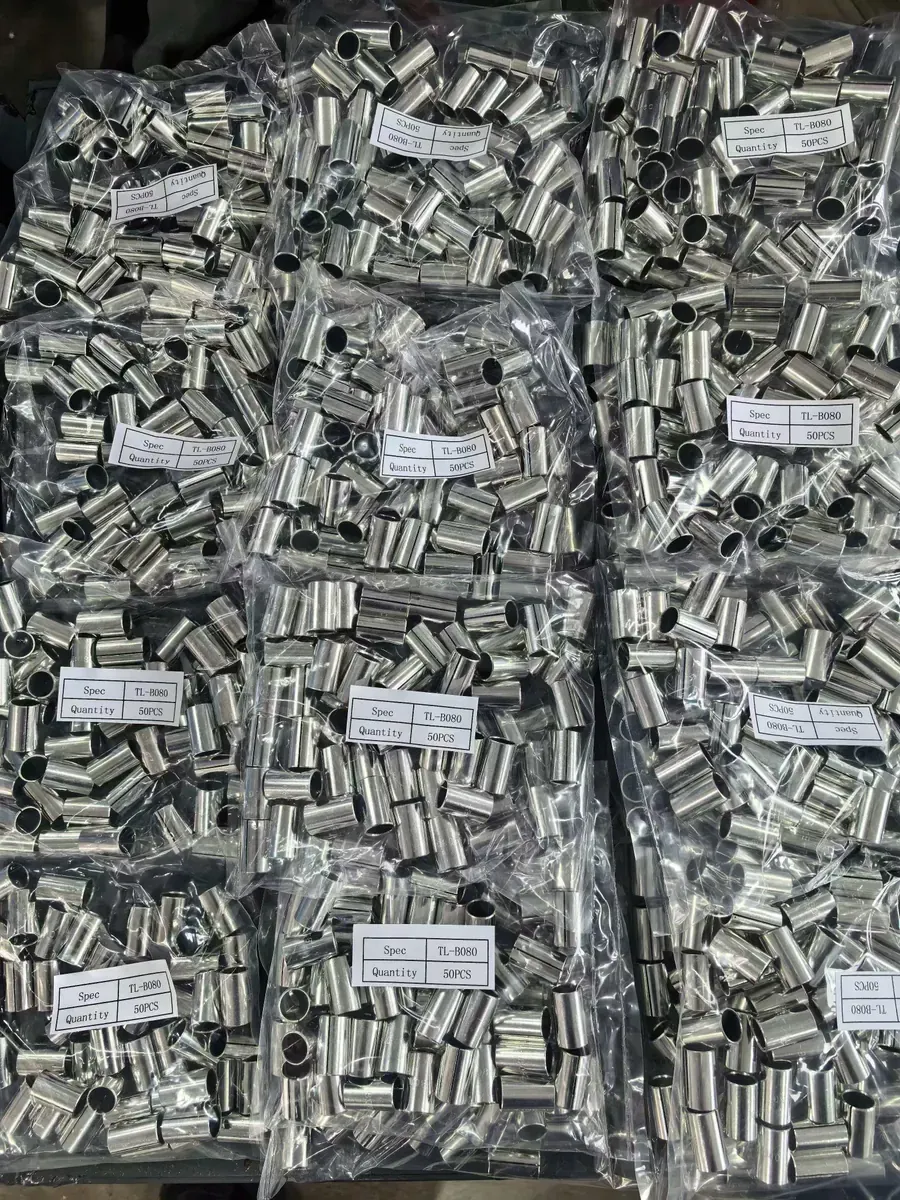
Three running layers
Choose the running layer from the lubrication regime: none, grease, or a working fluid.
PTFE composite · JBM-10
Dry running, widest temperature range, lowest friction. Pivots, hinges, pedals, cylinders, pumps.
Dry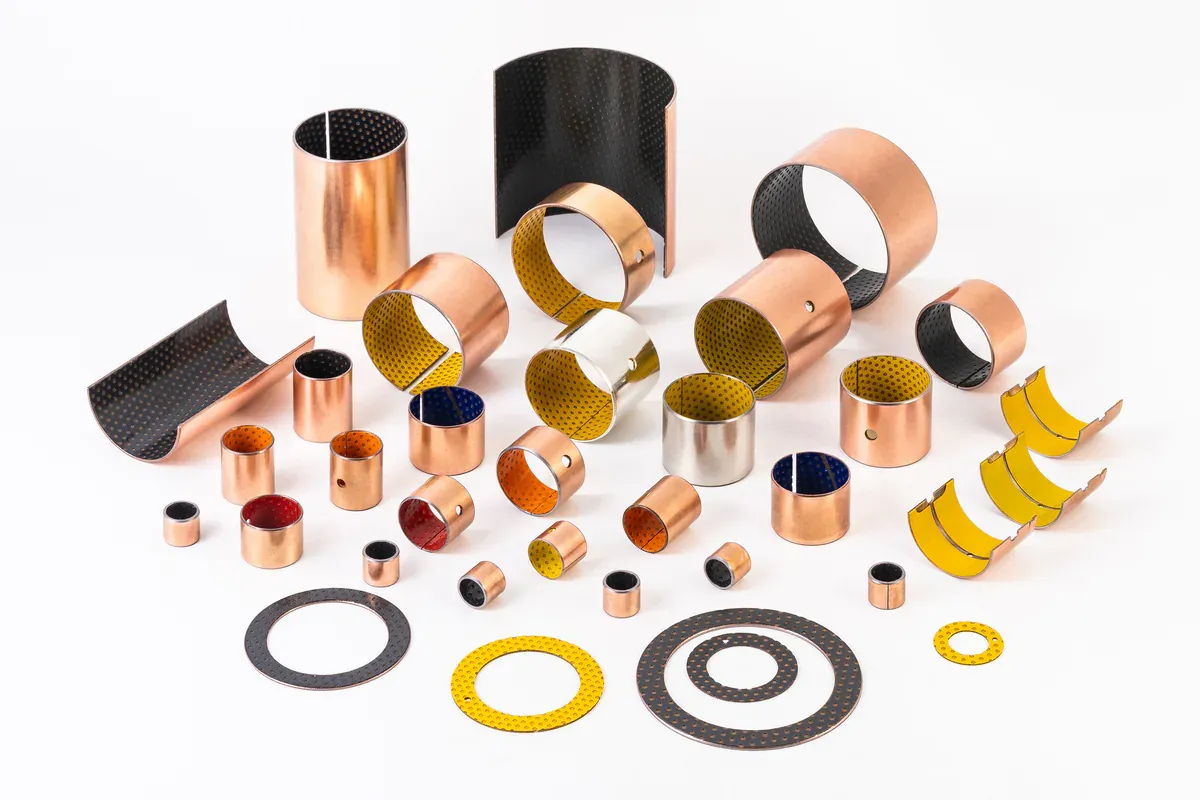
POM composite · JBM-20
Greased at assembly; higher PV, better edge-load and dirt tolerance. Suspension, steering, construction machinery.
Greased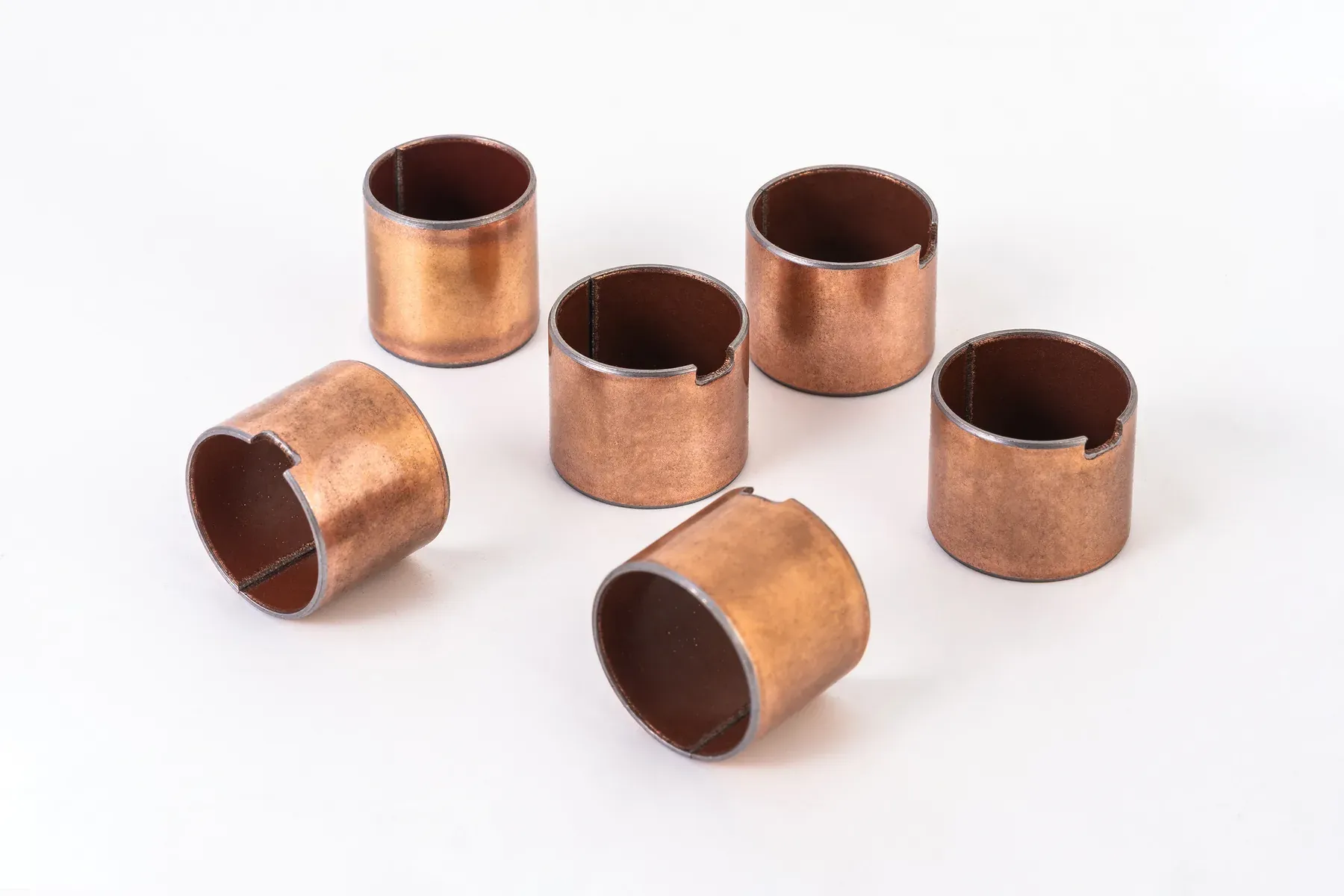
Bronze-mesh PTFE · JBM-FR
Bronze wire mesh with sintered PTFE layer for low-speed reciprocating and oscillating motion, 30 N/mm², −20 to +250 °C.
Reciprocating
Why three layers
Solid polymer bushings are cheap but soft: under load they creep, under heat they expand ten times more than steel, and they insulate the shaft so frictional heat cannot escape. Bonding a thin polymer layer to a steel back through porous bronze fixes all three. The steel holds the dimensions and the press fit, the bronze conducts heat to the housing and locks the polymer in place mechanically, and the polymer layer is thin enough not to creep yet thick enough to bed in, embed fine particles and, in PTFE, transfer a lubricating film to the shaft.
The layers are formed as a continuous strip, which is why composite bushings are wrapped rather than machined: a strip is blanked, rolled into a sleeve with a butt joint, sized on the outside diameter and, for flanged types, formed. Bushing MFG runs this process on 20 automated lines.
PTFE or POM
PTFE composite runs dry from the first movement and over the widest temperature range; it has the lowest friction and needs no attention, but it has a finite wear life proportional to the PV and it does not like abrasive dirt or edge loading. POM composite has a thicker acetal layer with lubricant pockets; grease applied at assembly is held in the pockets for boundary lubrication, and the thicker, tougher layer takes edge loads, misalignment and dirt better and reaches far higher PV under oil. Its limits are 130 °C and the need for that initial grease.
| Property | PTFE composite JBM-10 | POM composite JBM-20 |
|---|---|---|
| Lubrication | None (dry) or working fluid | Grease at assembly; oil possible |
| Static load | 250 N/mm² | 250 N/mm² |
| Dynamic load | 140 N/mm² low speed · 60 rotating | 140 N/mm² · 60 oscillating |
| PV | 1.8 long-term / 3.6 intermittent dry | 2.8 dry / 22 oil lubricated |
| Speed | 2 m/s dry, > 3 m/s lubricated | 2.5 m/s oil lubricated |
| Temperature | −195 to +280 °C | −40 to +130 °C |
| Friction | 0.02–0.20 | 0.05–0.25 |
| Running layer | PTFE + solid lubricants, a few hundredths of a mm | POM with lubricant pockets, 0.3–0.5 mm |
| Strengths | Dry, temperature, low friction, speed | Edge load, dirt, high PV with lubrication, toughness |
Catalogue and datasheet values; separate limits, not one operating point.
Bronze-mesh PTFE (JBM-FR)
The JBM-FR construction replaces the solid steel back with a bronze wire-mesh carrier combined with a sintered PTFE-based sliding layer. It is flexible, can be formed to curved and flat surfaces, and is used where motion is reciprocating, oscillating or intermittent at low speed: vehicle door and window mechanisms, textile machinery, joint bearings, valve mechanisms, office equipment and instrument linings. Catalogue values are 30 N/mm² maximum load, 0.5 m/s, PV 1.65 N/mm²·m/s, −20 to +250 °C and friction 0.05–0.20; current sheets are issued with the quotation.
Backings and coatings
The standard back is low-carbon steel, plated against corrosion. For wet, chemical or food environments the PTFE layer is supplied on a bronze back (JBM-1B) or a stainless steel back in 304, 316 or 316L (JBM-1S); both are also the route to a lead-free bearing. Backing choice does not change the running-layer limits.
Sizes and forms
Sleeves, flanged bushings, thrust washers and strip follow the ISO 3547 metric series; JBM-20 covers Ø10–280 mm shaft diameter with a part number of shaft diameter + length (Ø20 × 30 mm = JBM-20 2030). Inch sizes, split and slotted bushings, oil holes and special forms are made to drawing. Because the part is wrapped from strip, a new diameter is a tooling matter: standard sizes ship quickly, specials need a batch.
What to put in the enquiry
Six items let us quote within 12 hours.
Dimensions
Shaft diameter, housing bore, length, or ISO 3547 / JBM reference, or the drawing.
Load and motion
Radial and axial force; rotating, oscillating or sliding; speed; duty cycle.
Lubrication
None, grease at assembly, oil or working fluid.
Environment
Temperature, dust, water, chemicals.
Shaft and housing
Shaft material, hardness, finish; housing material.
Quantity
Sample, batch and annual quantity. Samples are free; no minimum order.
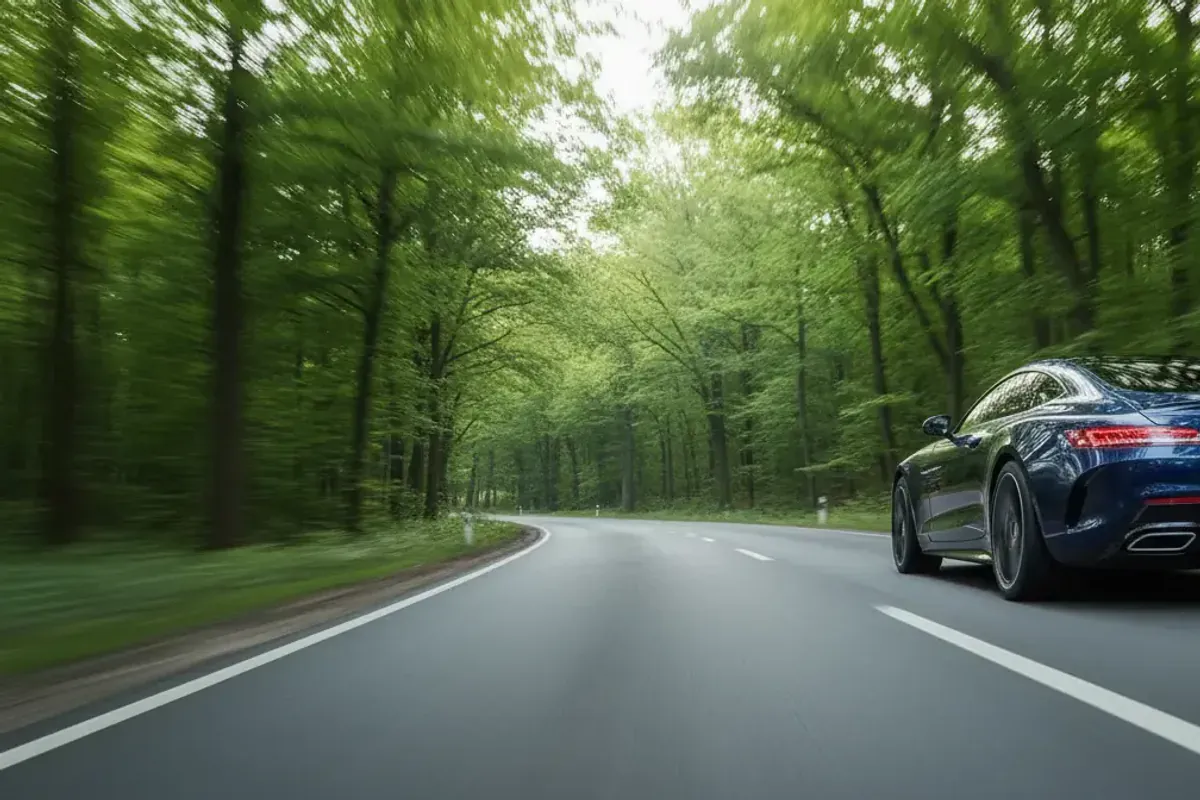
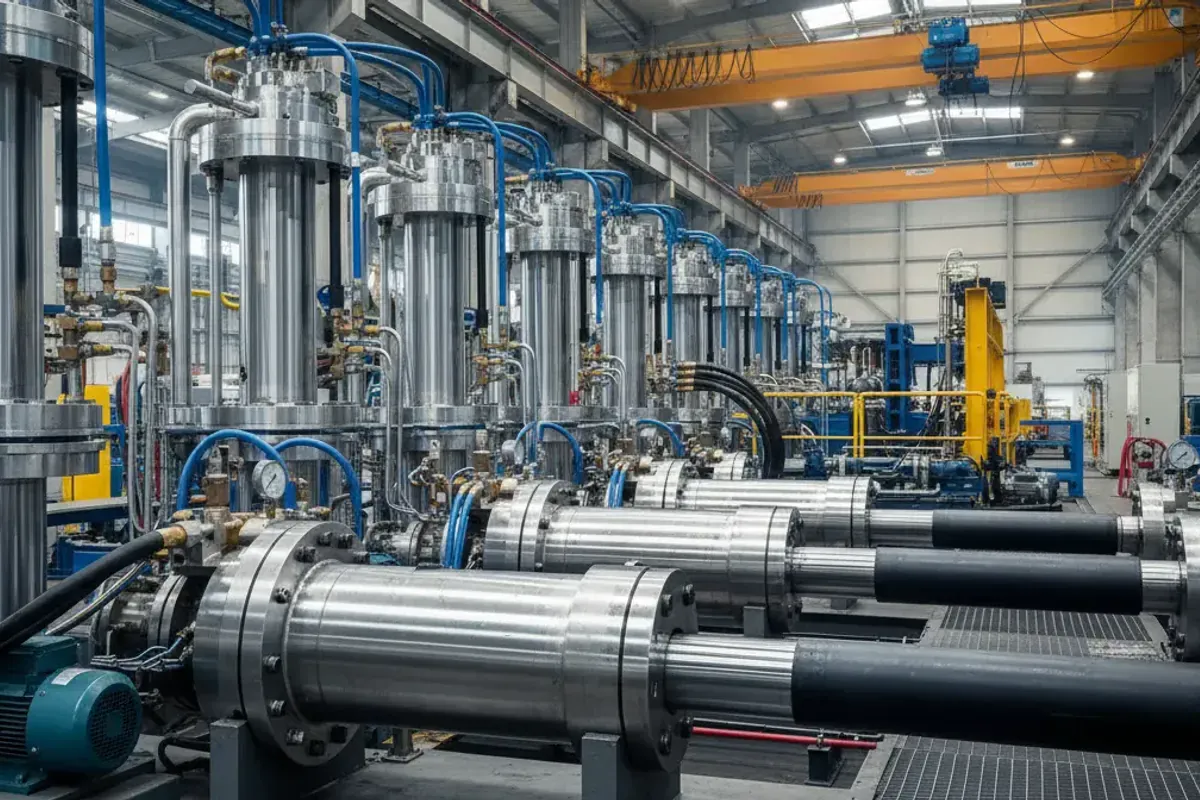
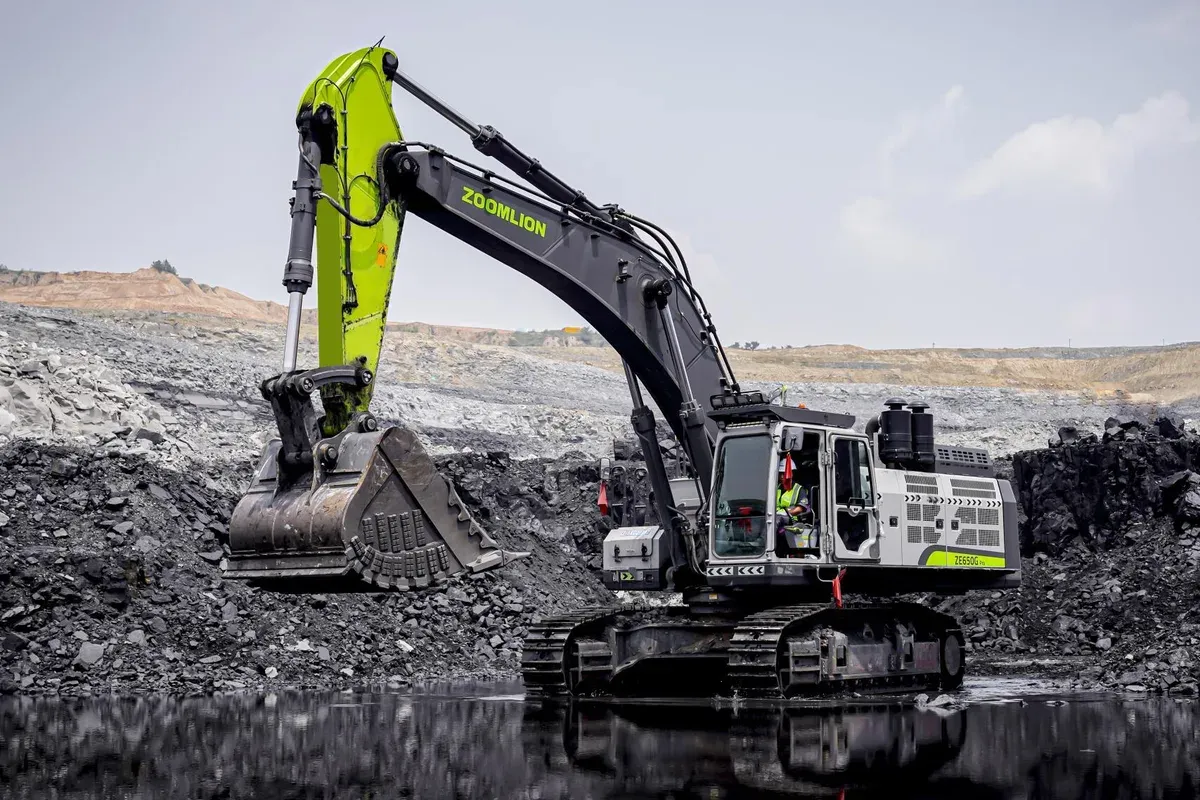
Where composite bushings are used
Volume pivots and slides in vehicles, hydraulics and machinery, wherever grease points are to be eliminated or minimised.
Frequently asked questions
What is a composite bushing?
A layered plain bearing: steel back, porous bronze interlayer and a polymer running layer, PTFE or POM. The layers share the work so the bushing carries 250 N/mm² static, far more than a solid plastic bushing.
Which is better, PTFE or POM composite?
Neither; they suit different regimes. PTFE for dry running, wide temperature and low friction. POM for greased service with higher PV, edge loading and dirt. Send the duty and we recommend one.
Do composite bushings need lubrication?
PTFE composite: no. POM composite: grease at assembly, retained in the pockets; oil lubrication raises its limits further.
Can composite bushings be machined?
No. The running layer is thin and the bushing is finished to size before assembly; the bore reaches its running size when pressed into an H7 housing.
What is a DU or DX bushing?
Trade names that became generic: DU-type is the PTFE composite (our JBM-10), DX-type the POM composite (our JBM-20). The names describe the construction, not dimensional interchangeability, which is checked part by part.
Send the duty and let us pick the layer.
Our engineers confirm PTFE or POM, backing and fits and quote within 12 hours. Samples are free and there is no minimum order.