
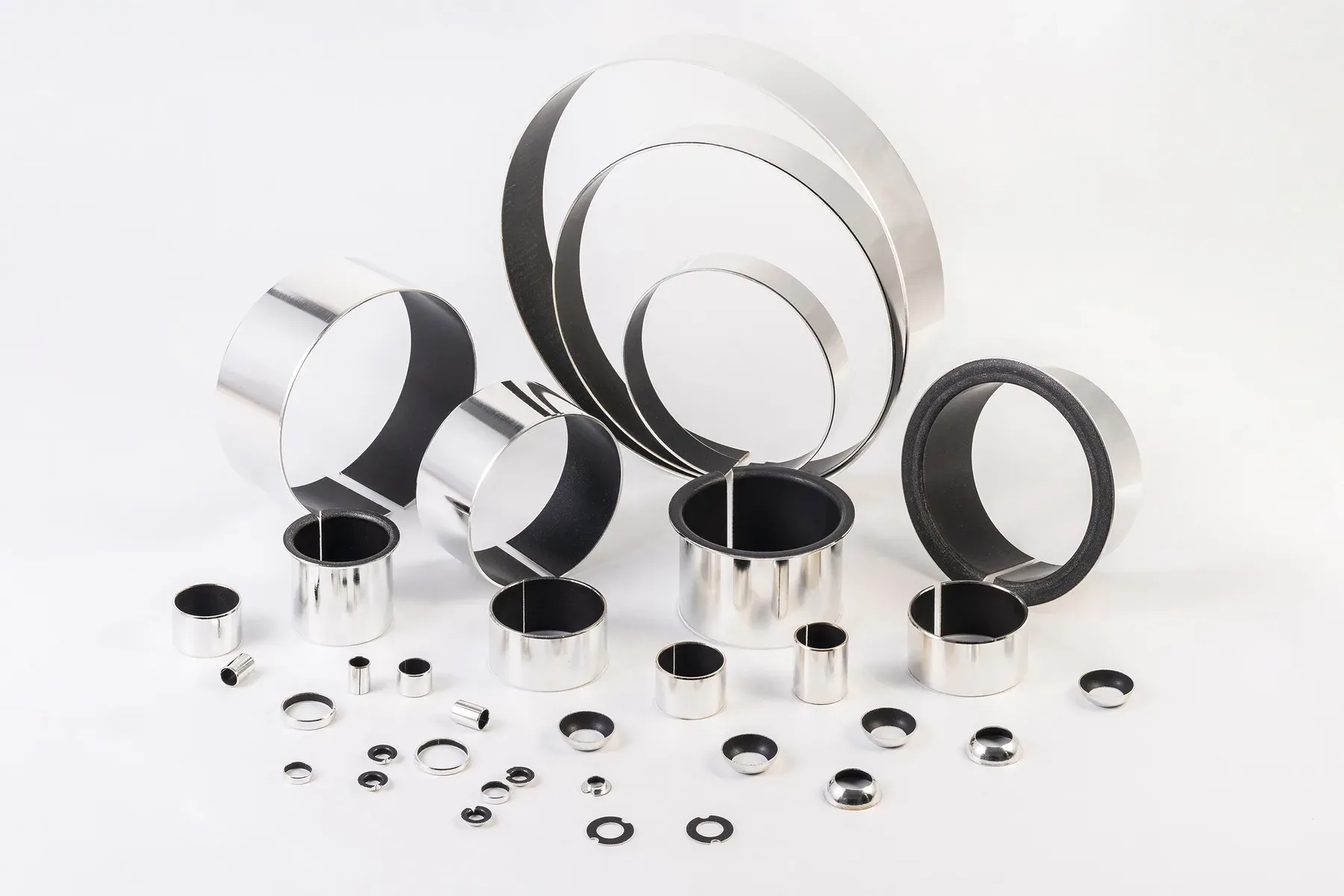
PTFE composite bushings
Steel-backed, maintenance-free plain bearings with a PTFE running layer: the DU-type bushing. A steel strip carries a sintered porous bronze layer filled and overlaid with PTFE and solid lubricants, wrapped into sleeves, flanged bushings, thrust washers and strip. No grease, no oil, no maintenance, from −195 to +280 °C.
- 250 N/mm²Static load
- 2 m/sDry sliding speed
- −195 – 280 °CWorking temperature
- 0.02–0.20Coefficient of friction
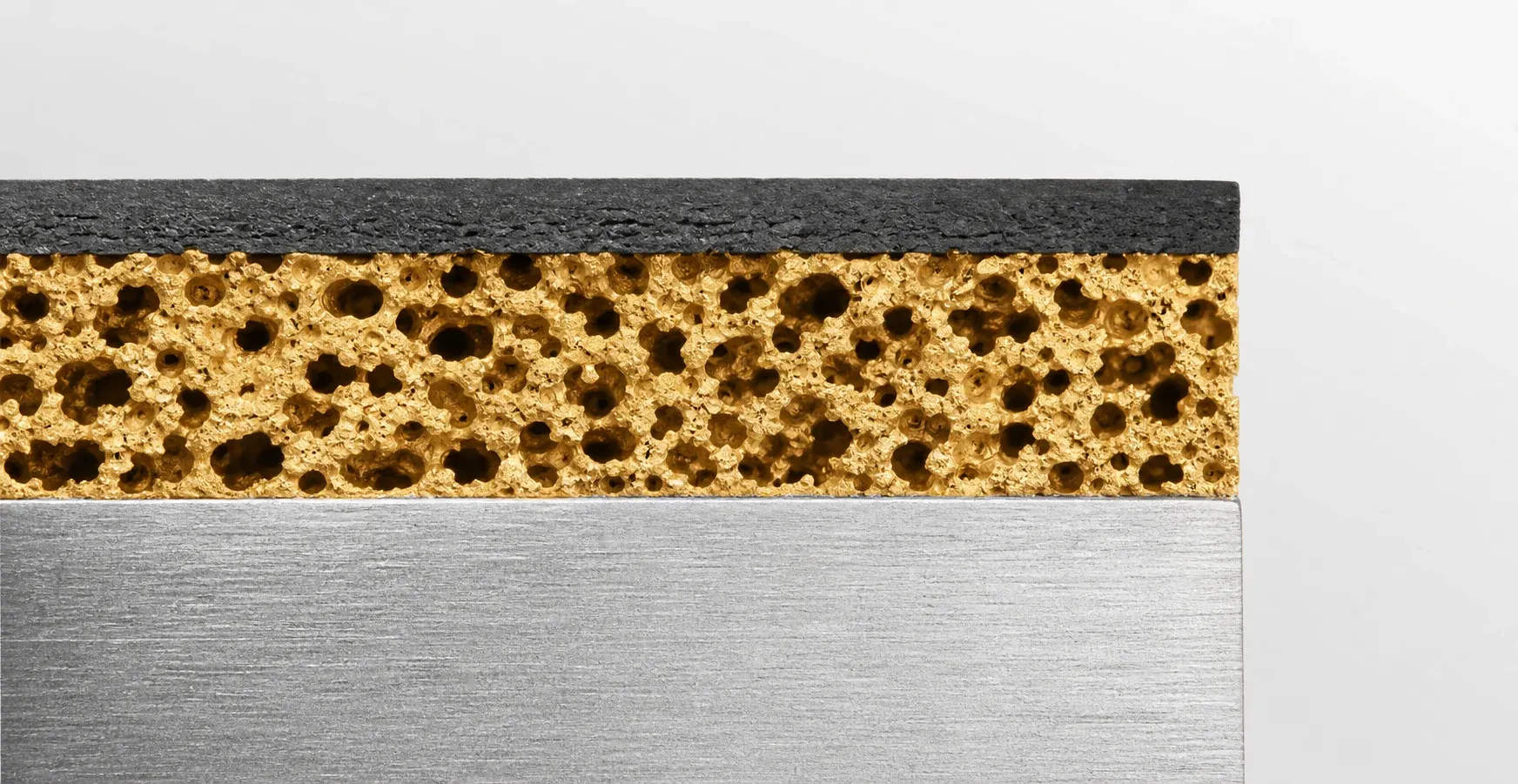
A PTFE composite bushing is a wrapped metal-polymer plain bearing. The steel back gives strength and a press fit; the porous bronze interlayer bonds the PTFE and conducts heat away; the PTFE-based running layer, a few hundredths of a millimetre thick, transfers a low-friction film to the shaft and needs no lubricant.
- JBM-10: low-carbon steel back · sintered bronze · PTFE running layer with solid lubricants
- Static load 250 N/mm², 140 N/mm² at low speed, 60 N/mm² rotating or oscillating
- Dry sliding speed 2 m/s (over 3 m/s with liquid lubrication); PV 1.8 long-term / 3.6 intermittent N/mm²·m/s dry
- Working temperature −195 to +280 °C; friction 0.02–0.20
- Bronze back (JBM-1B) and stainless back 304 / 316 / 316L (JBM-1S) for corrosive service; lead-free running layers available
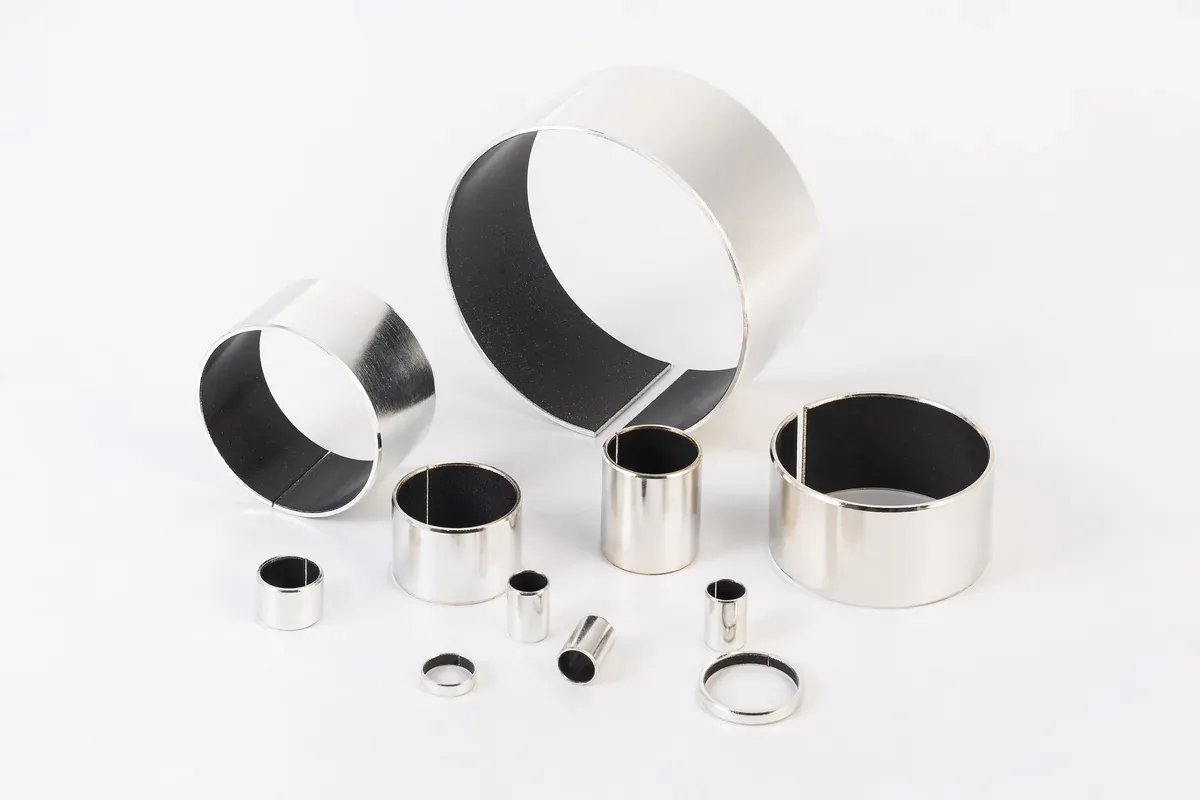
JBM-10 variants
One running layer, several backings and forms. The backing is chosen for the environment, the form for the housing.
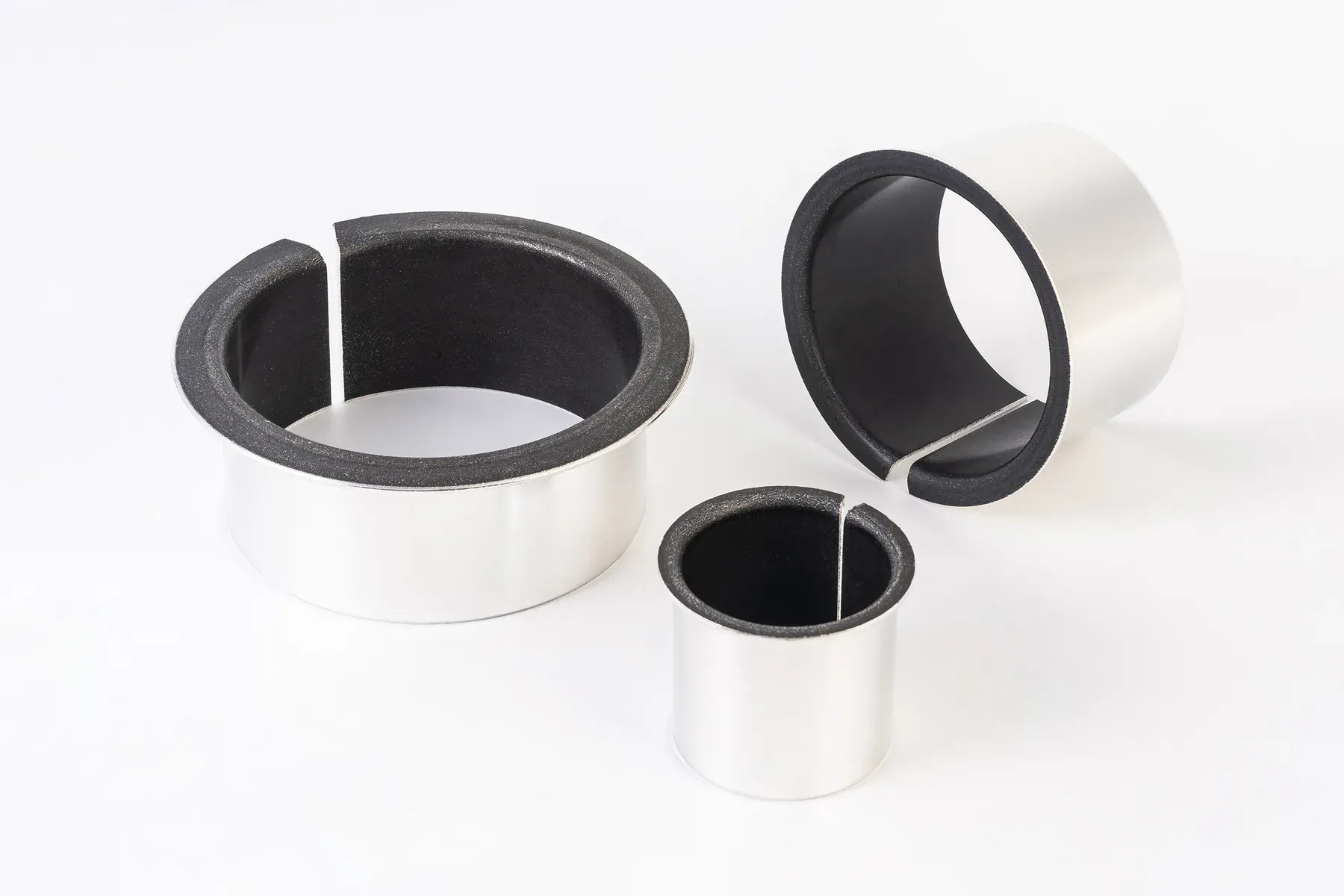
JBM-10 · steel back
The standard DU-type bushing: low-carbon steel back, copper or tin plated against corrosion.
Standard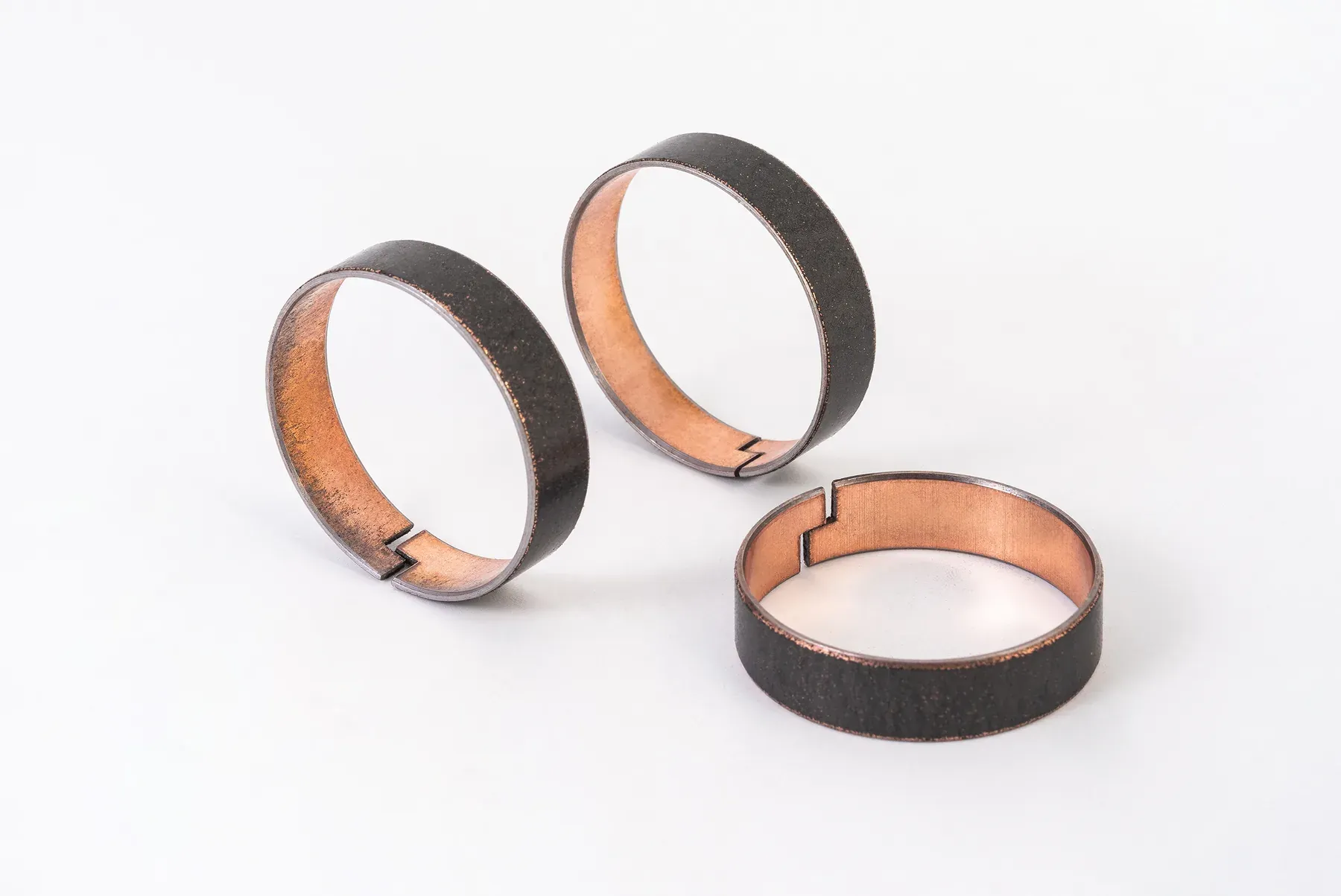
JBM-1B · bronze back
Solid bronze back for corrosive or wet service and lead-free running layer.
Corrosion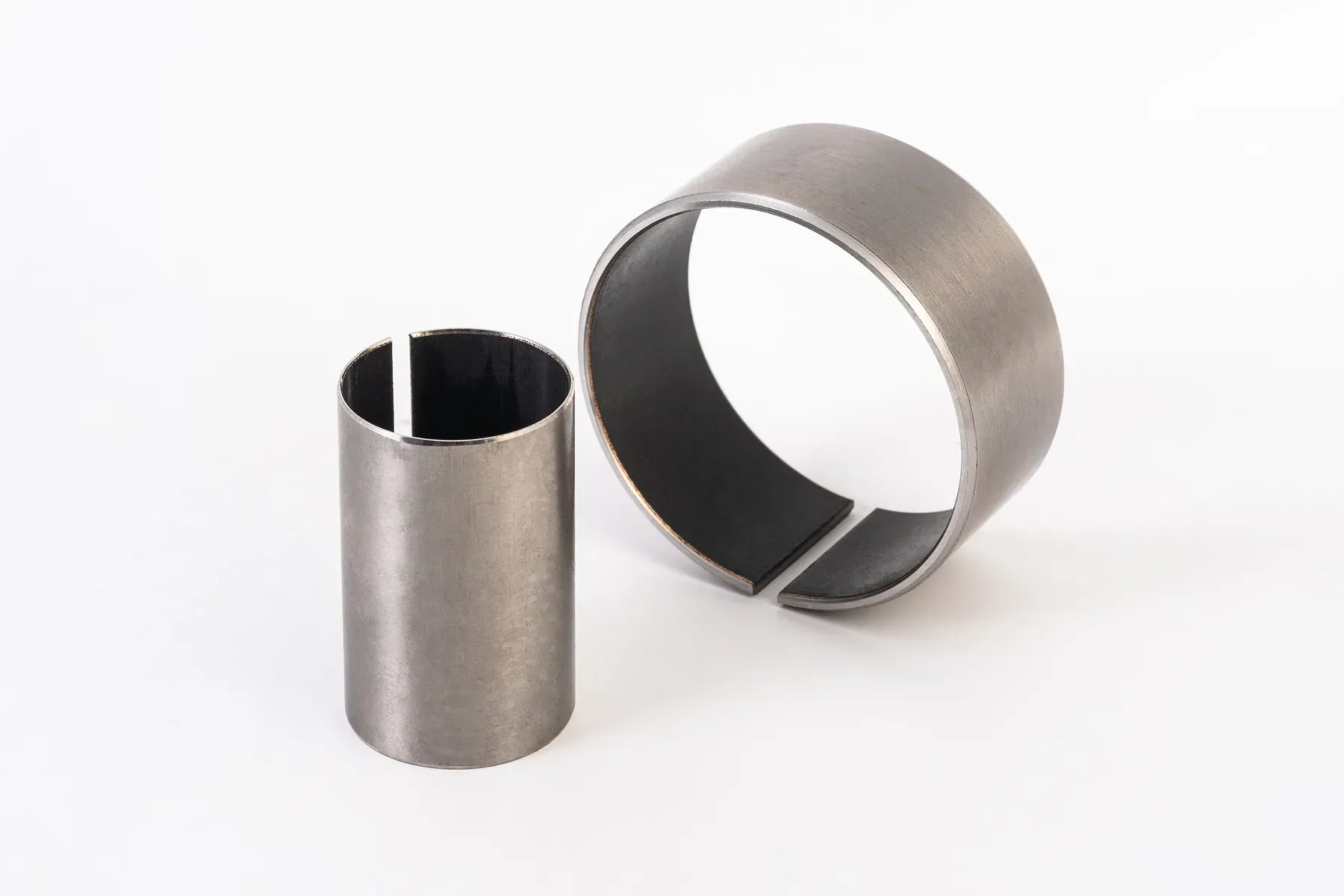
JBM-1S · stainless back
304, 316 or 316L back for food, chemical and marine equipment.
Stainless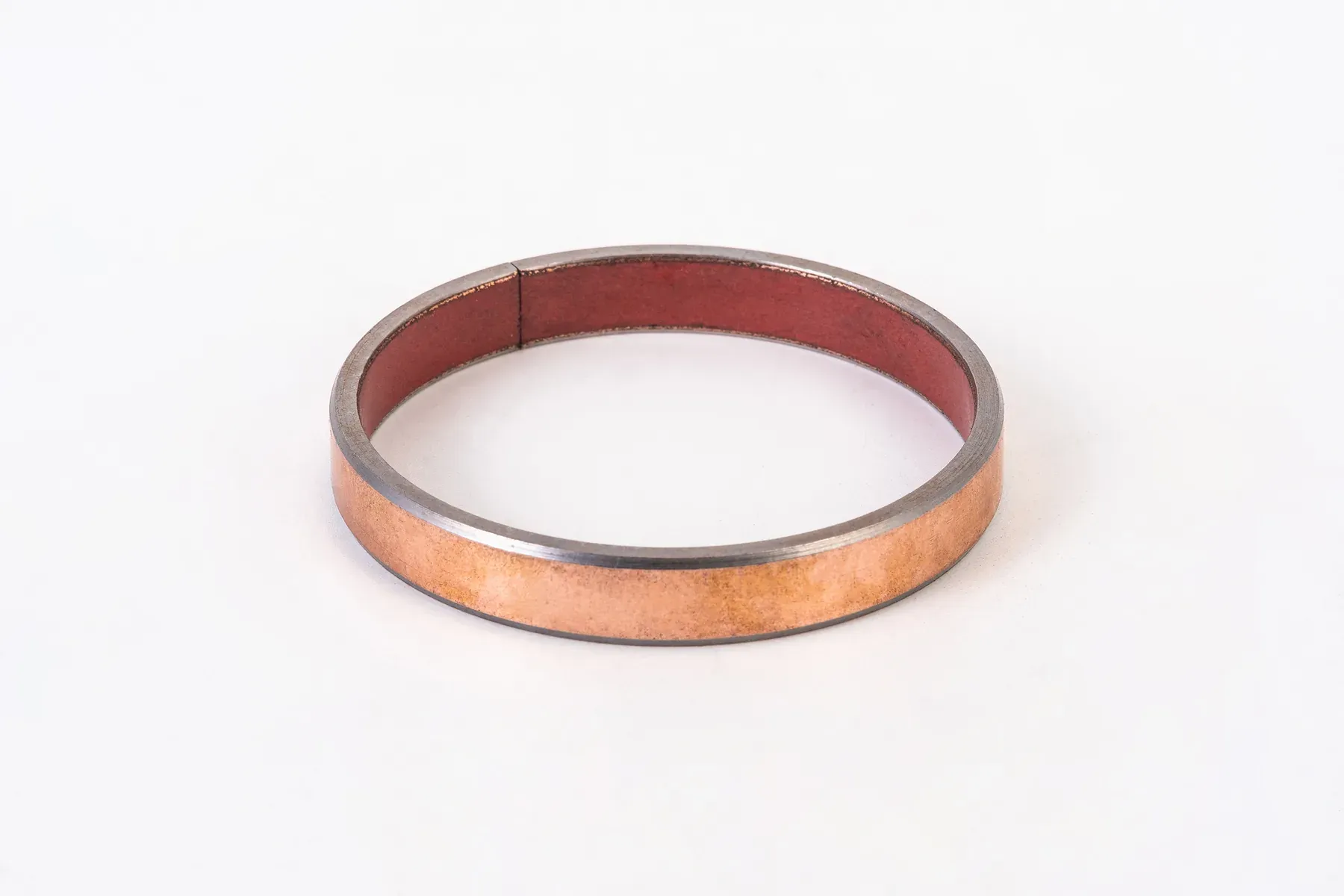
JBM-1T / 1D · pump and cylinder
Gear-pump and hydraulic-cylinder bushings run in the working fluid.
Fluid-lubricated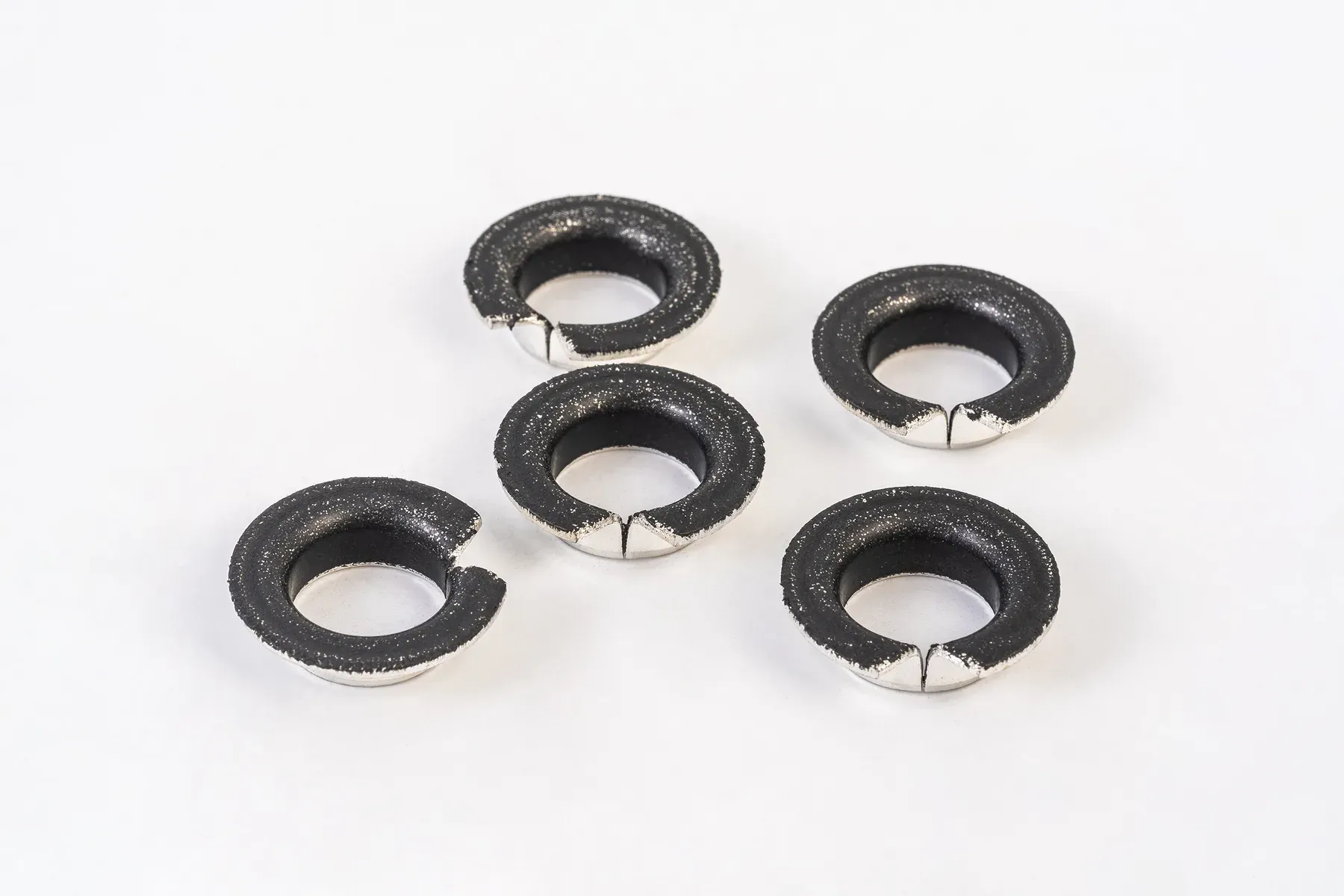
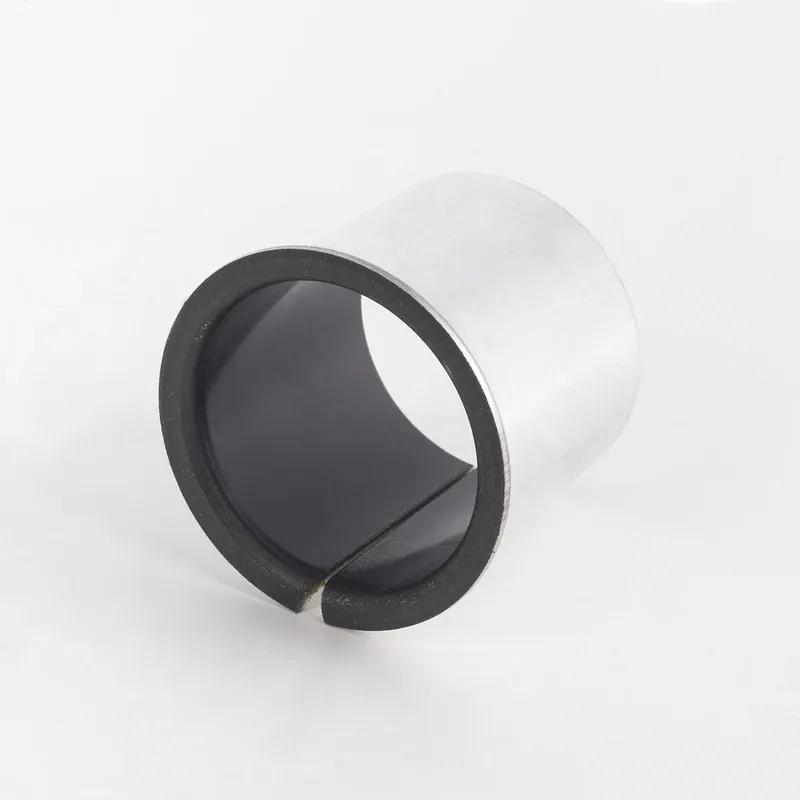
Flanged, washers, strip
JBM-10F flanged bushings, 10WC thrust washers and 10SP strip / plates.
Forms
Three layers and what each one does
The steel back gives the bushing its strength and its press fit and is plated against corrosion. The sintered porous bronze layer, a few tenths of a millimetre, is bonded to the steel and impregnated with the PTFE compound; it anchors the running layer mechanically and conducts frictional heat to the housing. The PTFE running layer with solid lubricants, a few hundredths of a millimetre on top of the bronze, is what the shaft runs on: during running-in it transfers a thin film to the shaft and thereafter the two PTFE surfaces slide on each other. Layer thicknesses are given on the drawing of each part.
Because the running layer is thin, the load path is short and stiff and the bushing carries far more than a solid plastic bushing of the same size. Because it is thin, it also cannot be re-machined: the bushing is finished to size before assembly and the bore reaches its running dimension when pressed into an H7 housing.
Performance limits
The values below are the JBM-10 main-series limits. Each is a separate limit: a bushing may run at the maximum static load or at the maximum speed, not both, and the PV product ties them together. Long-term dry service is designed to the lower PV figure; the higher figure is for intermittent operation.
| Parameter | Unit | JBM-10 |
|---|---|---|
| Maximum static load | N/mm² | 250 |
| Maximum load, low speed | N/mm² | 140 |
| Maximum load, rotating / oscillating | N/mm² | 60 |
| Maximum sliding speed, dry | m/s | 2 |
| Maximum sliding speed, liquid lubricated | m/s | > 3 |
| PV, long-term dry | N/mm²·m/s | 1.8 |
| PV, intermittent dry | N/mm²·m/s | 3.6 |
| Working temperature | °C | −195 to +280 |
| Coefficient of friction | — | 0.02–0.20 |
| Thermal conductivity | W/(m·K) | 42 |
| Linear thermal expansion | K⁻¹ | 11 × 10⁻⁶ |
Main-series reference values; they are not simultaneously achievable and do not automatically apply to every variant or custom size.
Shaft, housing and fits
The running layer is thin, so the shaft finish matters more than for any bronze bushing. The general recommendation for DU-type bushings is a steel shaft, hardened where the load allows, ground to about Ra 0.2–0.4 µm: a rougher shaft abrades the PTFE film, a much smoother one does not hold it. Hard chrome and stainless steel work well; avoid soft, rough or corroding shafts. The shaft specification is confirmed with the quotation.
Sleeves are supplied to the ISO 3547 dimension series: outside diameter oversize for a press fit in an H7 housing, bore closing to the running clearance after pressing. For high temperature the thermal growth of housing and shaft is added to the clearance. Seal the bushing against abrasive dust: grit embedded in PTFE cuts the shaft.
Dry, or lubricated by the working fluid
JBM-10 is designed to run dry and gains nothing from grease in normal service; grease can even hold dirt against the running layer. Where the bushing sits in a fluid anyway, as in gear pumps and hydraulic cylinders, the fluid lubricates and cools it and the speed limit rises above 3 m/s. The pump variant JBM-1T and cylinder variant JBM-1D are the standard bushing with the backing and finish chosen for that fluid.
Sizes and forms
Cylindrical sleeves, flanged bushings (10F), thrust washers (10WC) and strip or plates (10SP) follow the ISO 3547 metric series; inch sizes and special forms are made to drawing. The strip is wrapped, so a new diameter is a tooling question, not a machining one: standard sizes are quick, specials need a batch.
The PTFE bushing size chart lists the metric series with wall thickness and installed clearance.
What to put in the enquiry
Six items let us quote within 12 hours.
Dimensions
Shaft diameter, housing bore and length, or the ISO 3547 reference, or the drawing.
Load and motion
Radial and axial force; rotating, oscillating or linear; speed or frequency; duty cycle.
Environment
Temperature, dust, water, chemicals, fluid the bushing runs in.
Shaft
Material, hardness, finish and plating.
Backing
Steel, bronze or stainless; lead-free requirement if any.
Quantity
Sample, batch and annual quantity. Samples are free; no minimum order.
Where PTFE composite bushings are used
Maintenance-free pivots and slides at low to moderate speed in every industry.

Frequently asked questions
What is a PTFE bushing?
A steel-backed plain bearing with a PTFE running layer bonded through a porous bronze interlayer. It is the DU-type or metal-polymer bushing: maintenance-free, dry running, 250 N/mm² static load, −195 to +280 °C.
Do PTFE bushings need lubrication?
No. The PTFE layer transfers a film to the shaft and runs dry. In pumps and cylinders the working fluid lubricates them and raises the speed limit. Grease is not needed and can trap dirt.
How fast can a PTFE composite bushing run?
2 m/s dry and more than 3 m/s with liquid lubrication, subject to the PV limit of 1.8 N/mm²·m/s for long-term dry service.
PTFE composite or POM composite (DX-type)?
PTFE composite for dry running, high and low temperature and speed. POM composite (JBM-20) for higher PV with grease, better tolerance of dirt and edge loading, but only to 130 °C and only with initial grease.
Can the bore be machined after pressing?
No. The running layer is a few hundredths of a millimetre thick. The bushing is finished to size and the bore takes its running dimension when pressed into an H7 housing; size the housing correctly instead.
Are lead-free PTFE bushings available?
Yes. Lead-free running layers are available and are standard on the bronze-backed JBM-1B and stainless-backed JBM-1S. State the requirement on the enquiry so the material declaration matches.
Send the shaft, the housing and the duty.
Our engineers confirm the variant and fits and quote within 12 hours. Samples are free and there is no minimum order.