
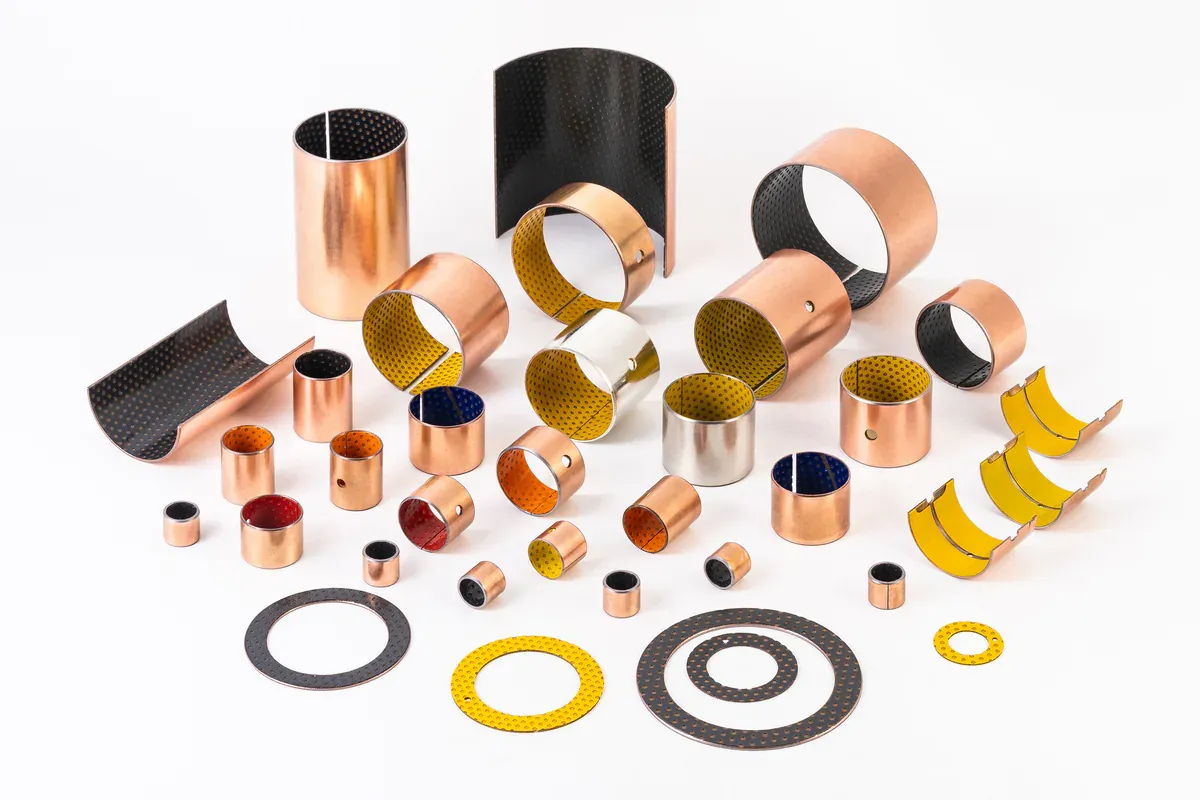
Plastic bushings
Solid polymer sleeves and flanged bushings for light loads where corrosion, noise, weight or cost rule out metal: nylon for toughness, POM for dimensional stability and low friction, UHMWPE for abrasion and impact, PTFE for chemical resistance and the lowest friction. Machined from bar and tube or moulded for volume, to your drawing.
- 4Polymer groups
- ≈ 5–10 N/mm²Typical load (dry)
- 0Corrosion
- To drawingSizes
A plastic bushing is a plain bearing made entirely of polymer, without a metal back. It runs dry or with light grease, does not corrode, damps vibration and noise, and is cheap in volume; in return it carries a small fraction of the load of a metal-polymer composite, creeps under sustained load, expands about ten times more than steel with temperature, and insulates the shaft from the housing so heat cannot escape.
- JBM-31 POM (acetal): stiff, dimensionally stable, low moisture uptake, μ ≈ 0.2 dry; to ≈ 100 °C
- JBM-32 nylon PA6 / PA66 (JBM-32-O oil-filled): tough, impact resistant, absorbs moisture and swells; to ≈ 100 °C
- JBM-33 UHMWPE: best abrasion and impact resistance, food safe, μ ≈ 0.15; to ≈ 80 °C
- JBM-34 PTFE (filled): lowest friction and widest chemical resistance, but creeps; to ≈ 260 °C at very low load
- Typical duty: specific load below about 5–10 N/mm², PV below about 0.1–0.3 N/mm²·m/s dry; sizes to drawing
Four polymers
Each polymer has one property that makes it the choice; the table in the next section gives the numbers.
POM (acetal) bushings
JBM-31. Stable, precise, low friction dry; the default solid plastic bearing.
JBM-31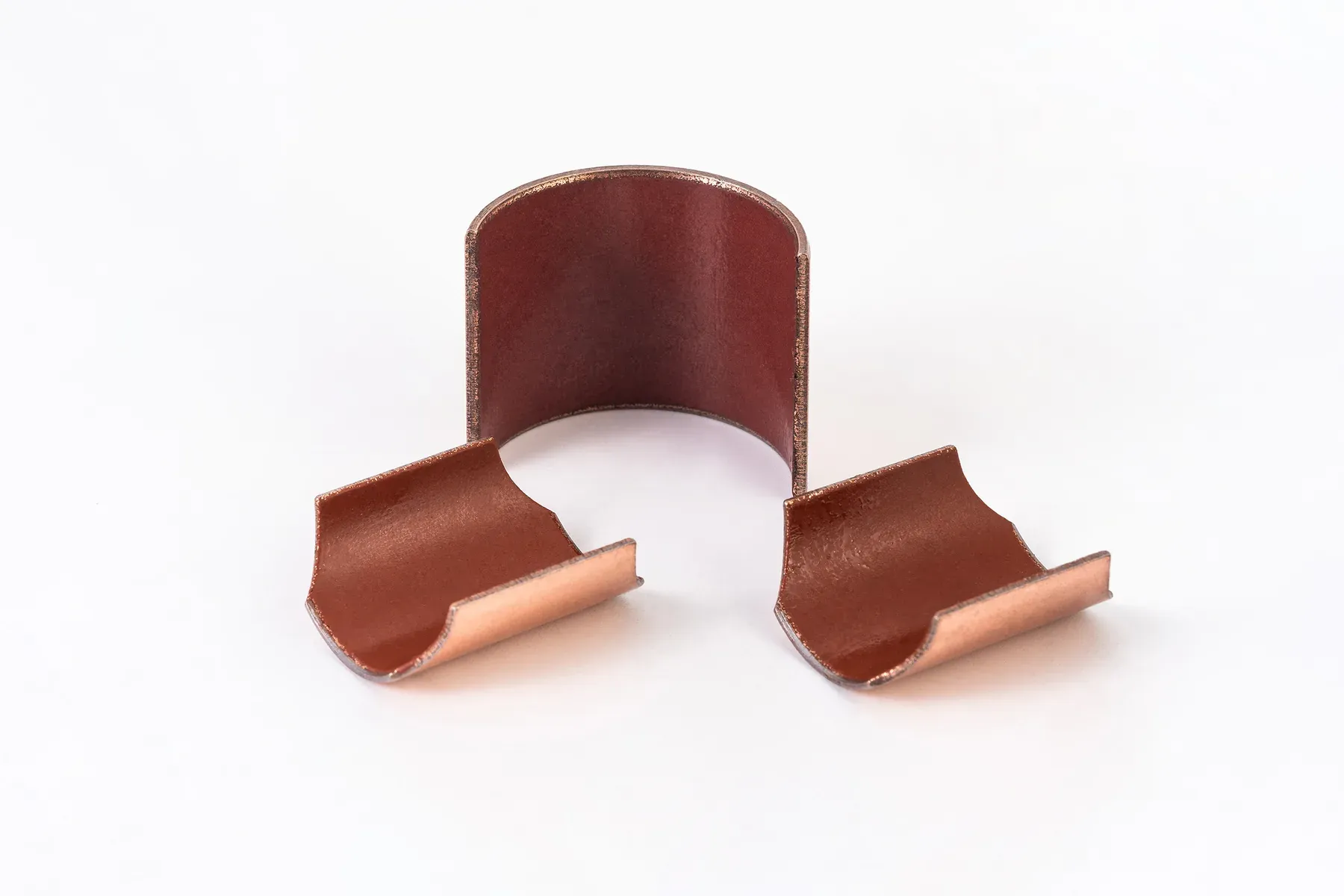
Nylon (PA) bushings
JBM-32; JBM-32-O oil-filled for lower friction. Toughest under shock. Swells in water: allow clearance.
JBM-32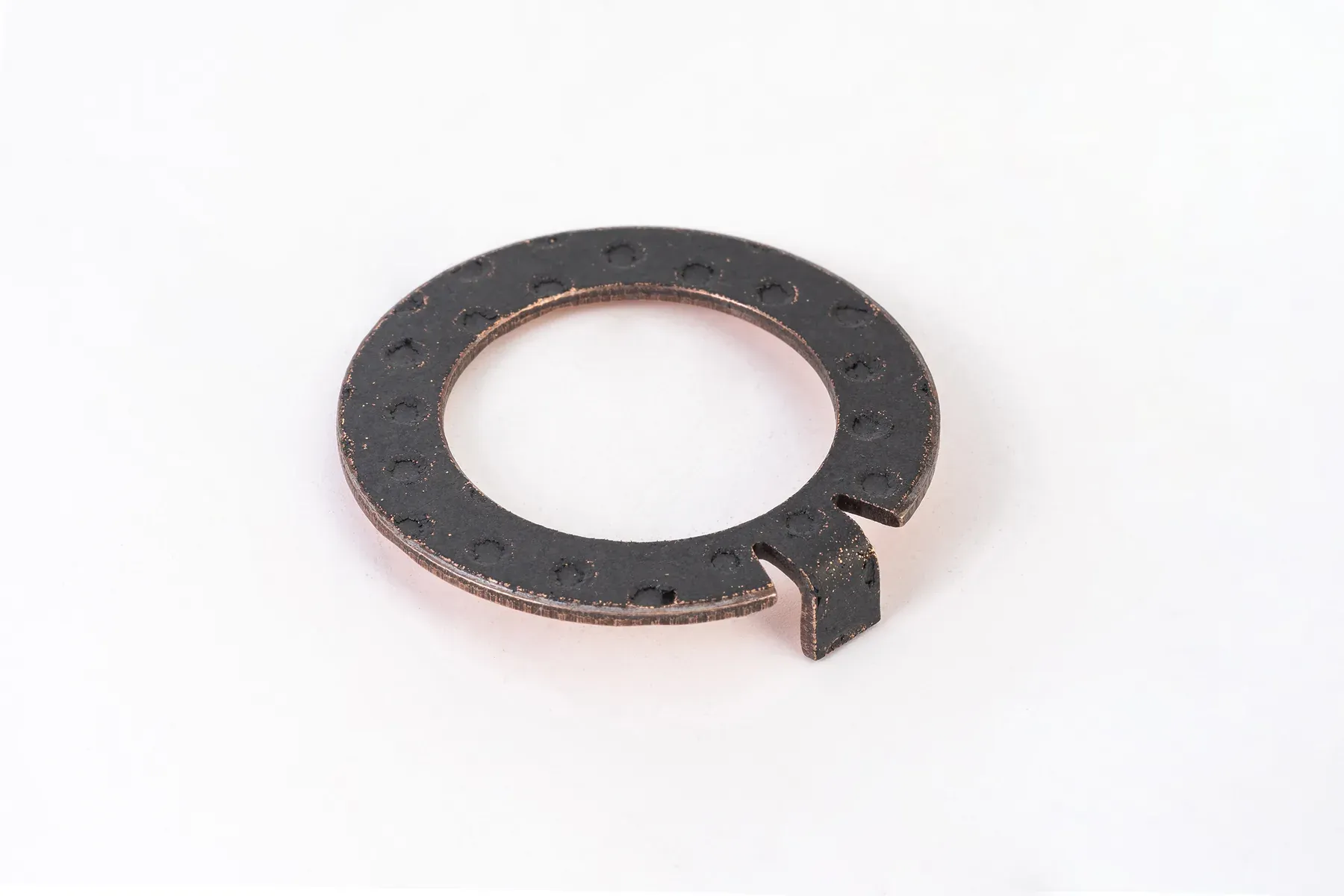
UHMWPE bushings
JBM-33. Abrasion and impact resistance, food contact; low stiffness and temperature.
JBM-33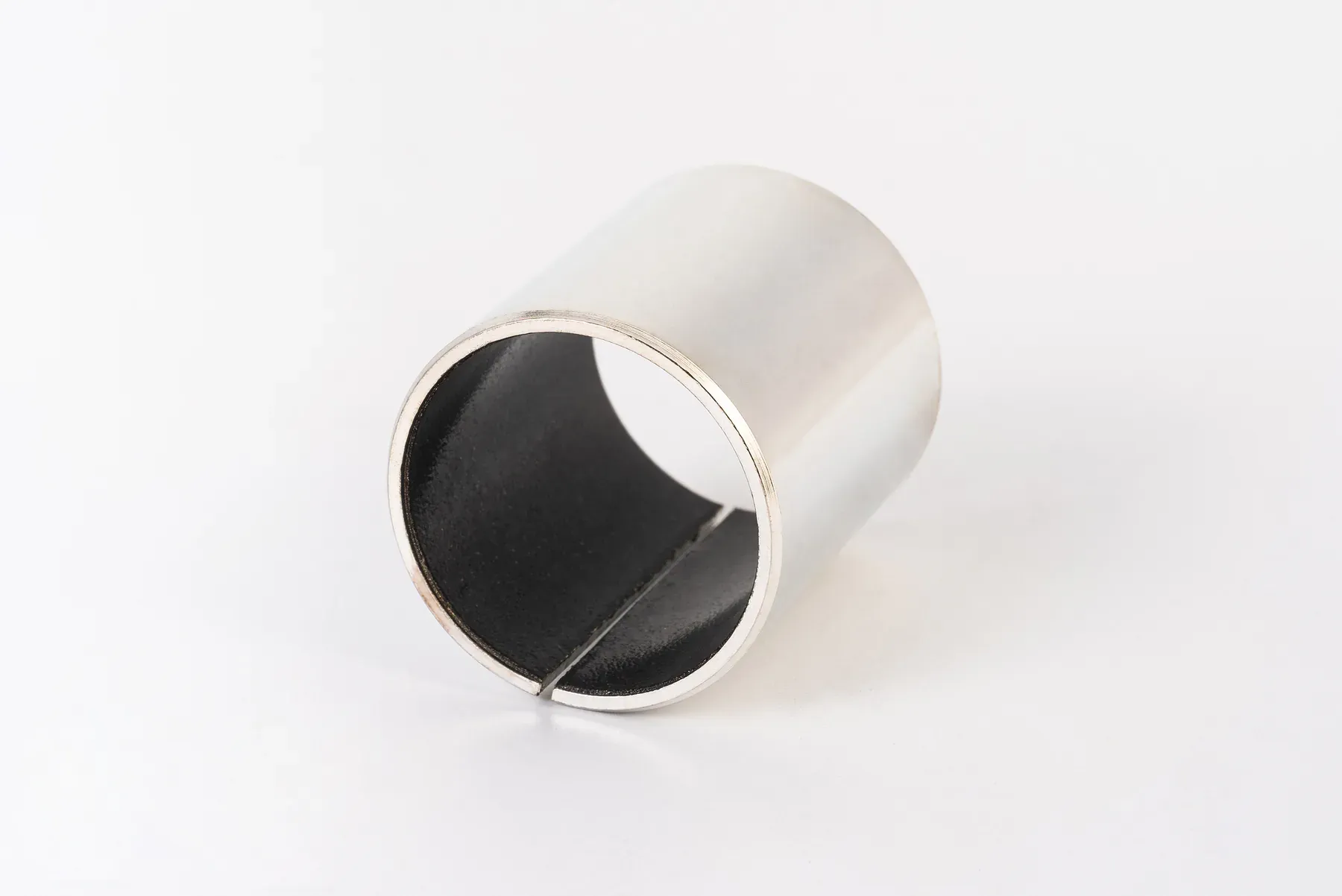
PTFE bushings
JBM-34. Lowest friction, chemically inert; only for very light loads because it creeps.
JBM-34
Materials compared
Published typical values for unfilled or standard bearing grades; filled grades (glass, MoS₂, oil, PTFE) shift them. Load and PV are conservative dry-running guides, not ratings of a specific part.
| JBM series | Polymer | μ dry vs steel | Load guide | PV guide (dry) | Max. temperature | Moisture | Strength |
|---|---|---|---|---|---|---|---|
| JBM-31 | POM (acetal) | 0.15–0.3 | ≈ 10 N/mm² | ≈ 0.1–0.15 N/mm²·m/s | ≈ 100 °C | Low | Stiff, stable |
| JBM-32 | Nylon PA6 / PA66 | 0.2–0.4 | ≈ 10 N/mm² | ≈ 0.1–0.15 | ≈ 100 °C | Absorbs up to 3 %, swells | Tough, good impact |
| JBM-32-O | Nylon, oil-filled | 0.15–0.25 | ≈ 10 N/mm² | ≈ 0.2 | ≈ 100 °C | Absorbs, less | Tough |
| JBM-33 | UHMWPE | 0.1–0.2 | ≈ 5 N/mm² | ≈ 0.1 | ≈ 80 °C | None | Impact, abrasion; low stiffness |
| JBM-34 | PTFE, filled | 0.05–0.1 | ≈ 2–5 N/mm² | ≈ 0.1–0.3 | ≈ 260 °C | None | Creeps |
| JBM-20 | For comparison: POM composite (steel back) | 0.05–0.25 | 250 N/mm² static | 2.8 dry / 22 oiled | 130 °C | None | Steel back |
Typical literature values for the polymer class. The last row shows why a steel back changes the picture. Part number: series + bore-OD-length in mm, e.g. JBM-31 20-25-20; suffix F for flanged, WC for thrust washers.
When a solid plastic bushing is right
Light load, low speed, and one of: a corrosive or wet environment (washdown, marine, food, chemical), a requirement for silence or vibration damping, electrical insulation, very low weight, or a very low unit cost in high volume. Typical positions are conveyor rollers, guide rails, food-machinery pivots, garden and leisure equipment, furniture and door hardware, and light linkages.
When the load or speed climbs, a metal-polymer composite bushing gives the same running surface (POM or PTFE) on a steel back that carries 25 times the load, holds its dimensions and conducts heat away; the plastic bushing then becomes the wrong tool. Bushing MFG supplies both and recommends the crossing point for each enquiry.
Design rules
Allow for expansion: polymers grow 5–10 times more than steel with temperature and nylon also swells with moisture, so running clearances are several times those of a bronze bushing and the press fit is calculated for the temperature range. Keep the wall thin so heat can escape and creep is small; 1–3 mm walls are normal. Use a smooth shaft (Ra 0.4–0.8 µm); plastics do not embed grit and a rough shaft abrades them. Avoid sustained high static load, which causes cold flow, and ultraviolet exposure for nylon and POM unless stabilised.
Sizes and manufacture
Plastic bushings are machined from extruded bar and tube for small quantities and any size, or injection moulded where the volume pays for a tool. Sleeves, flanged bushings, thrust washers and special shapes are made to drawing; there is no standard size series. The part number is the polymer series followed by bore-OD-length in millimetres (JBM-31 20-25-20 is a Ø20 × Ø25 × 20 mm POM sleeve; JBM-31F flanged, JBM-31WC thrust washer). State the polymer or the duty, the temperature range, the shaft and the quantity.
Where plastic bushings are used
Light, wet, quiet or cheap: food and packaging machinery, conveyors, furniture, leisure equipment, light linkages.


Frequently asked questions
Which plastic is best for bushings?
POM (acetal) for most dry, light-load pivots: stable, low friction, precise. Nylon where impact matters, UHMWPE for abrasion and food contact, PTFE for chemicals and the lowest friction at very light load.
How much load can a plastic bushing carry?
Roughly 5–10 N/mm² of projected area dry for nylon and POM, less for UHMWPE and PTFE, with PV below about 0.1–0.3 N/mm²·m/s. A steel-backed POM or PTFE composite carries 250 N/mm² static.
Why should I replace a plastic bushing with a composite one?
When it creeps, wears fast, runs hot or loses its fit with temperature. The composite keeps the same polymer surface on a steel back that holds dimensions, carries the load and conducts the heat away.
Do plastic bushings need lubrication?
No; they run dry. A light grease reduces friction and wear where it is acceptable, and oil-filled nylon carries its own.
Do you make nylon bushings to drawing?
Yes: nylon (JBM-32), POM (JBM-31), UHMWPE (JBM-33) and PTFE (JBM-34) bushings machined from bar or tube in any size, or moulded for volume. Send the drawing, the duty and the quantity.
Send the drawing and the environment.
We confirm the polymer, or propose a composite where the load calls for it, and quote within 12 hours. Samples are free.