
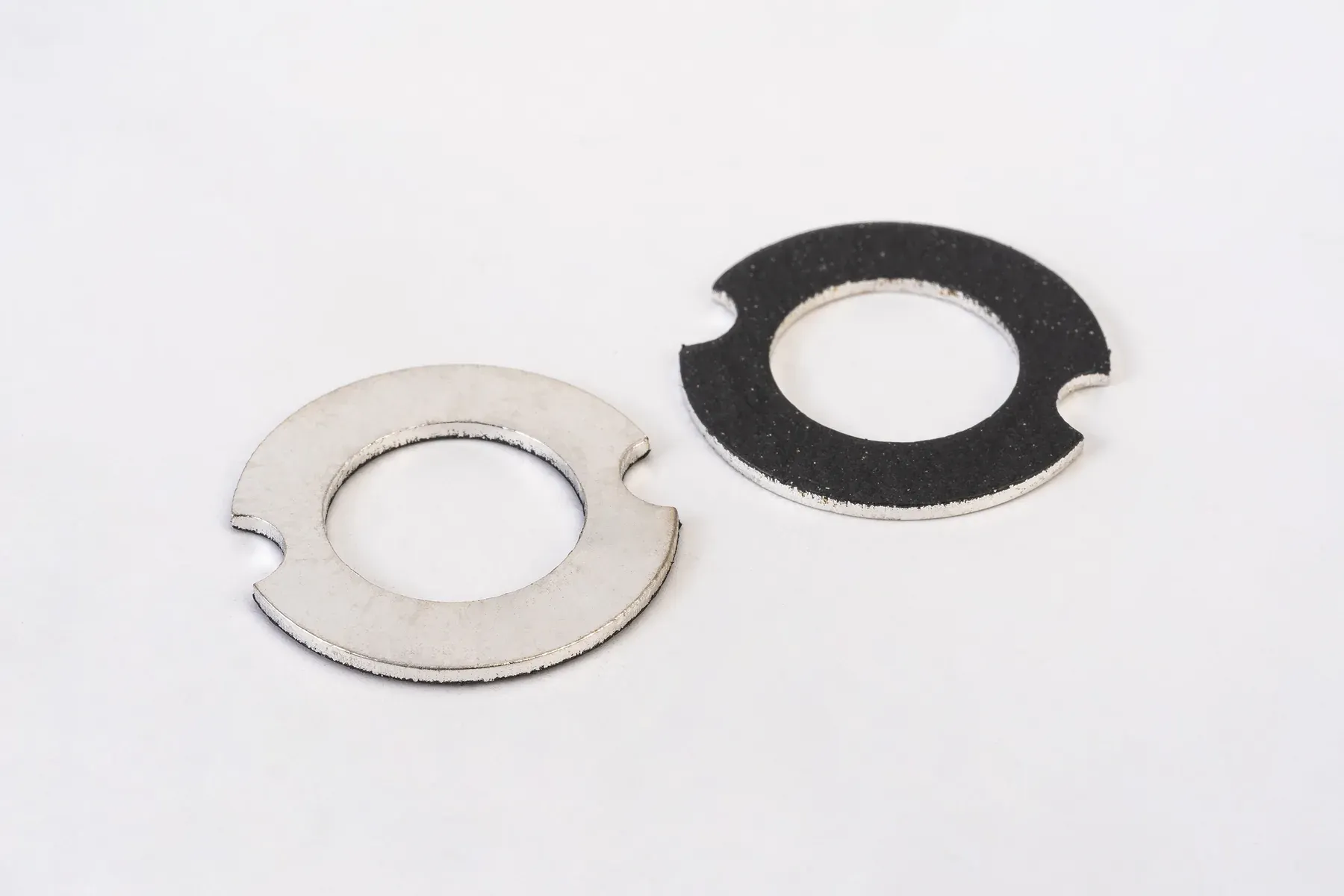
Thrust washers
A thrust washer is a flat plain bearing: a ring that carries the axial load of a shaft against a housing face while the shaft turns or oscillates. Bushing MFG makes them in every bearing material it makes bushings in, plain or with grooves, oil holes, tabs and bolt holes, from small stamped washers to large machined rings.
- 6Materials
- 250 N/mm²Static load, composite
- Ø3–1000 mmMachined bronze range
- 12 hQuotation
Thrust washers carry axial (thrust) load on a flat sliding face; a sleeve bushing carries radial load on a cylindrical one. The two are normally used together: the bushing locates the shaft radially and the washer takes the sideways push. A thrust washer is specified by inside diameter × outside diameter × thickness, plus grooves, tabs and holes.
- Cast bronze C93200 and alloys: machined, greased or oiled, 45 N/mm² static
- Wrapped CuSn8 bronze: stamped from pocketed strip, 120 N/mm² static
- Bimetal (JBM-800): steel back with sintered bronze face for oil-lubricated gearbox and engine thrust faces
- PTFE composite (JBM-10WC) and POM composite (JBM-20WC): maintenance-free, 250 N/mm² static
- Graphite-plugged bronze: plugs in the face, for dry, hot or wet slewing tables and hinges, shaft 10–120 mm standard
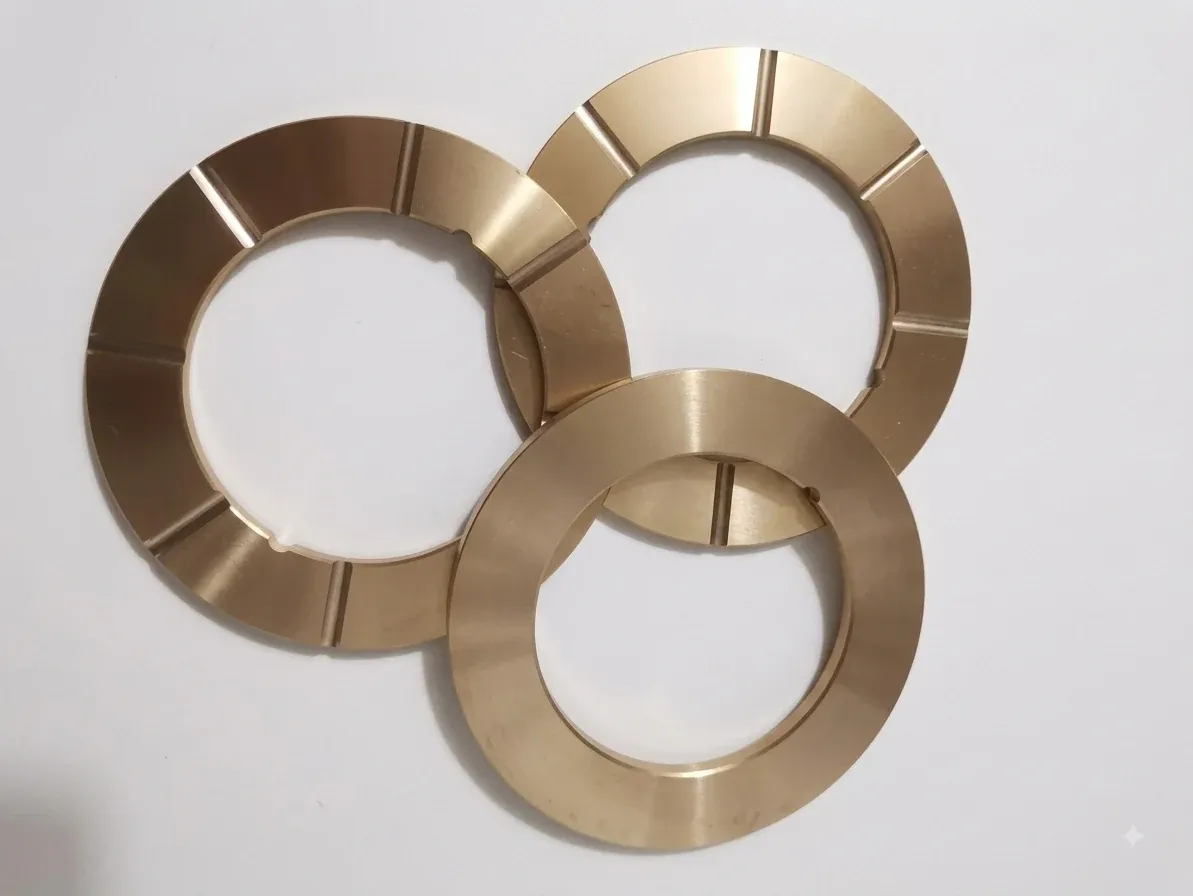
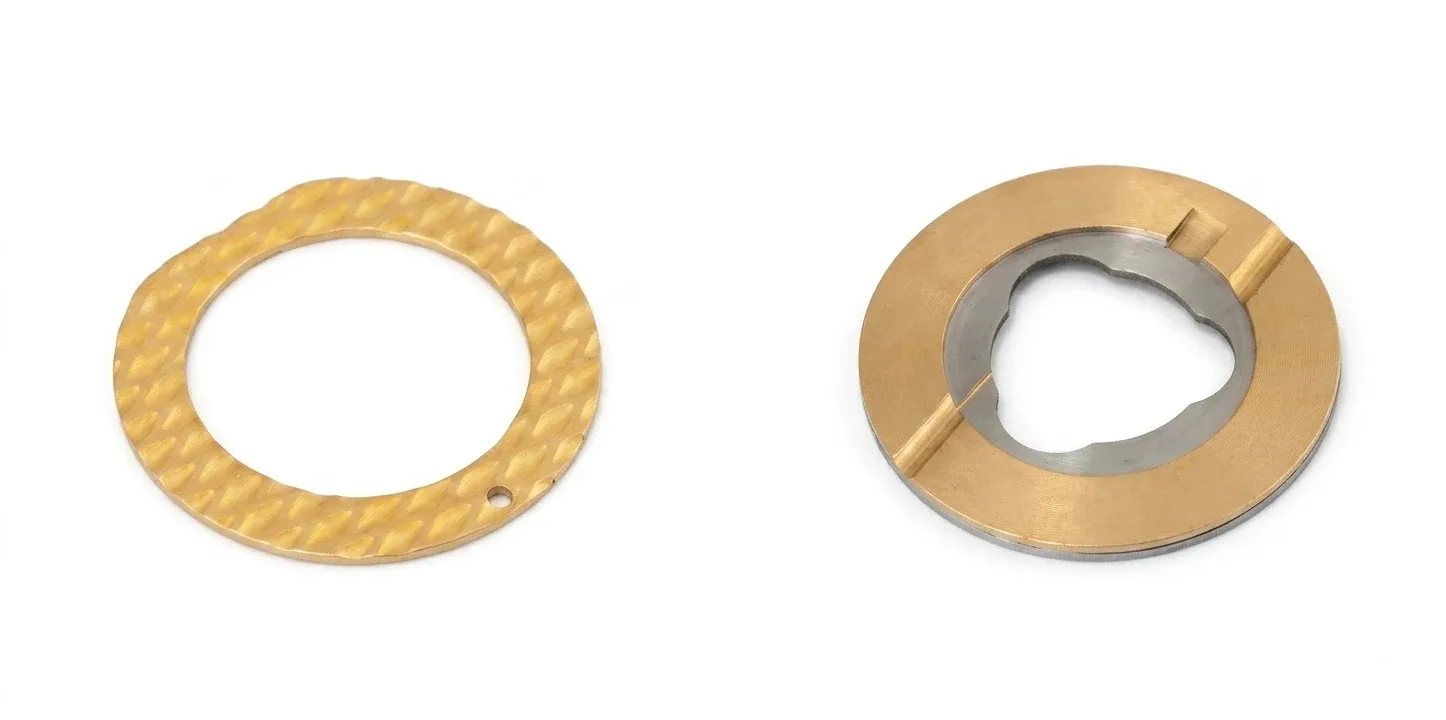
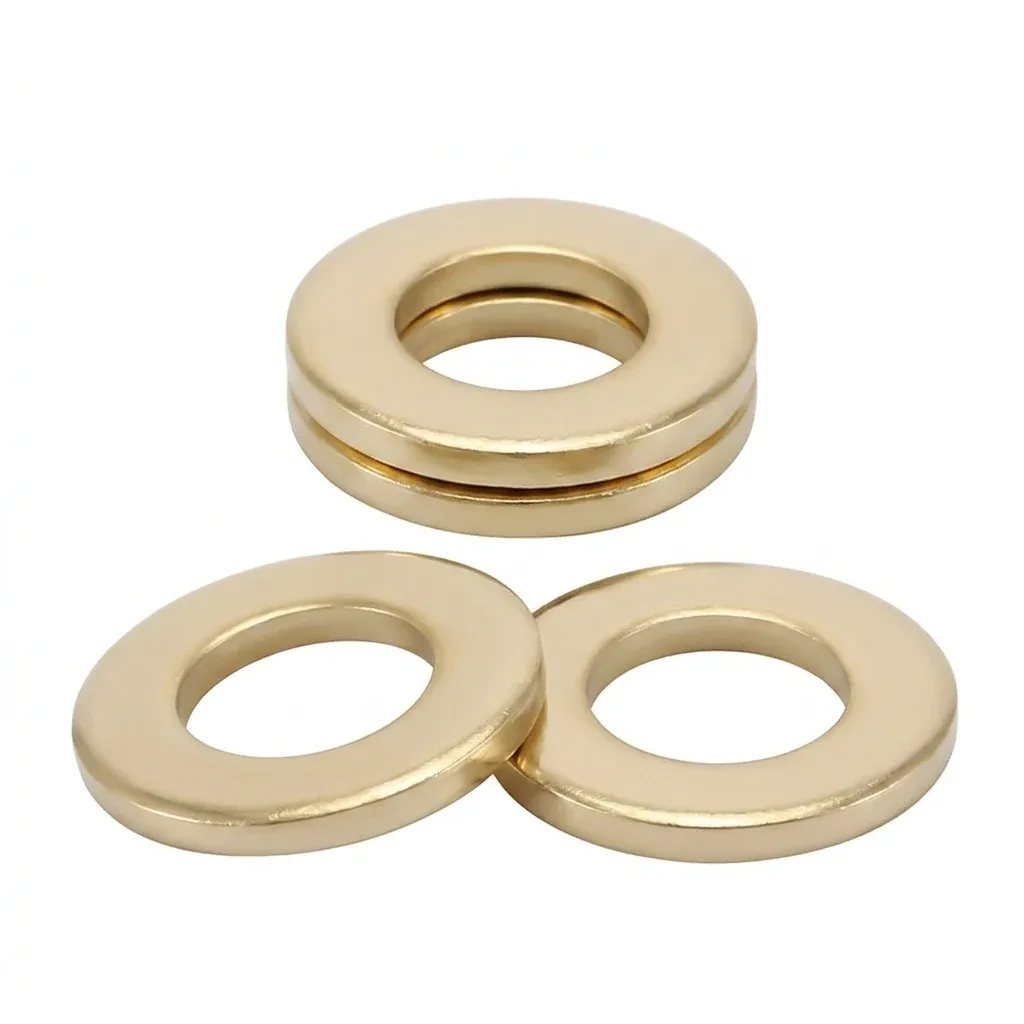
Thrust washers by material
The face material follows the same logic as the bushing beside it: lubricated bronze and bimetal for load, composite and graphite types for no maintenance.
Cast bronze
Machined from bar or plate in any size; grooves and oil holes to drawing. Greased or oiled.
Any size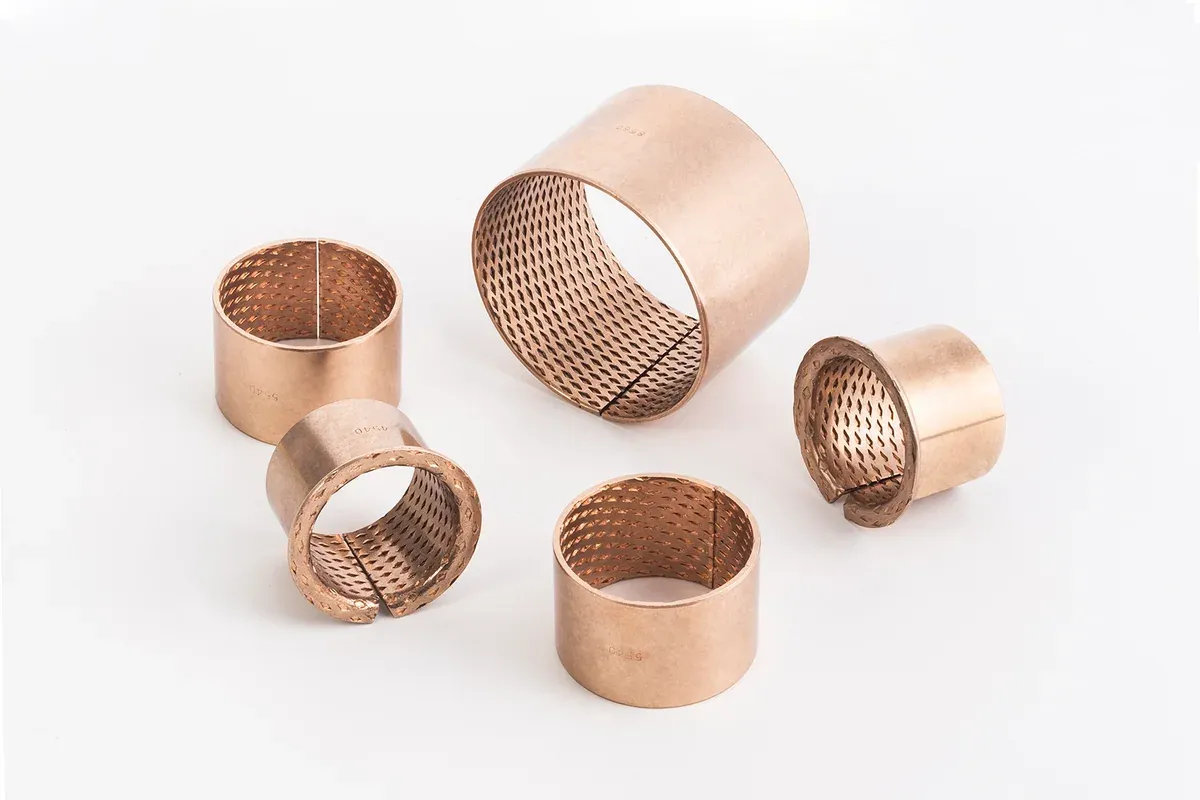
Wrapped bronze
Stamped from CuSn8 strip with lubricant pockets; economical in volume.
VolumeBimetal
Steel back, CuPb10Sn10 face; oil-lubricated gearbox, differential and pump thrust faces.
OilPTFE composite
Dry running, −195 to +280 °C, 250 N/mm² static; often with tabs to stop rotation.
Dry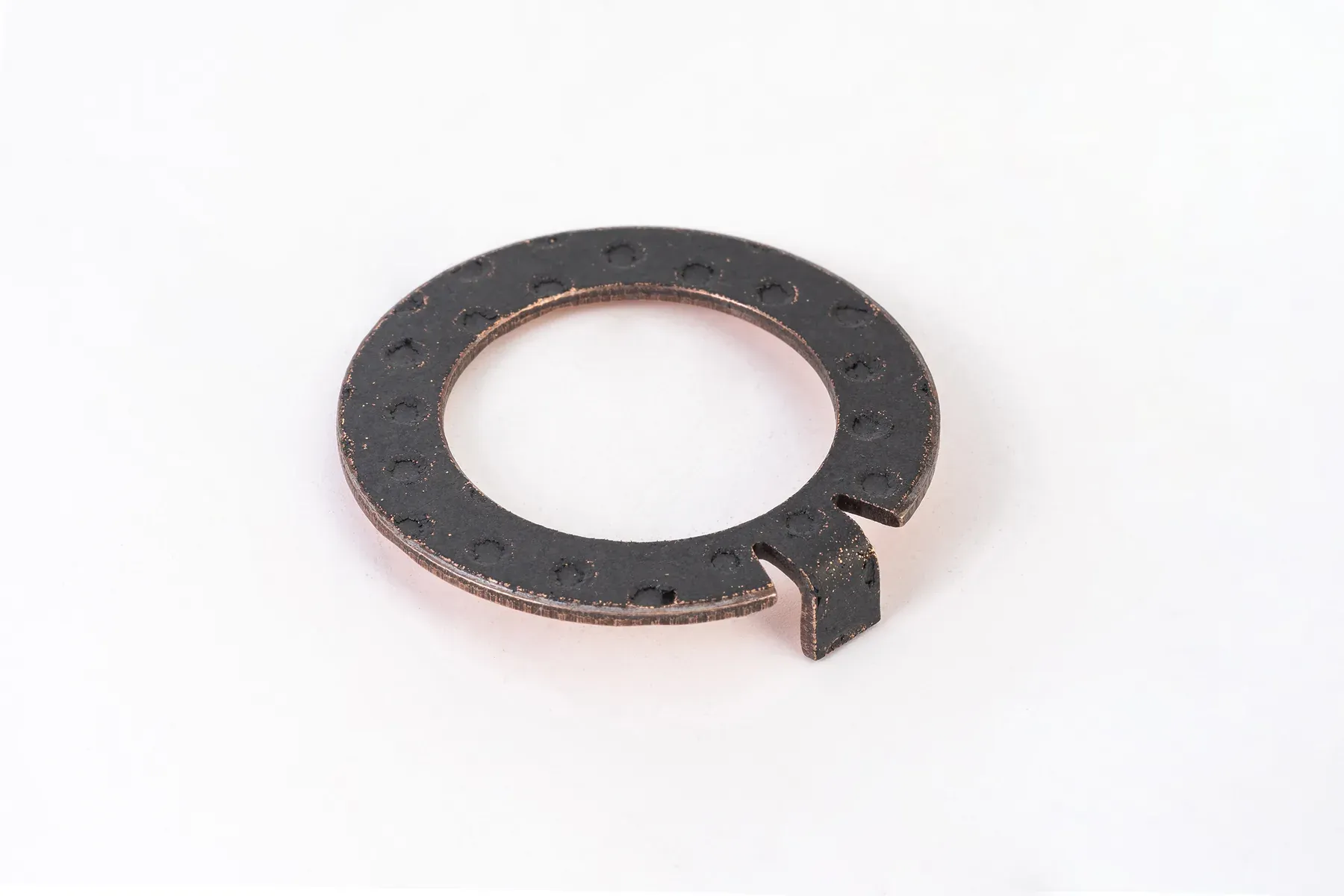
POM composite
Greased at assembly; higher PV and edge-load tolerance below 130 °C.
Greased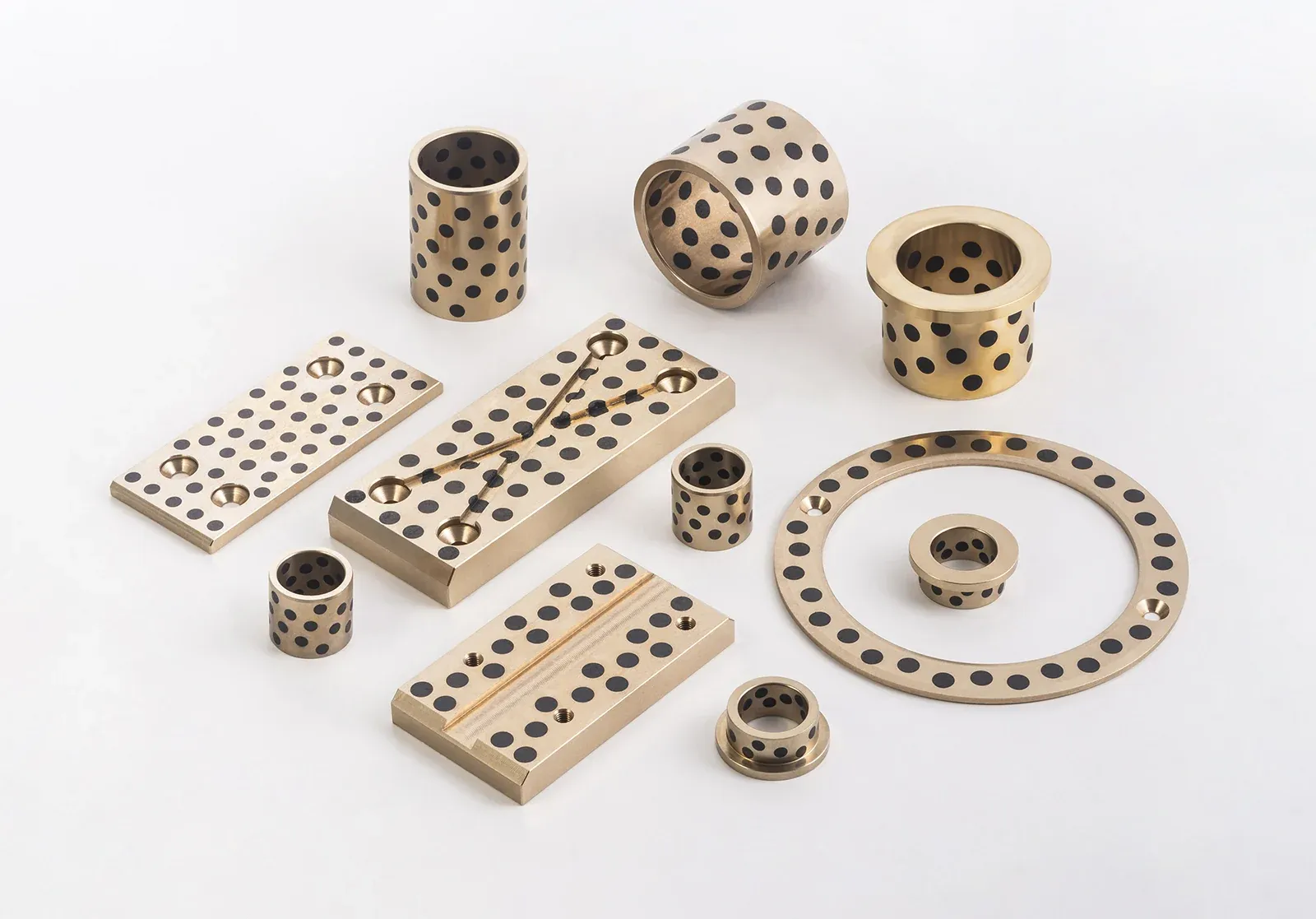
Graphite-plugged bronze
Solid-lubricant plugs in the face; slewing tables, gate hinges, turntables.
Dry · hot
Sizing a thrust washer
The specific load is the axial force divided by the annular face area, π/4 × (OD² − ID²) less any grooves, and is compared with the static or dynamic rating of the material: 45 N/mm² greased cast bronze, 120 N/mm² wrapped CuSn8, 150 N/mm² dynamic bimetal in oil, 250 N/mm² static composite. The sliding speed is taken at the mean diameter, and the PV product at that diameter is checked against the material limit in the same way as for a bushing.
Unlike a bushing, a washer has no wedge geometry to build an oil film unless it is grooved or tapered, so most washers run in boundary lubrication and are rated at the lower, boundary figures. Radial grooves across the face feed lubricant inward and outward; a washer with several grooves carries less load per unit area but runs cooler.
| Material | Static load | Speed | Temperature | Lubrication |
|---|---|---|---|---|
| Cast bronze C93200 | 45 N/mm² (25 moving) | 0.5 m/s greased | −40 to +250 °C | Grease or oil |
| Wrapped CuSn8 | 120 N/mm² (40 dynamic) | 2 m/s lubricated | −100 to +200 °C | Grease in pockets |
| Bimetal CuPb10Sn10 | 150 N/mm² dynamic | 3.5 m/s grease · 8 m/s oil | To 250 °C in oil | Grease or oil |
| PTFE composite | 250 N/mm² (60 rotating) | 2 m/s dry | −195 to +280 °C | None |
| POM composite | 250 N/mm² (140 dynamic) | 2.5 m/s oiled | −40 to +130 °C | Grease at assembly |
| Graphite-plugged bronze | 50–100 N/mm² | 0.5 m/s dry | −40 to +400 °C | Plugs |
Published limits; separate values, not one operating point.
Grooves, tabs, holes and location
A washer must not rotate with the shaft, or it wears the housing instead of the shaft collar. Machined washers are located by a dowel or by bolt holes; stamped composite and bimetal washers by one or two bent tabs that engage a slot in the housing; large graphite-plugged washers by counterbored bolt holes on a pitch circle. Lubrication grooves are radial, spiral or figure-eight, fed from an oil hole in the housing or from the bushing bore next to the washer. Chamfer or radius the inner edge so it does not scrape the shaft fillet.
Sizes
Machined bronze and graphite-plugged washers are made to drawing from Ø3 to Ø1000 mm outside diameter; thickness from about 1.5 mm upward, with a thickness tolerance to suit the axial float of the assembly. Stamped wrapped-bronze, bimetal, PTFE and POM composite washers follow the ISO 3547 washer series and the JBM catalogue forms (10WC, 20WC) and are made to drawing where volume justifies tooling.
State the axial clearance you need across the assembly; thickness tolerance is set from it.
What to put in the enquiry
Inside diameter × outside diameter × thickness with thickness tolerance, axial load and whether it is continuous or occasional, rotating speed, lubrication, location method (tabs, holes, dowel), material or duty, and quantity. Samples are free; there is no minimum order.
Where thrust washers are used
Beside almost every bushing that sees a sideways load.



Frequently asked questions
What is a thrust washer?
A flat ring of bearing material that carries the axial load of a rotating or oscillating shaft against a housing face. It is the axial counterpart of a sleeve bushing and is usually used beside one.
How do I size a thrust washer?
Divide the axial force by the annular face area (less grooves) and compare with the material rating; check the sliding speed at the mean diameter and the PV. Use the boundary-lubrication figures unless the washer is oil fed and grooved.
Bronze or composite thrust washer?
Bronze or bimetal where the face is greased or oiled and the load is high; PTFE or POM composite where no maintenance is possible; graphite-plugged bronze for slow, hot, wet or very heavy faces.
How is a thrust washer kept from spinning?
By tabs engaging a housing slot (stamped types), a dowel pin or bolt holes (machined types). A washer that spins wears the housing.
Can you make thrust washers to my drawing?
Yes, in any of the six materials, from Ø3 to Ø1000 mm in machined bronze and graphite bronze; stamped types where the volume justifies tooling.
Send the axial load and the washer envelope.
We confirm the material, grooves and location and quote within 12 hours. Samples are free and there is no minimum order.