
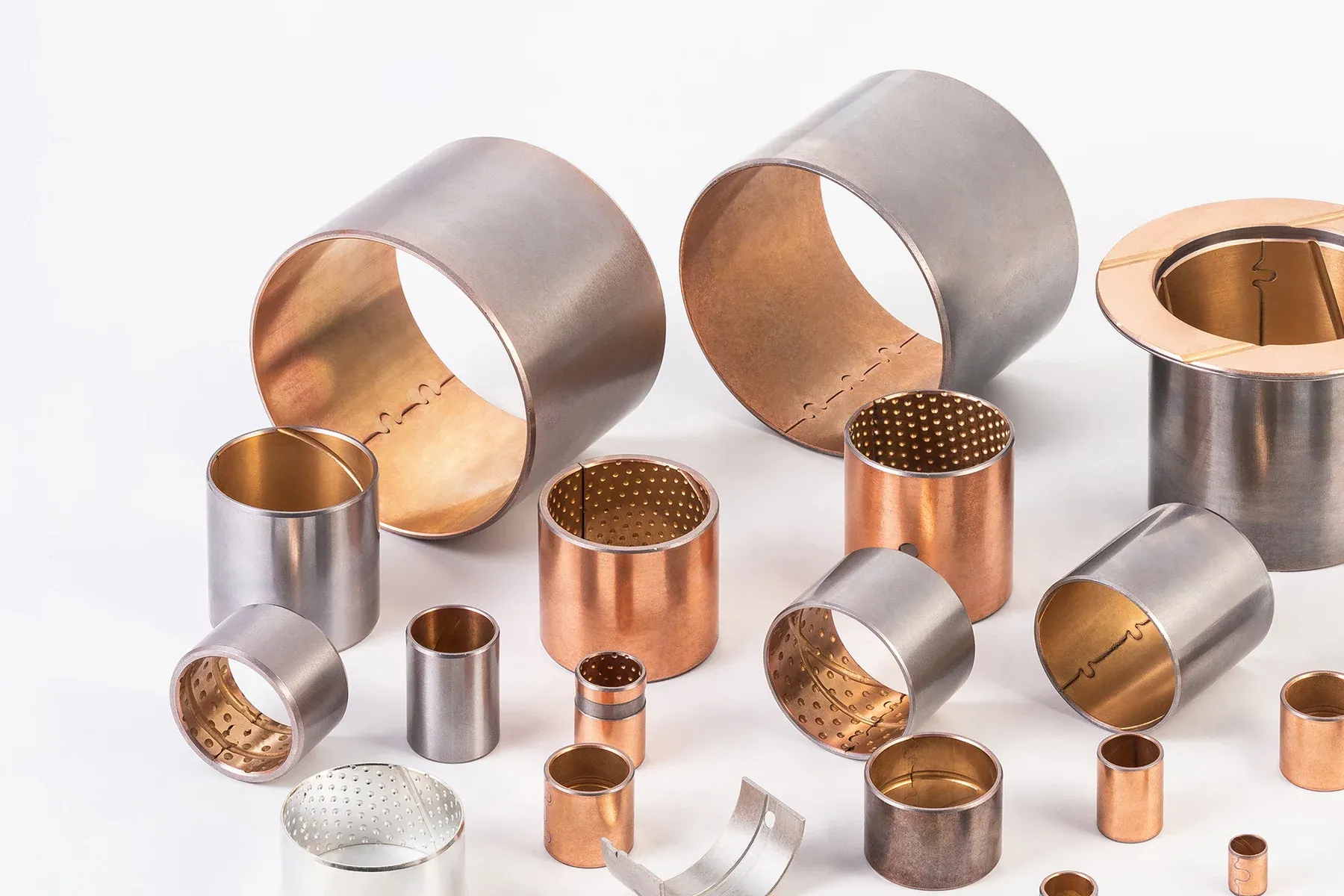
Bimetal bushings
A low-carbon steel back carrying a sintered copper-alloy or aluminium-tin bearing layer, wrapped into bushings and formed into thrust washers. The steel gives the strength and the press fit; the thin lining gives the bearing surface. Lubricated with grease or oil, bimetal bushings carry more load at more speed than any solid bronze sleeve of the same size.
- 150 N/mm²Dynamic load, JBM-800
- 3.5 m/sGreased
- 8 m/sOil lubricated
- 10–150 mmStandard shaft range
A bimetal bushing is a two-layer plain bearing: a steel backing strip onto which a bearing alloy is sintered and rolled, then blanked, wrapped and sized. The lining is a thin layer of leaded bronze, tin bronze or aluminium-tin; the steel back is the rest of the wall. Bushing MFG sinters and rolls the strip in its own plant.
- JBM-800 CuPb10Sn10 lining: 80–120 HB, 150 N/mm² dynamic load; the general-purpose grade (SAE 792/797, JF-800 enquiry terminology)
- JBM-810 CuPb24Sn4 (soft, anti-seizure), JBM-820 CuPb6Sn6Zn3, JBM-830 CuSn10, JBM-840 CuSn6.5P, JBM-850 AlSn20Cu
- Grease: 2.5–3.5 m/s, PV 2.8 N/mm²·m/s, to 150 °C · Oil: 5–15 m/s, PV 10 N/mm²·m/s, to 250 °C
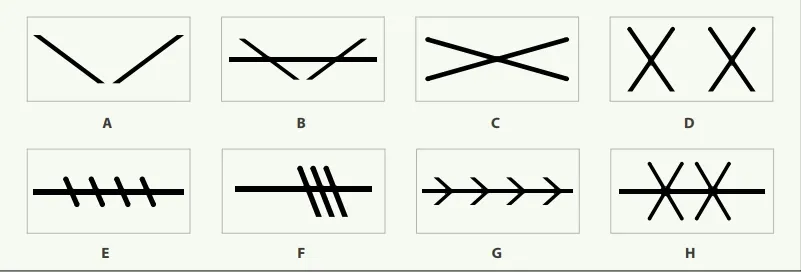
- Smooth bore, lubricant pockets or oil grooves; straight or interlocking butt joint
- Standard wrapped bushings 10–150 mm shaft; flanged bushings, thrust washers and sizes to drawing
Six linings
The steel back is common to the range; the lining is chosen for load, speed, shaft finish and the debris in the oil.
JBM-800 · CuPb10Sn10
Hard, fatigue-resistant, corrosion-resistant. The default for engines, transmissions, cylinders and pivots.
150 N/mm²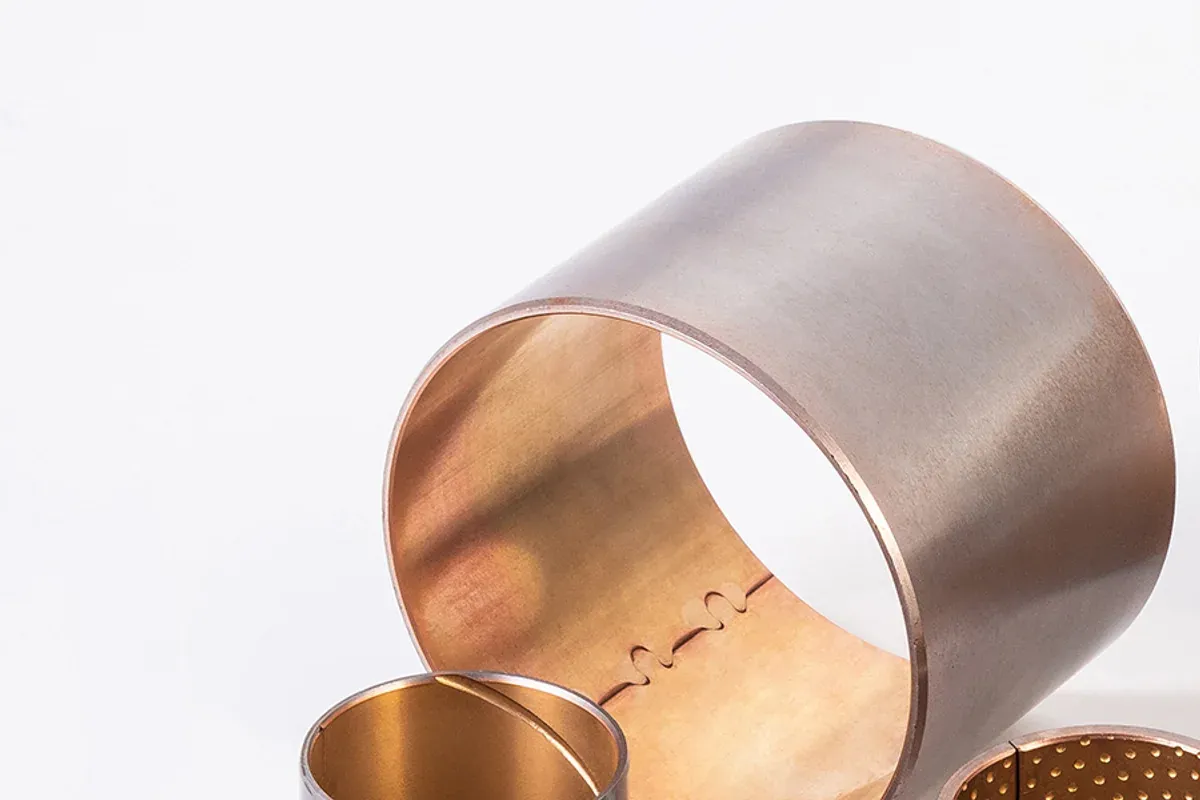
JBM-810 · CuPb24Sn4
Soft, high-lead lining: best anti-seizure and embeddability, 10 m/s in oil.
Anti-seizureJBM-820 · CuPb6Sn6Zn3
Medium-hard leaded bronze for general industrial duty.
130 N/mm²JBM-830 · CuSn10
Tin bronze lining without lead for programmes with material restrictions.
Tin bronzeJBM-840 · CuSn6.5P
Phosphor bronze lining for oil-lubricated moderate loads.
Phosphor bronzeJBM-850 · AlSn20Cu
Aluminium-tin lining for the highest speed, 15 m/s in oil, at 100 N/mm².
15 m/s
Steel back, sintered lining
The strip starts as low-carbon steel. Bearing-alloy powder is spread on it, sintered, rolled to density and sintered again, so the lining is metallurgically bonded and porous enough to hold oil. The strip is then blanked, wrapped into a bushing with a straight or interlocking butt joint, sized on the outside diameter and, if required, embossed with lubricant pockets or machined with oil grooves and holes. Bushing MFG sinters and rolls the bimetal strip in-house rather than buying finished strip.
Compared with a solid bronze sleeve of the same wall, the bimetal bushing has a stiffer, stronger back that holds its press fit in aluminium and steel housings, a thinner lining that conducts heat to the housing faster, and a lower material cost. Compared with a PTFE composite bushing it carries higher PV under lubrication and tolerates far more heat, but it must be lubricated.
Lining alloys and limits
The catalogue values below are per lining and per lubrication condition. Maximum temperature is 150 °C with grease and 250 °C with oil for the range. Load, speed, PV and temperature are separate limits, not one operating point.
| Model | Lining | Hardness | Max. dynamic load | Grease: speed / PV | Oil: speed / PV | Shaft |
|---|---|---|---|---|---|---|
| JBM-800 | CuPb10Sn10 | 80–120 HB | 150 N/mm² | 3.5 m/s / 2.8 | 8 m/s / 10 | ≥ 53 HRC, Ra 0.32–0.63 |
| JBM-810 | CuPb24Sn4 | 45–70 HB | 130 N/mm² | 2.5 m/s / 2.8 | 10 m/s / 10 | ≥ 45 HRC, Ra 0.32–0.63 |
| JBM-820 | CuPb6Sn6Zn3 | 70–100 HB | 130 N/mm² | 2.5 m/s / 2.8 | 5 m/s / 10 | ≥ 53 HRC, Ra 0.16–0.63 |
| JBM-830 | CuSn10 | 70–100 HB | 130 N/mm² | 2.5 m/s / 2.8 | 5 m/s / 10 | ≥ 53 HRC, Ra 0.32–0.63 |
| JBM-840 | CuSn6.5P | 70–100 HB | 130 N/mm² | — / 2.8 | 5 m/s / 10 | ≥ 53 HRC, Ra 0.16–0.63 |
| JBM-850 | AlSn20Cu | 30–40 HB | 100 N/mm² | — | 15 m/s / 8 | Ra 0.16–0.63 |
PV in N/mm²·m/s. Friction 0.05–0.15 greased, 0.04–0.12 oiled. Thermal conductivity 60 W/(m·K) (JBM-850: 47). JBM catalogue values; the lead-free status of JBM-830/840/850 requires a current material declaration.
Lubrication and surface pattern
Bimetal bushings are lubricated bearings. With grease the limits are 2.5–3.5 m/s and PV 2.8 N/mm²·m/s; with a supply of oil they rise to 5–15 m/s and PV 10. The running surface is supplied smooth for oil-fed positions, with embossed lubricant pockets for grease, or with machined grooves and radial holes where the housing feeds the bore at one point. Grease the bore at assembly in every case.
Shaft and housing
The lining is hard enough (80–120 HB for JBM-800) to need a hardened shaft: ≥ 53 HRC for the tin and leaded bronzes, ≥ 45 HRC for the soft JBM-810, ground to Ra 0.32–0.63 µm. The housing is H7; the bushing outside diameter is sized for a press fit and the bore reaches its running diameter after pressing, so the bore is not machined afterwards. The interlocking butt joint is placed away from the loaded arc.
Sizes
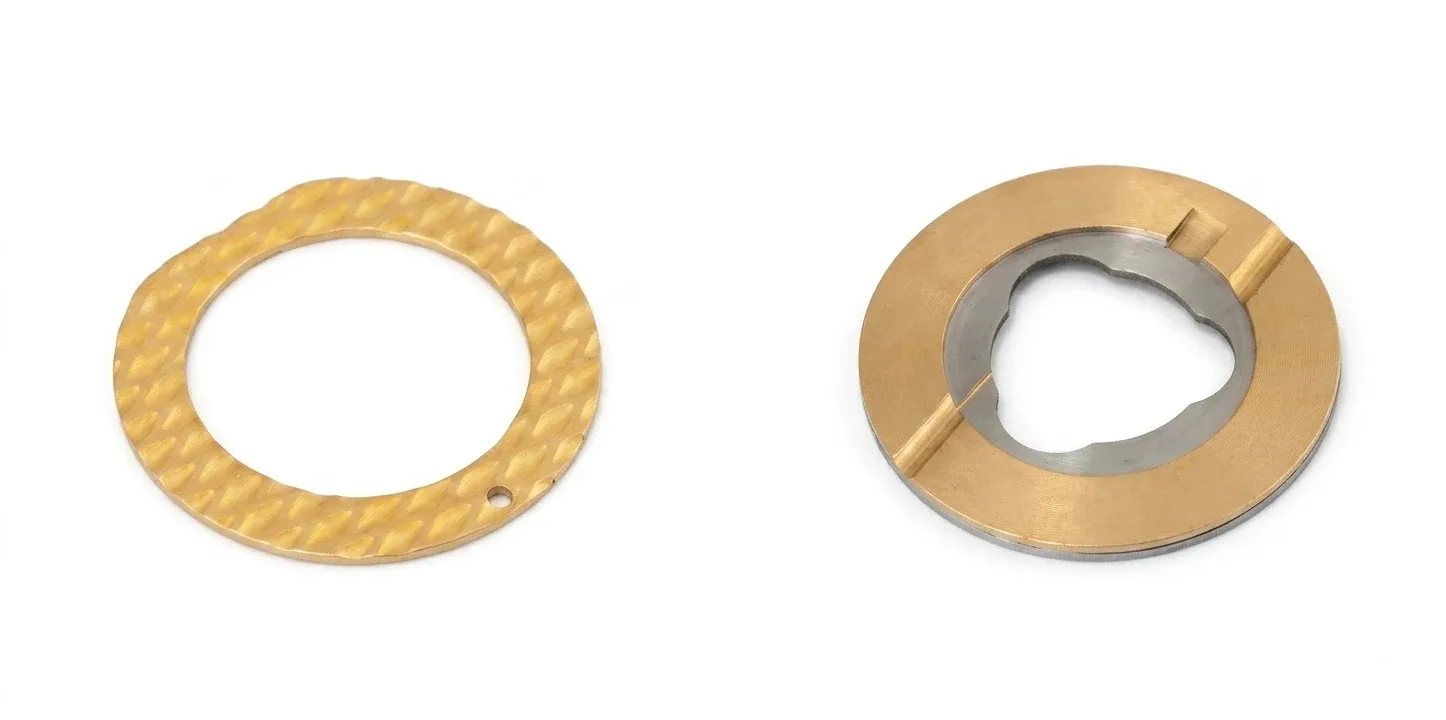
Standard wrapped bushings cover 10–150 mm shaft diameter in the wall thicknesses of the strip; flanged bushings and thrust washers are formed from the same strip. Non-standard diameters, lengths, walls and tolerances are made to drawing, and cross-references to SAE 792/797 or JF-800 part numbers are checked dimension by dimension before quotation.
The bimetal bushing size chart lists the standard series by shaft diameter.
What to put in the enquiry
Five items let us quote within 12 hours.
Dimensions
Shaft diameter, housing bore, length, or the drawing or OE number.
Load, speed and motion
Radial force, rpm or oscillation, duty cycle.
Lubrication and temperature
Grease or oil, fed or splash, operating temperature.
Lining
JBM-800 unless stated; lead-free requirement if any.
Quantity
Sample, batch and annual quantity. Samples are free; no minimum order.
Where bimetal bushings are used
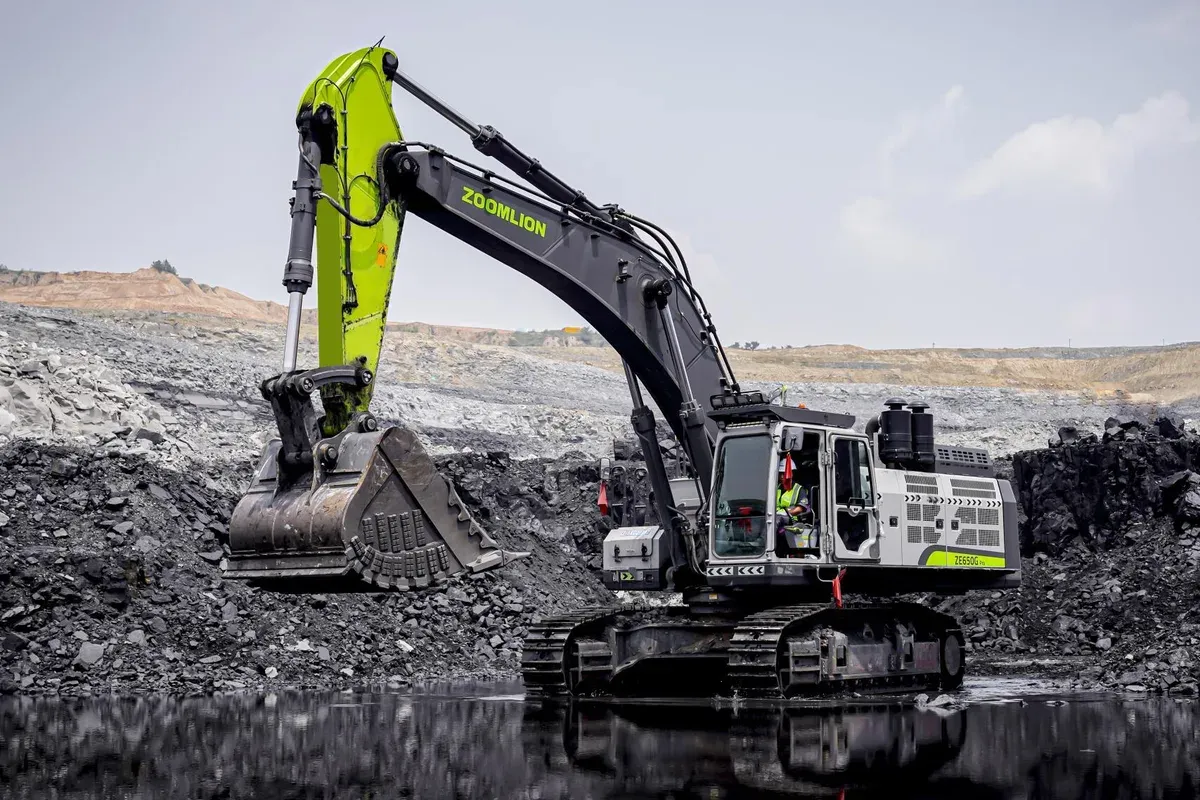
Lubricated positions with more speed or load than solid bronze can take: engines, transmissions, cylinders and mobile-machinery pivots.
Frequently asked questions
What is a bimetal bushing?
A steel-backed plain bearing with a sintered copper-alloy or aluminium-tin lining, wrapped from strip. The steel carries the load and holds the press fit; the lining is the bearing surface. It must be lubricated with grease or oil.
Bimetal or solid bronze bushing?
Bimetal for higher load, higher speed, thin walls and aluminium housings, when lubrication is assured. Solid cast bronze for large or non-standard sizes, re-machinable bores and where a thick wall is needed for wear allowance.
What speed can a bimetal bushing run at?
3.5 m/s greased and 8 m/s in oil for JBM-800; up to 10 m/s for JBM-810 and 15 m/s for the aluminium-tin JBM-850 in oil, within the PV limit.
Does the bore need machining after pressing?
No. The bushing is sized so that the bore reaches its running diameter when pressed into an H7 housing. Machining would cut through the thin lining.
Are SAE 792 / JF-800 bushings the same as JBM-800?
JBM-800 is the same CuPb10Sn10-on-steel construction and these names are used for enquiries and drawings. Dimensional interchangeability is checked part by part from the drawing, never assumed from the name.
Are lead-free bimetal bushings available?
JBM-830 (CuSn10) and JBM-840 (CuSn6.5P) linings contain no intentional lead and JBM-850 is aluminium-tin. Regulatory lead-free status for a specific part is confirmed with a material declaration on request.
Send the shaft, the speed and the lubrication.
Our engineers confirm the lining and surface pattern and quote within 12 hours. Samples are free and there is no minimum order.