
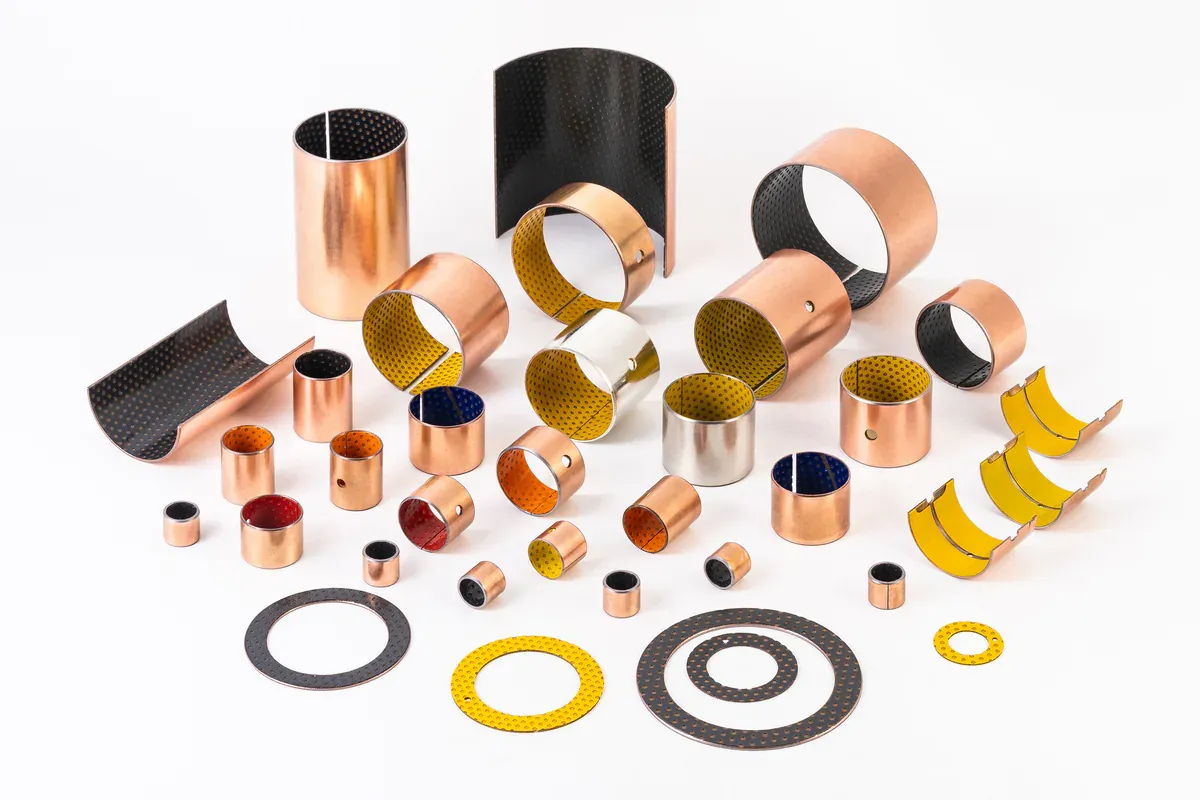
POM composite bushings
Prelubricated metal-polymer bushings for oscillating and low-speed rotary motion under high load: a steel back, a sintered bronze interlayer and a 0.3–0.5 mm POM (acetal) running layer with regularly spaced lubricant pockets. Grease applied at assembly stays in the pockets and lubricates the boundary for years. The DX-type or SF-2 bushing.
- 250 N/mm²Static load
- 22 N/mm²·m/sPV, oil lubricated
- −40 – 130 °CWorking temperature
- Ø10–280 mmStandard shaft range
A POM composite bushing is a steel-backed plain bearing whose running layer is polyacetal (POM) rather than PTFE. The POM layer is thicker and tougher, is dimpled with pockets that hold grease, and tolerates edge loads, misalignment and dirt that would damage a PTFE layer. It needs grease at assembly and works to 130 °C.
- Sliding layer POM 0.3–0.5 mm with lubricant pockets · interlayer porous sintered bronze 0.2–0.3 mm · steel back, plated
- Static load 250 N/mm² · dynamic 140 N/mm² · oscillating 60 N/mm²
- PV 2.8 N/mm²·m/s dry · 22 N/mm²·m/s oil lubricated · speed 2.5 m/s oil lubricated
- Working temperature −40 to +130 °C · friction 0.05–0.25 · prelubrication required
- Metric split bushings Ø10–280 mm shaft; part number = shaft diameter + length (JBM-20 2030 = Ø20 × 30); flanges, oil holes, specials to drawing

Forms
The metric datasheet covers split cylindrical bushings; other forms follow the current drawing.
Cylindrical split bushings
Ø10–280 mm shaft, press fit, bore to size after pressing.
Datasheet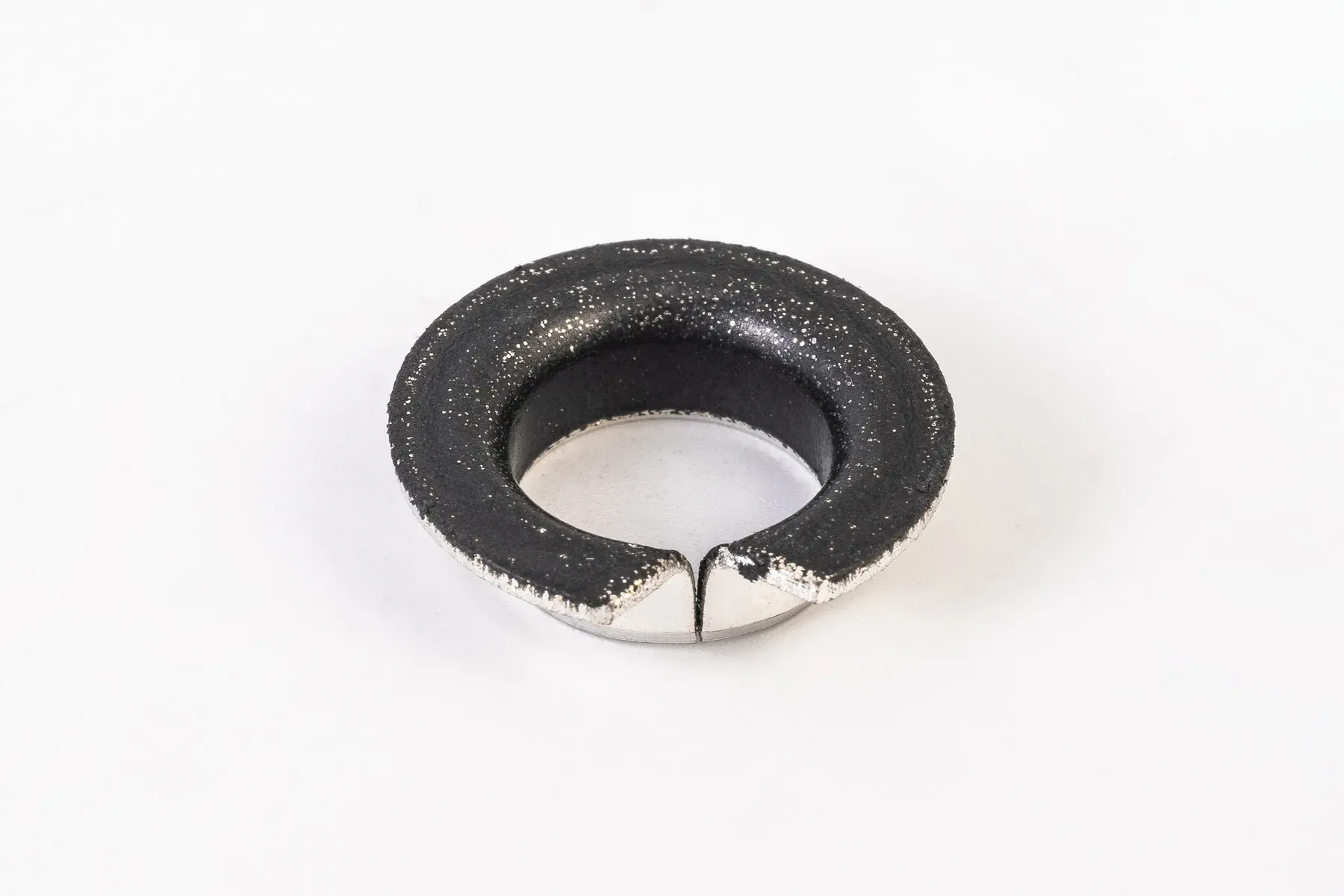
Flanged (JBM-20F)
Located by a formed flange; dimensions to drawing.
To drawing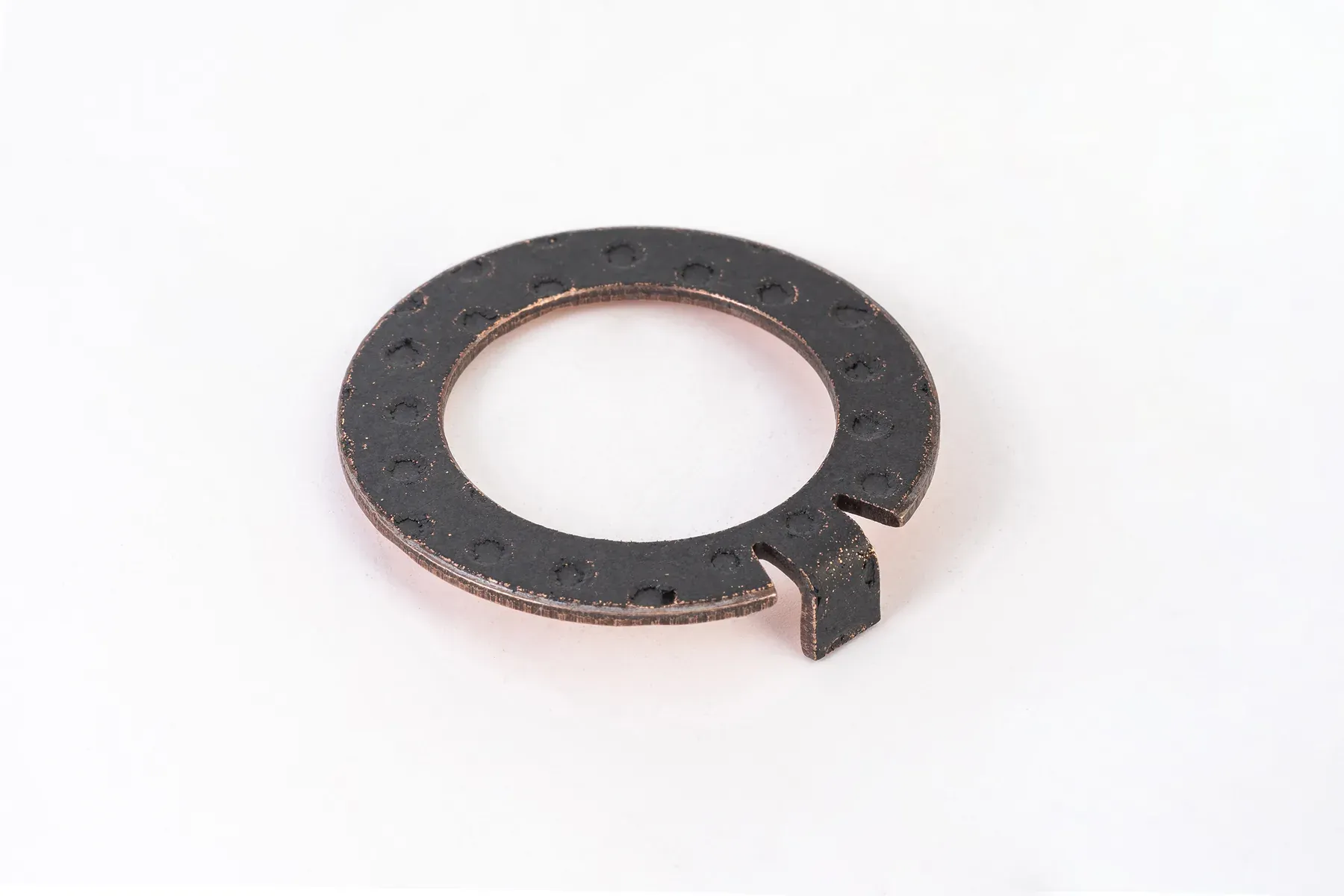
Thrust washers (JBM-20WC)
Pocketed running face for axial load.
To drawing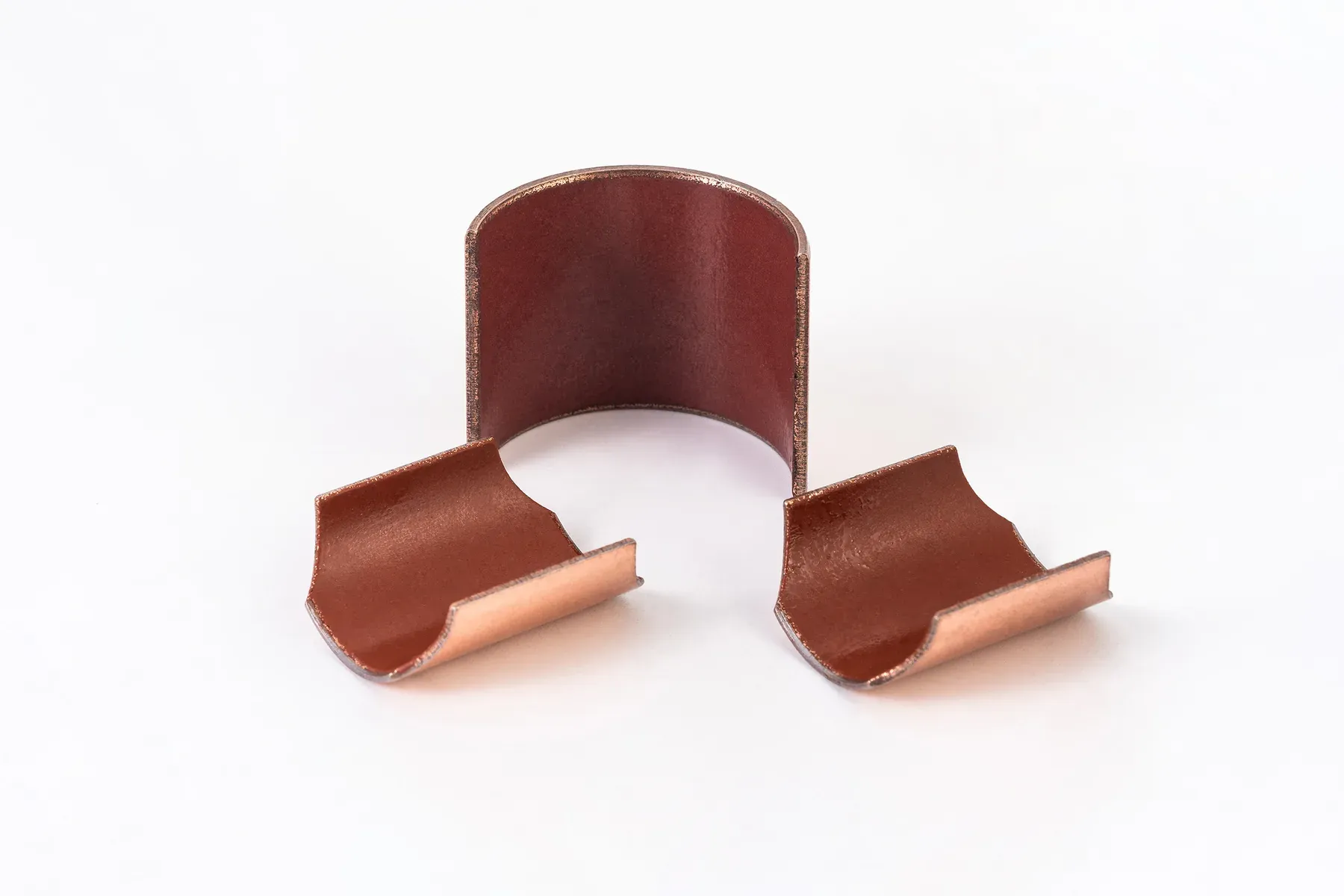
Strip and plates (JBM-20SP)
Flat wear strip for slides and guides.
To drawing
Structure
Three layers: a steel back for strength and press fit, plated on the outside against corrosion; a porous sintered bronze interlayer 0.2–0.3 mm thick that bonds the polymer and conducts heat; and the POM sliding layer, 0.3–0.5 mm, formed with regularly distributed lubricant pockets. Grease is applied inside the bushing at assembly and held at the running interface by the pockets; as the surface beds in, the pockets keep feeding the boundary film.
The thicker polymer layer is what distinguishes POM composite from PTFE composite: it deforms elastically under edge loads and misalignment, it embeds fine dirt without cutting the shaft, and under oil it reaches a PV of 22 N/mm²·m/s, eight times the dry figure. The price is the temperature limit of the acetal, 130 °C, and the requirement for initial grease.
Technical data
Datasheet values, Rev. 2026-07. Keep the lubrication condition with each value; they are not one operating point.
| Property | Condition | Value |
|---|---|---|
| Maximum load | Static | 250 N/mm² |
| Maximum load | Dynamic | 140 N/mm² |
| Maximum load | Oscillating | 60 N/mm² |
| PV limit | Dry | 2.8 N/mm²·m/s |
| PV limit | Oil lubricated | 22 N/mm²·m/s |
| Speed limit | Oil lubricated | 2.5 m/s |
| Friction coefficient | Datasheet range | 0.05–0.25 |
| Working temperature | — | −40 to +130 °C |
| Thermal conductivity | — | 2.03 kcal/(m·h·°C) |
| Linear expansion | — | 51 × 10⁻⁶ /°C |
| Assembly | — | Prelubrication with grease required |
JBM-20 metric datasheet Rev. 2026-07. Outside-plating thickness is stated on the part drawing.
Installation
The outside diameter is toleranced to the housing bore before assembly and the inside diameter reaches its working size after the press fit, so the housing bore, normally H7, sets the running clearance. Chamfer the housing bore to lead the bushing in, press with a stepped mandrel, and apply grease to the bore at assembly: the pockets need to be filled once. Do not machine the bore. Oil holes, flanges and splits are added at manufacture to drawing.
Sizes and part numbers
The standard metric series covers Ø10–280 mm shaft diameter. Part numbers are shaft diameter followed by length: JBM-20 2030 is Ø20 × 30 mm, JBM-20 10050 is Ø100 × 50 mm. Other lengths, oil holes, flanges, splits and non-standard sizes are available to drawing. The datasheet holds the full diameter, tolerance, clearance, wall-thickness and length tables and is issued with the quotation.
What to put in the enquiry
Shaft diameter and housing bore (or the JBM-20 part number), length, load and motion, temperature, grease type if specified, and quantity. Samples are free and there is no minimum order.
Where POM composite bushings are used
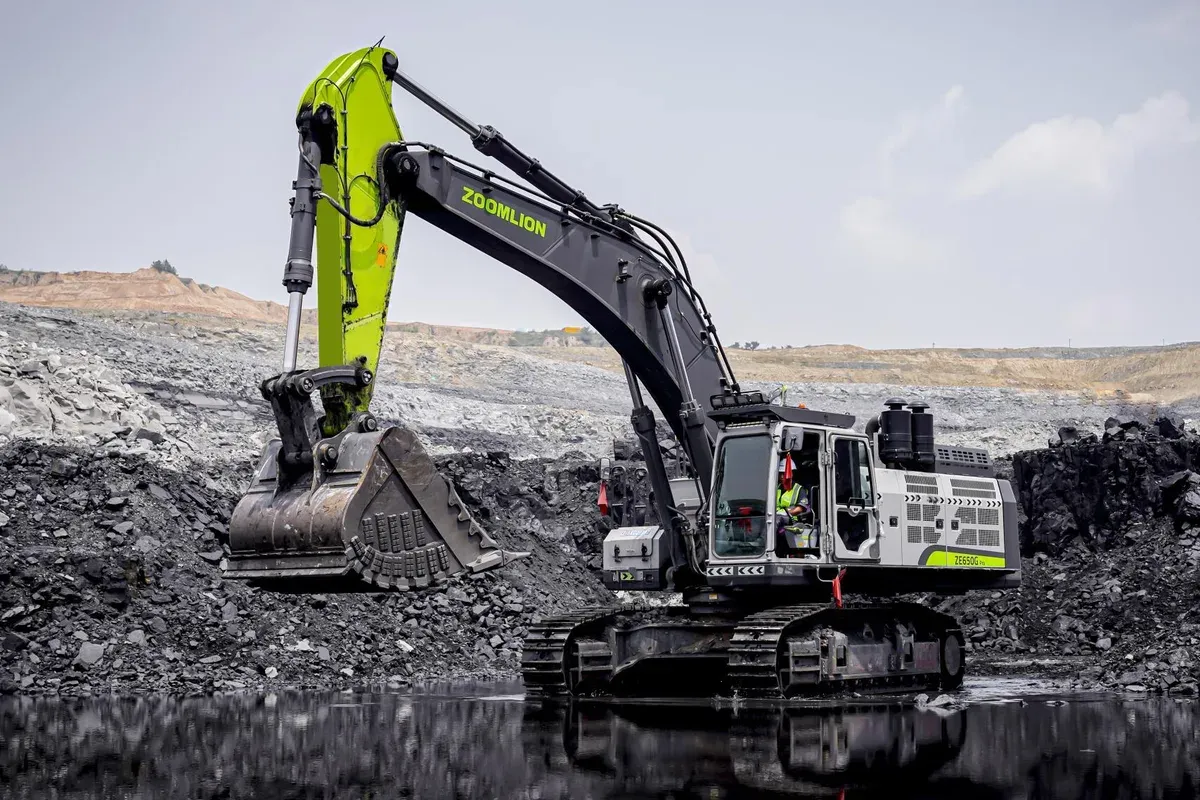
Oscillating and low-speed rotary pivots under high load, greased once: automotive, construction machinery, hydraulics and general industry.


Frequently asked questions
What is a POM composite bushing?
A steel-backed plain bearing with a sintered bronze interlayer and a 0.3–0.5 mm polyacetal (POM) running layer with grease pockets: the DX-type or SF-2 bushing. Greased once at assembly, it carries 250 N/mm² static and works to 130 °C.
Does a POM bushing need grease?
Yes, once, at assembly. The pockets hold it at the interface. Oil lubrication in service raises the PV limit to 22 N/mm²·m/s and the speed to 2.5 m/s.
POM composite or PTFE composite?
POM for greased, heavily or edge-loaded, dirty pivots below 130 °C. PTFE for dry running, temperatures outside −40 to +130 °C and the lowest friction.
Is JBM-20 interchangeable with DX or SF-2 bushings?
It is the same construction and the metric series overlaps, but dimensional interchangeability is confirmed part by part from the drawing, not from the type name.
What sizes are standard?
Ø10–280 mm shaft diameter in the metric split-bushing series, in the lengths of the datasheet; other lengths and forms to drawing.
Send the shaft, the housing and the load.
We confirm the JBM-20 size and fits and quote within 12 hours. Samples are free and there is no minimum order.