
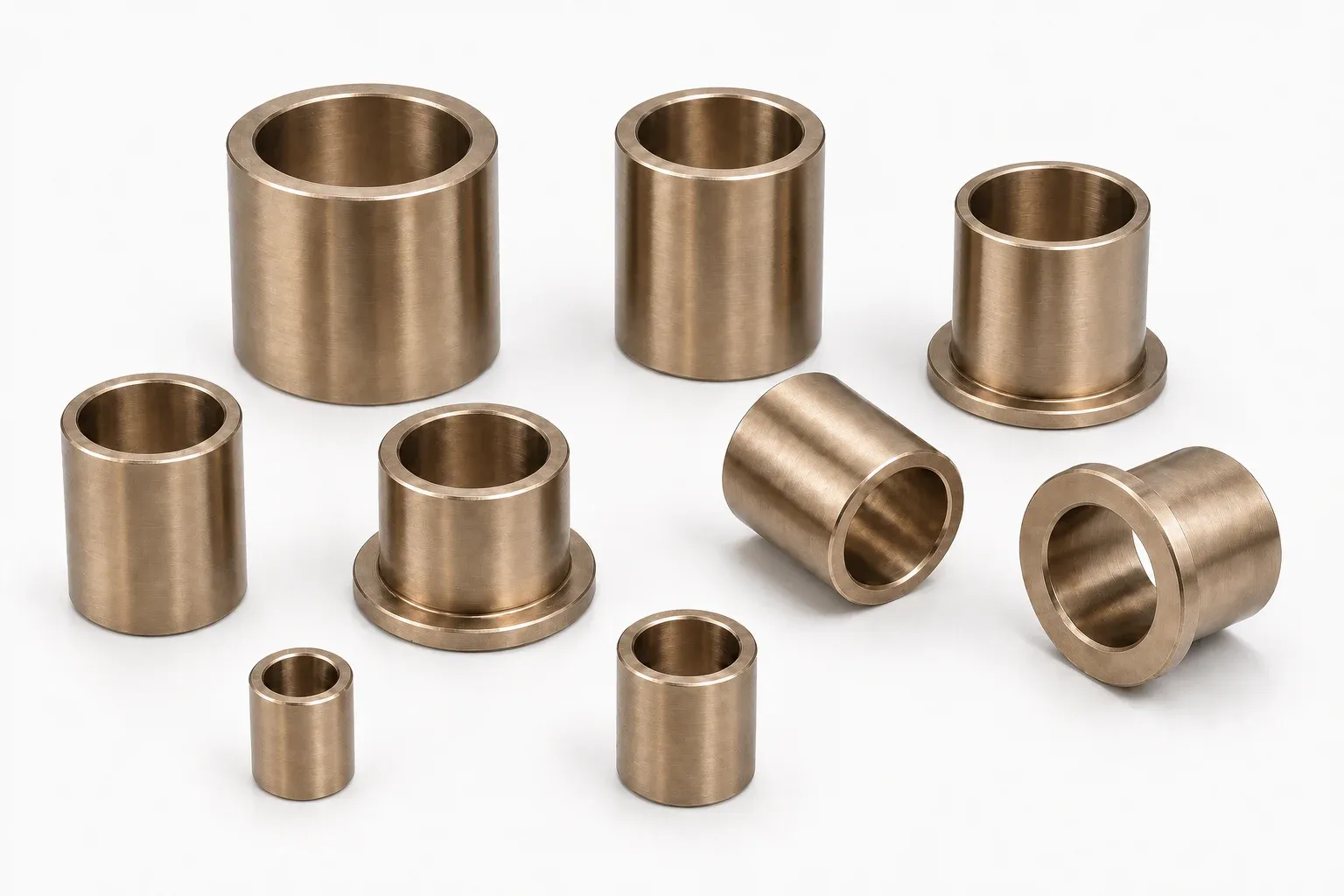
Cast bronze bushings
Solid-wall plain bearings turned and bored from cast bearing bronze: C93200 / SAE 660 as standard, unleaded tin bronzes and aluminium bronzes for heavier duty. Sleeves and flanged bushings to ISO 4379 from Ø6 to Ø200 mm, and any size from Ø3 to Ø1000 mm, with oil holes and grooves, to drawing. Greased or oil-lubricated; the bushing for heavy, slow pivots and for every job where a drawing, not a catalogue, sets the size.
- 25 / 45N/mm² moving / static, greased
- 0.5 m/sSliding speed, greased
- Ø3–1000mm, made to drawing
- 3–5 daysFree samples
A cast bronze bushing is a plain bearing whose whole wall is bearing bronze, machined from cast bar or tube to the finished bore, outside diameter and length. There is no steel backing and no liner: the bearing surface is the same metal all the way through, so the bushing can be re-bored in service and made in any wall thickness, and it needs grease or oil fed to the bore.
- JBM-600: leaded tin bronze C93200 / SAE 660 standard (C93700, C93800 on request) · JBM-610: unleaded C90500, CuSn12 · JBM-620: aluminium bronze C95400, C95500 · JBM-630: high-strength brass C86300
- Greased cast bronze: 25 N/mm² moving, 45 N/mm² static, 0.5 m/s, friction 0.08–0.15, −40 to +250 °C
- Fits: housing H7, shaft e7–e8; bore E6 before fitting, outside s6 / r6 (ISO 4379)
- Sizes: ISO 4379 sleeves and flanged bushings Ø6–200 mm; Ø3–1000 mm, metric or inch, to drawing
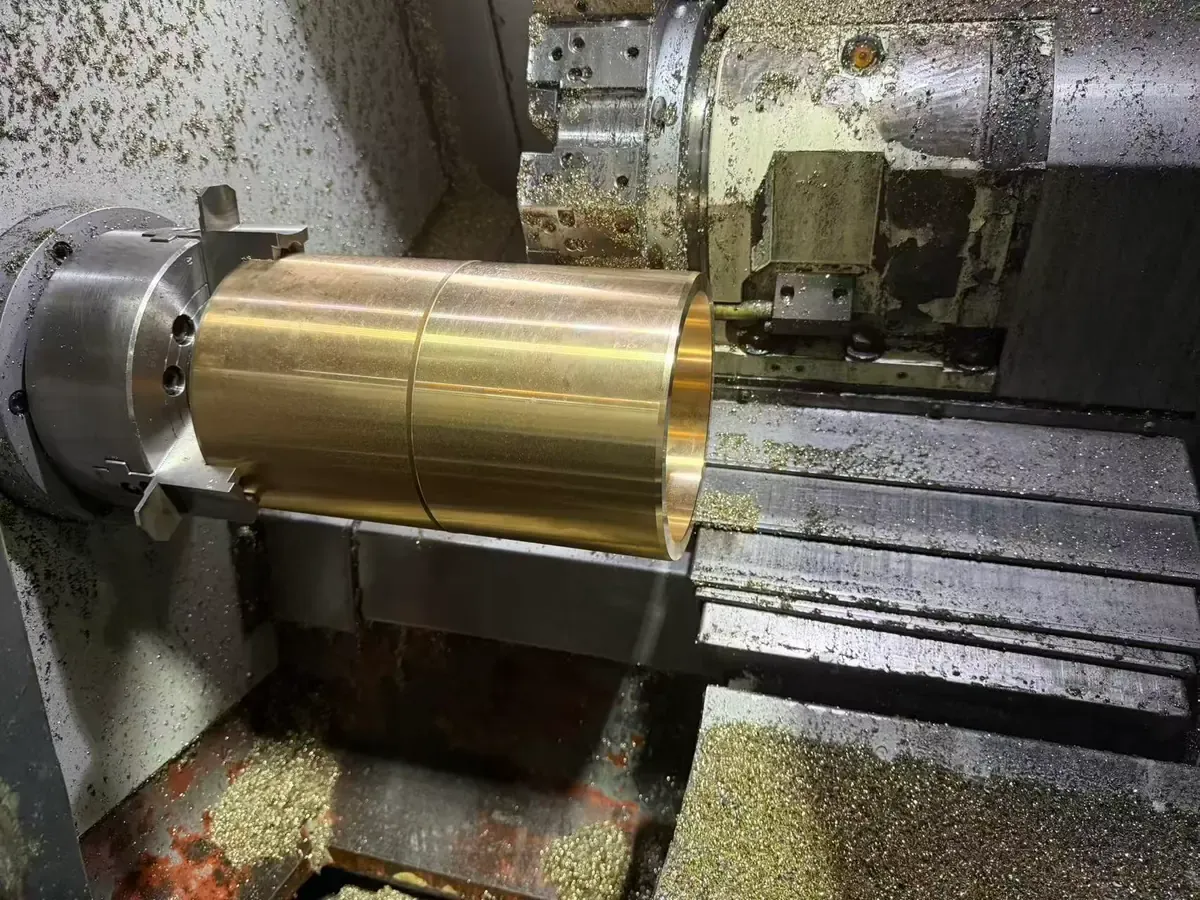
- Machined on 25 CNC lathes; samples in 3–5 days, free; no minimum order
Forms and alloys
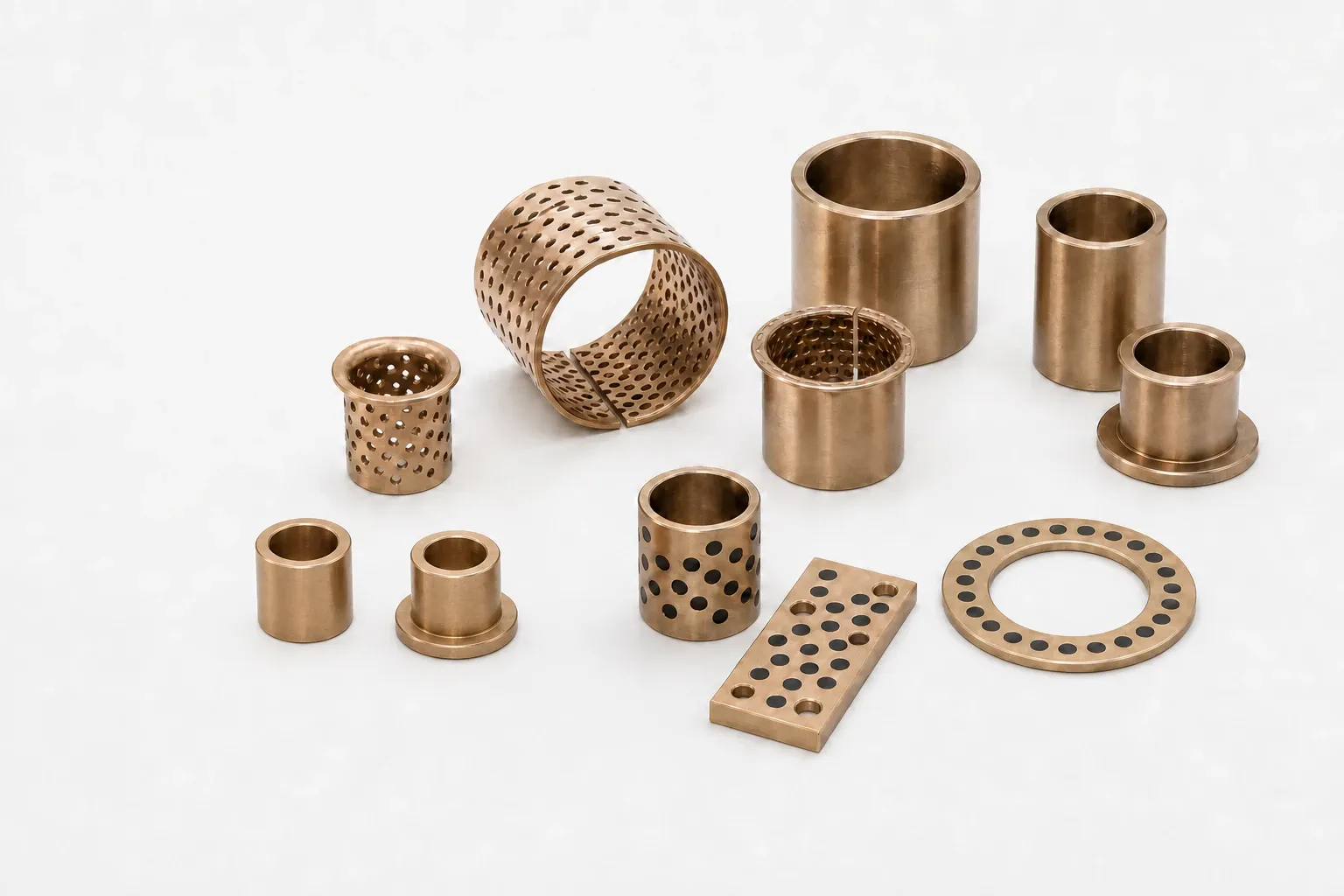
One construction, three standard forms and four alloy groups. The alloy on the drawing remains the specification; the JBM number identifies the product line for the order.
Sleeve bushings (ISO 4379 Type C)
46 bores Ø6–200 mm, each in a thin, medium and thick wall with standard lengths. Plain bore, or with oil hole and grooves.
Type CFlanged bushings (ISO 4379 Type F)
Same bores with a machined flange for axial location and light thrust; flange diameter d11.
Type F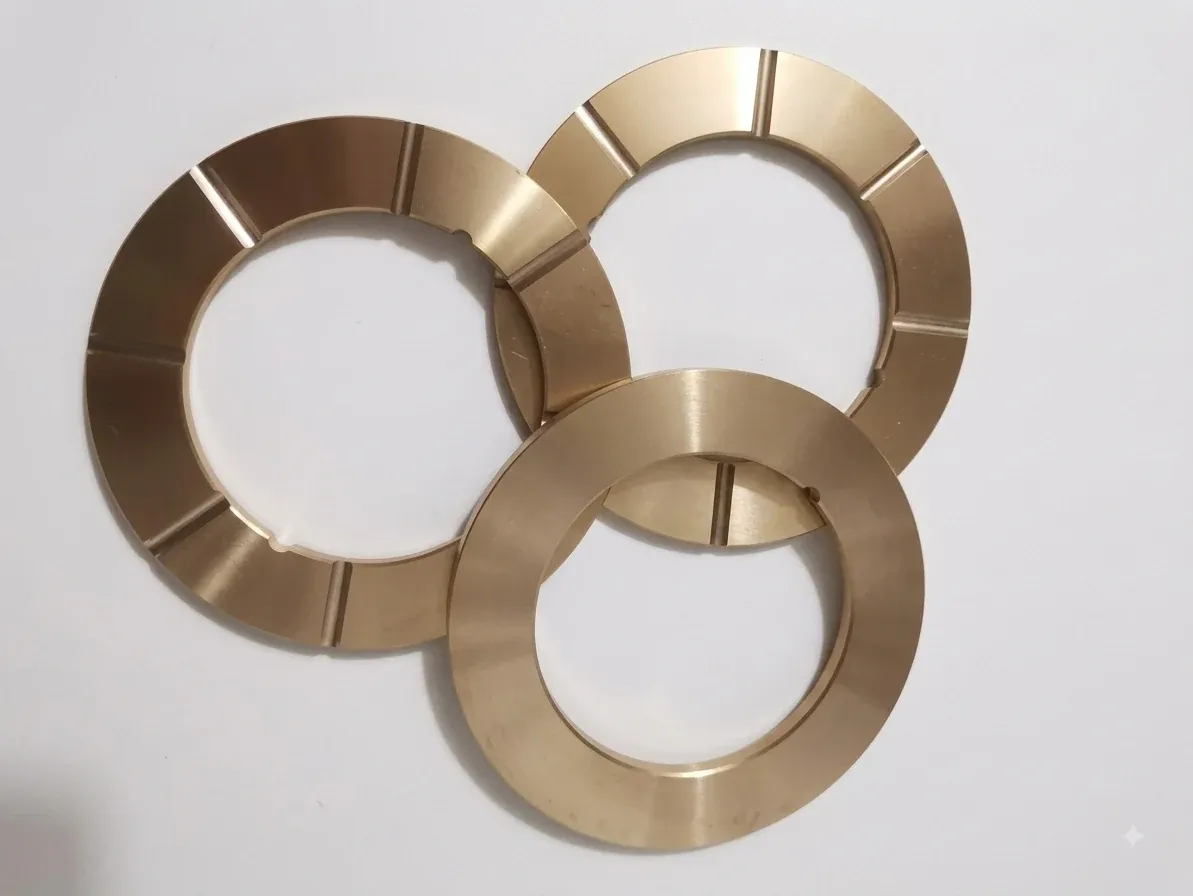
Thrust washers
Machined bronze washers for axial load, plain or grooved.
AxialMade to drawing
Ø3–1000 mm, inch sizes, split, stepped, grooved or with special features, in any of the alloys.
CustomJBM-600 · leaded tin bronze
C93200 / SAE 660, 65–75 HB: the general-purpose bearing bronze, forgiving of unhardened shafts and grease gaps.
Standard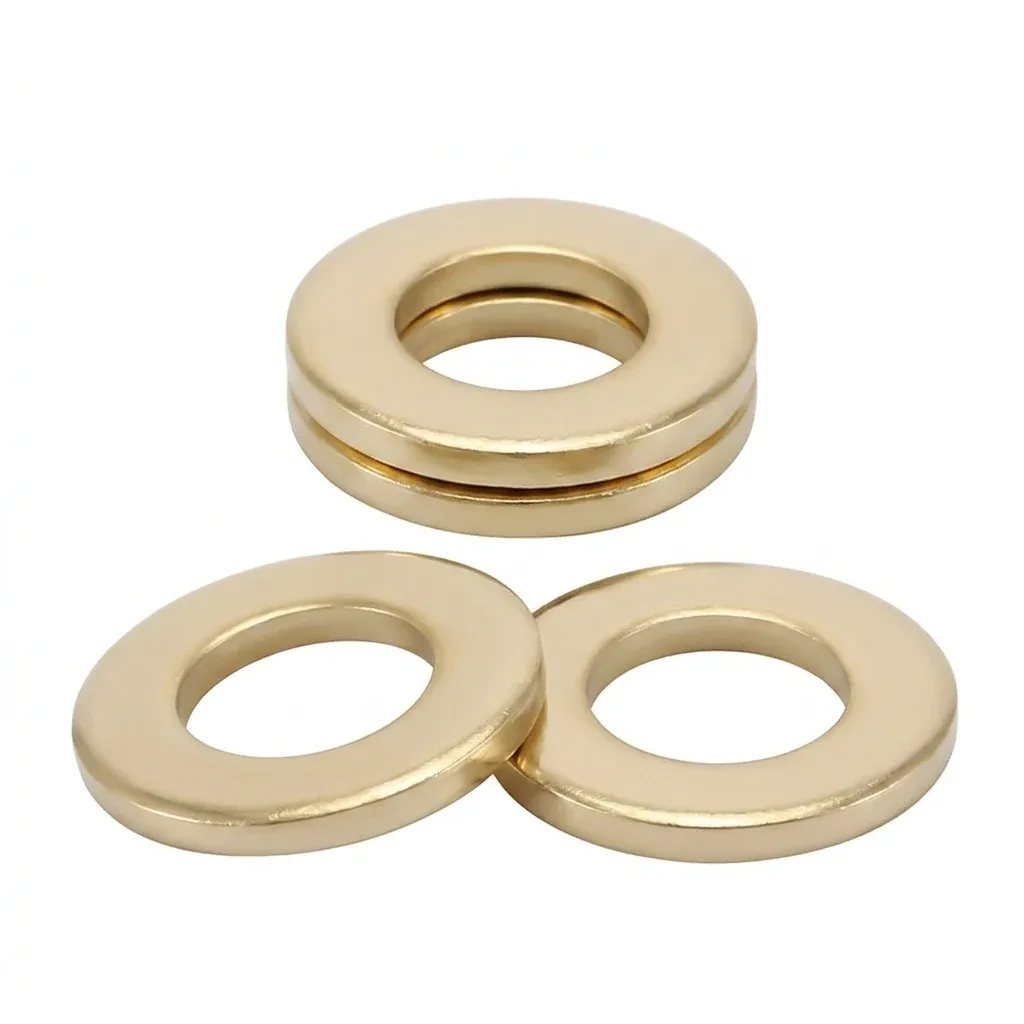
JBM-620 / 630 · hard alloys
C95400 aluminium bronze and C86300 manganese bronze for extreme load at low speed, on a hardened shaft.
Heavy duty
Cast, solid, machined: what the words mean
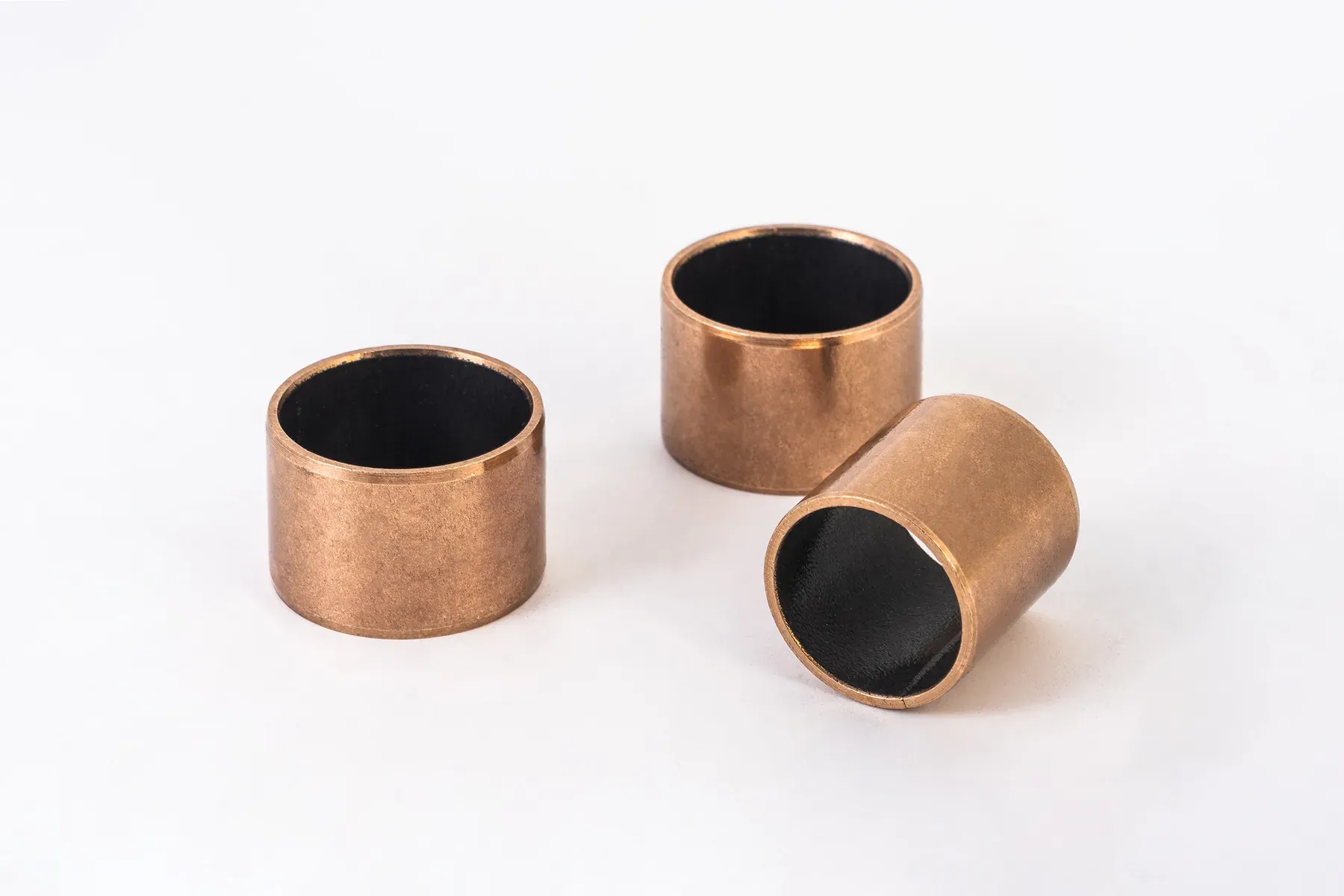
Cast describes the stock: bearing bronze is cast into bar or tube, which is the only practical way to produce these alloys in bearing sections. Solid describes the wall: bronze all the way through, unlike a bimetal or composite bushing whose bronze is a lining on a steel back. Machined describes how the finished part is made: the stock is turned, bored and faced on CNC lathes to the drawing, then drilled and grooved where lubrication features are called for. Every cast bronze bushing on this site is all three.
The consequence for the designer is freedom. A machined bushing has no tooling behind it, so the bore, outside diameter, length, flange, chamfers, oil holes and grooves are programme settings, not catalogue positions. Nothing stands between the drawing and the part, which is why cast bronze is the default for repairs, prototypes, large diameters and any drawing-specific part, and why a sample of a new size ships in three to five days.
Which bronze: the JBM-600 series
The second digit of the JBM-600 number stands for the alloy group. C93200 / SAE 660 (JBM-600) is the standard: seven percent tin for wear resistance, seven percent lead for conformability and emergency lubrication, and a hardness of 65–75 HB that runs on an unhardened steel shaft. Move up only when the duty asks for it: the unleaded tin bronzes (JBM-610) for lead-free requirements and higher load with good lubrication, the aluminium bronzes (JBM-620) and C86300 manganese bronze (JBM-630) for extreme load at very low speed, on a hardened shaft.
| JBM series | Alloys | Hardness HB | Shaft | Choose when |
|---|---|---|---|---|
| JBM-600 | C93200 / SAE 660 (standard); C93700, C93800 | 65–75 | Steel, unhardened acceptable | General duty, grease or oil; dirt and intermittent lubrication (higher-lead grades) |
| JBM-610 | C90500 / SAE 62, CuSn12 | 75–95 | Steel, hardened preferred | Lead-free requirement; higher load with reliable lubrication |
| JBM-620 | C95400, C95500 aluminium bronze | 160–180 | Hardened | Heavy load, slow speed, shock, seawater and heat |
| JBM-630 | C86300 / SAE 430B manganese bronze | 225 | Hardened, essential | Extreme load at very low speed; crane and press pivots |
Hardness values are typical as-cast figures from the alloy standards. The bearing envelope below is confirmed for greased C93200; the hard alloys carry more specific load at lower speed and are quoted per application. Alloy data: C93200 and C86300 material pages.
Operating limits, greased
The limits apply to a greased or oil-lubricated cast bronze bushing on a steel shaft under boundary lubrication, which is how nearly all of them run. They are separate limits, not one operating point: a bushing at 25 N/mm² will not also run at 0.5 m/s and 250 °C. Check the specific load p = F ÷ (d × L) against the moving value, and the sliding speed v = π × d × n against 0.5 m/s; the PV calculator does both.
| Parameter | Value | Condition |
|---|---|---|
| Specific load, shaft moving | 25 N/mm² | Greased, steel shaft |
| Specific load, static | 45 N/mm² | Greased |
| Sliding speed | 0.5 m/s | Greased; higher with a full oil film, on request |
| Coefficient of friction | 0.08–0.15 | Greased |
| Temperature | −40 to +250 °C | Grease grade to suit |
| Housing bore | H7 | Bushing OD s6 / r6 to ISO 4379 |
| Shaft | e7–e8 | e7 general duty; e8 for heat, misalignment and dirt |
Manufacturer-confirmed envelope for greased cast bronze bushings (2026-08-07). Hydrodynamic and grade-specific ratings on request.
Oil holes and grooves
Cast bronze has no lubricant of its own; the lead in C93200 covers a short gap, not a missed schedule. Grease or oil reaches the bore through a radial hole under the nipple and is spread by grooves machined in the bore: straight axial grooves for oscillating pins, a circumferential groove for oil supply to a rotating shaft, figure-of-eight or spiral patterns to carry grease across the whole running surface. The plain bore with a single oil hole is right for most greased pins; specify a pattern where the movement or the relubrication interval calls for it.
Where the joint cannot be relubricated at all, cast bronze is the wrong choice: use graphite-plugged bronze for heavy or hot dry duty, sintered oil-impregnated bronze for light high-cycle duty, or a PTFE composite.
Put the oil-hole position and the groove pattern on the drawing, or write “plain bore” so no feature is machined in.
Fits, pressing and the running clearance
The bushing is pressed into an H7 housing on its s6 (to Ø120 mm) or r6 outside diameter. Pressing closes the bore by roughly the interference, so the bore is finished E6 before fitting and lands at about H8 in the housing; against an e7 shaft that gives a running clearance of about 0.1–0.3 % of the diameter, the range greased bronze wants. Press from the chamfered end with a stepped mandrel, never on the bore edge; where several bushings must be aligned, order the bore with finishing stock and ream or bore it in place after pressing.
Shaft: steel, ground or fine-turned. C93200 runs on an unhardened shaft; the aluminium bronzes and C86300 need a hardened one, harder than the bushing, or the shaft wears instead of the bearing.
| Nominal Ø (mm) | Interference, s6 in H7 (µm) | Clearance, ≈ H8 bore vs e7 shaft (µm) |
|---|---|---|
| Ø30 | 14–48 | 40–94 |
| Ø40 | 18–59 | 50–114 |
| Ø80 | 29–78 | 60–136 |
From the ISO 286 deviations; the size chart computes the same fit for every standard size. Use the press-fit calculator for other tolerance classes.
Sizes
The ISO 4379 series lists 46 bores from Ø6 to Ø200 mm, each in three outside diameters (thin, medium and thick wall) and two or three lengths, as sleeves (Type C) and flanged bushings (Type F): about four hundred sizes, all machined to order and shipped fastest. Outside the series, anything from Ø3 to Ø1000 mm, inch sizes included, is made to drawing at the same lead time, because the same lathes cut both. For a non-standard size keep the wall at least 0.08 × bore + 1.5 mm so the bushing survives pressing; the bushing size calculator returns the standard sizes and fits for a given shaft.
What to put in the enquiry
Bore × outside diameter × length, or the drawing; the alloy, or the load, speed, temperature and lubrication so we can propose one; oil hole and groove pattern, or “plain bore”; quantity now and per year. Part number: series + bore-OD-length in millimetres, e.g. JBM-600 40-50-40 for a C93200 sleeve Ø40 × Ø50 × 40 mm. Samples are free for standard and custom parts and ship in 3–5 days; there is no minimum order.
Where cast bronze bushings are used
Heavy, slow, greased pivots and everything made to a drawing.
Construction machinery
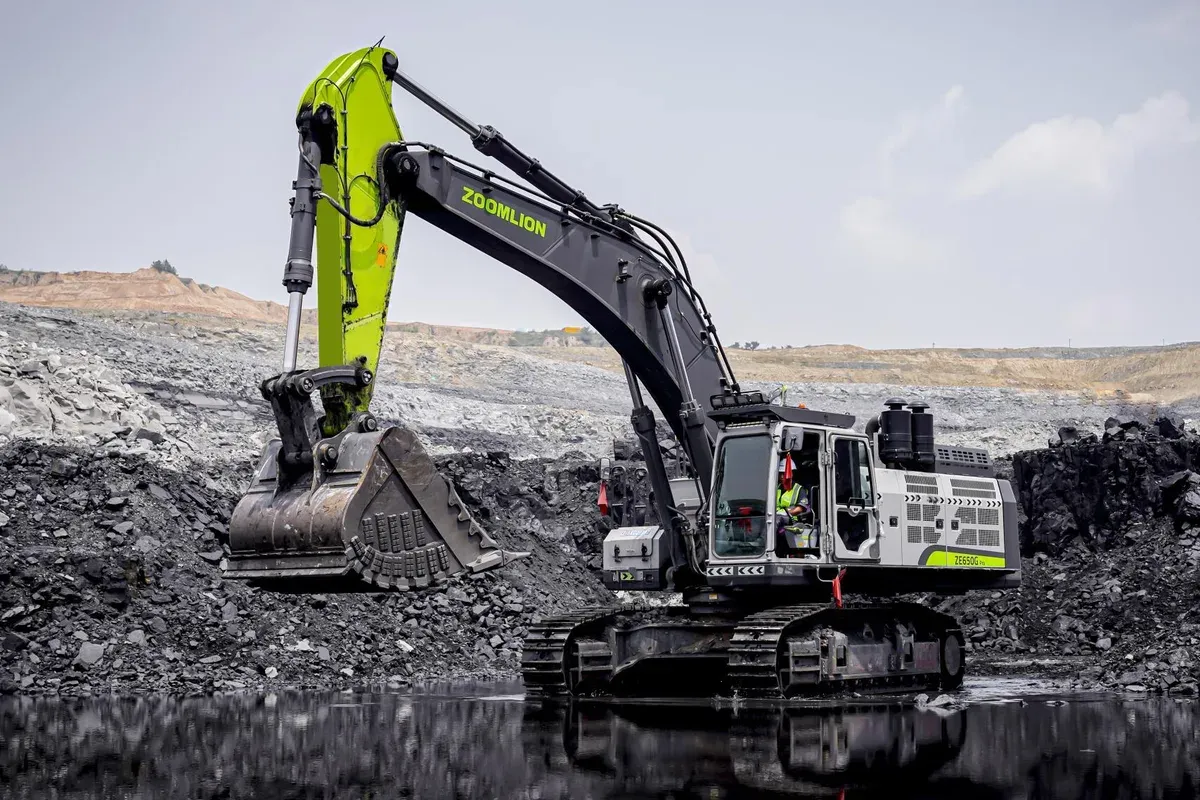
Boom, stick and bucket pivots, crane sheaves, outrigger and steering pins.
Pumps and valves
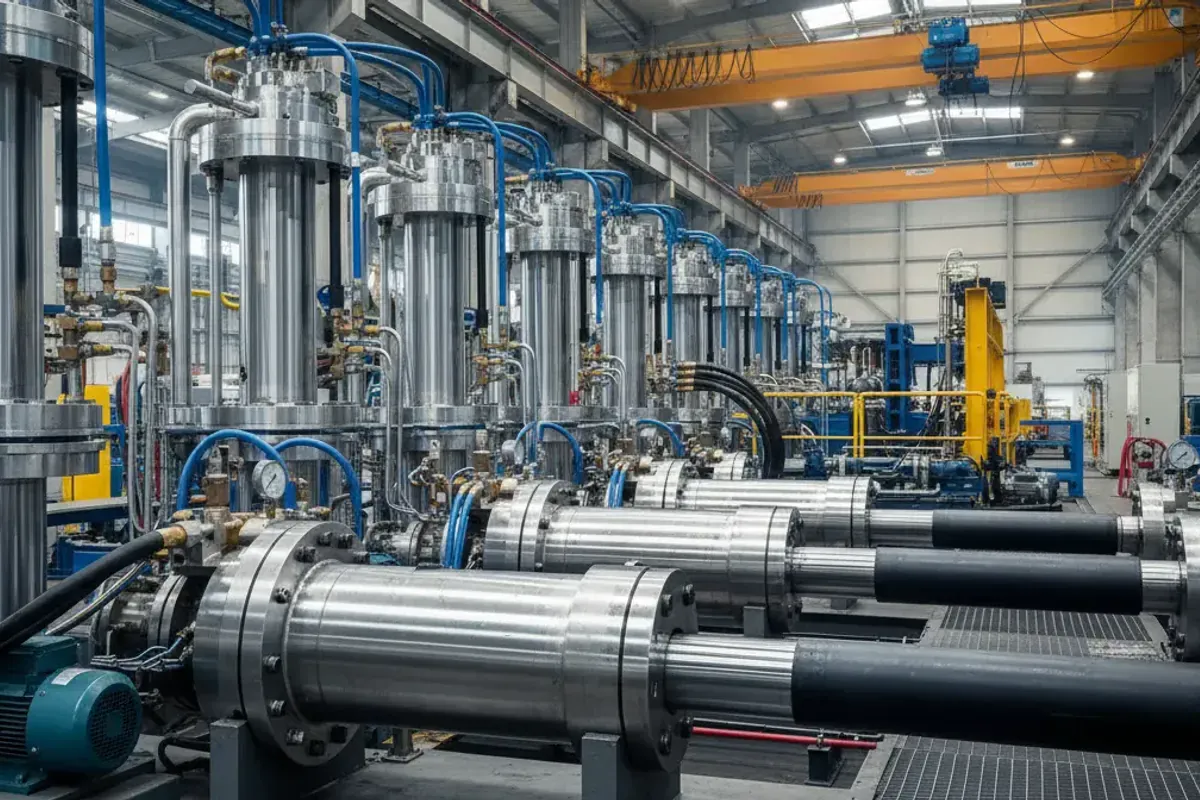
Shaft bushings, wear rings and valve stem bushings in water and process pumps.

Agricultural machinery
Linkage, axle and implement pivots that see dirt and infrequent greasing.
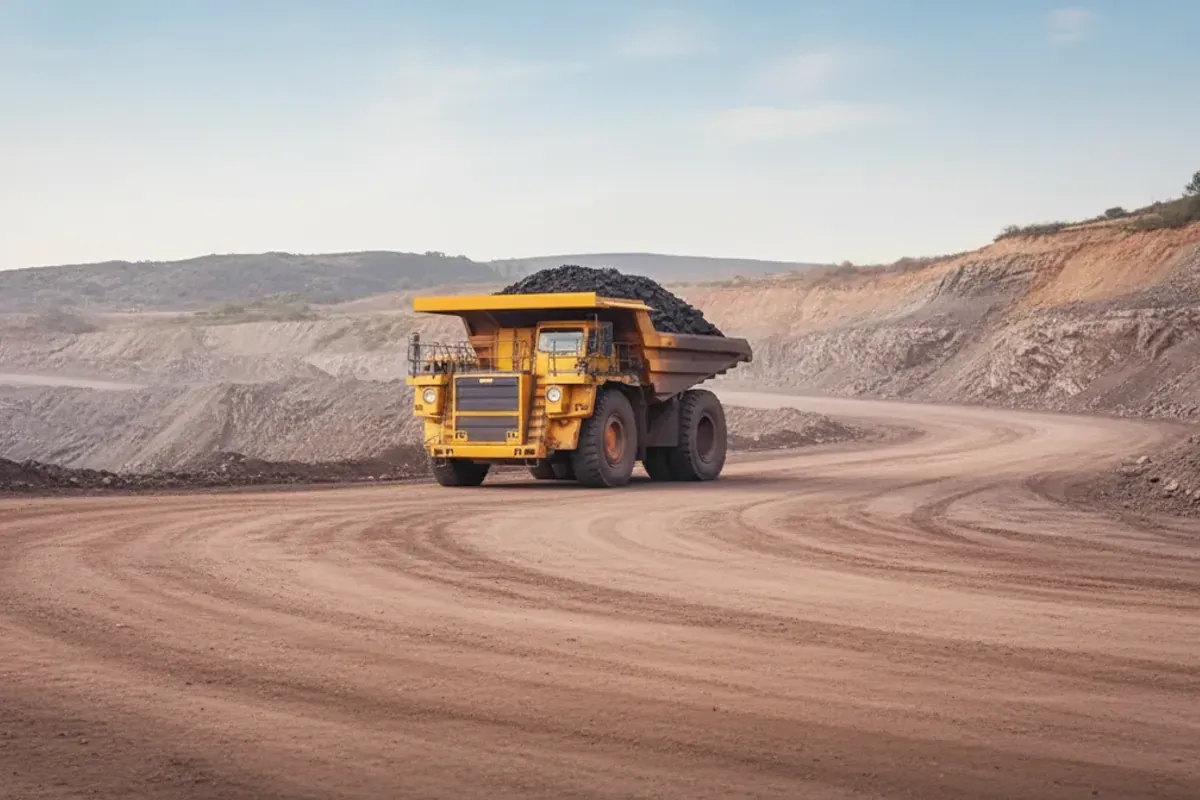
Hydraulic cylinders
Rod-eye and clevis bushings on large cylinders, machined to the eye bore.
Frequently asked questions
What is a cast bronze bushing?
A solid-wall plain bearing machined from cast bearing bronze bar or tube: no steel backing, no liner, the same bronze throughout. C93200 / SAE 660 is the standard alloy. It is greased or oil-lubricated and can be made in any size or wall.
How much load can a cast bronze bushing carry?
Greased C93200: 25 N/mm² of projected area (bore × length) with the shaft moving, 45 N/mm² stationary, at up to 0.5 m/s sliding speed. Aluminium bronze and C86300 carry more at lower speed on a hardened shaft; those ratings are quoted per application.
Does the shaft need to be hardened?
Not for C93200 / SAE 660, which at 65–75 HB runs on an unhardened steel shaft. For the aluminium bronzes and C86300 manganese bronze the shaft must be hardened and harder than the bushing.
Cast bronze or wrapped bronze?
Cast for single pieces, thick walls, large diameters, re-machinable bores and special alloys. Wrapped CuSn8 for thin walls, volume and 120 N/mm² static load in the ISO 3547 sizes. The comparison article sets the two side by side.
What sizes are available?
ISO 4379 sleeves and flanged bushings Ø6–200 mm as the standard series, and any size from Ø3 to Ø1000 mm, metric or inch, machined to drawing at the same lead time. Samples ship in 3–5 days.
What does JBM-600 mean on a quotation?
The series number for machined solid bronze bushings; the second digit is the alloy group (600 leaded tin bronze, 610 unleaded tin bronze, 620 aluminium bronze, 630 high-strength brass). The alloy on your drawing remains the specification.
Send the size or the drawing.
Bore × OD × length, alloy if you know it, oil hole and grooves if you want them. Quotation within 12 hours; free samples in 3–5 days; no minimum order.