
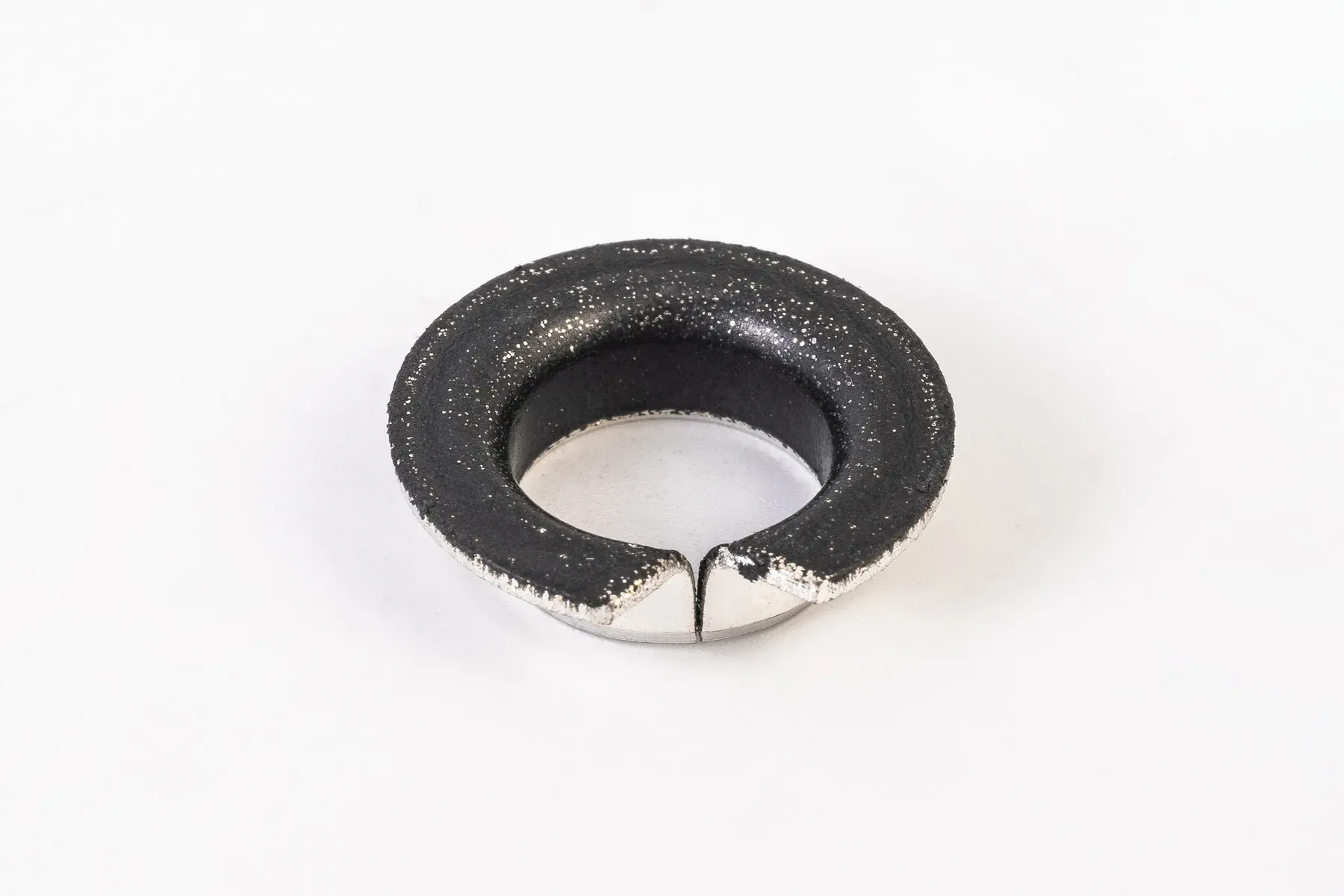
Flanged bushings
A flanged bushing is a sleeve with a collar at one end. The collar stops the bushing walking out of the housing, gives a face for axial (thrust) load and, on thin-walled types, a surface to screw or pin the bushing in place. Bushing MFG makes flanged bushings in every bearing material it works in: cast bronze, wrapped bronze, PTFE composite, POM composite, bimetal, graphite-plugged bronze and hardened steel.
- Ø6–200 mmCast bronze, ISO 4379
- 7Bearing materials
- 1–15 mmFlange thickness range
- 12 hQuotation
Flanged bushings are specified like a sleeve, bore × outside diameter × length, plus the flange diameter and flange thickness. The flange is integral: cast or machined on solid types, formed from the strip on wrapped types. The length is normally quoted including the flange.
- Cast bronze to ISO 4379 Type F: Ø6–200 mm bore, thin (Series 1) or heavy (Series 2) flange
- Wrapped bronze (CuSn8) and steel-backed PTFE composite to ISO 3547 flanged form
- Graphite-plugged bronze Ø10–120 mm bore; bimetal, POM composite and hardened steel to drawing
- Flange takes light axial load on thin-flange types, thrust and fixing screws on heavy-flange types
- Made to order; no minimum quantity; free samples
Flanged bushings by material
The flange is the same idea in every material; the sleeve behind it decides load, speed and lubrication. Pick the material as you would for a plain sleeve, then add the flange.
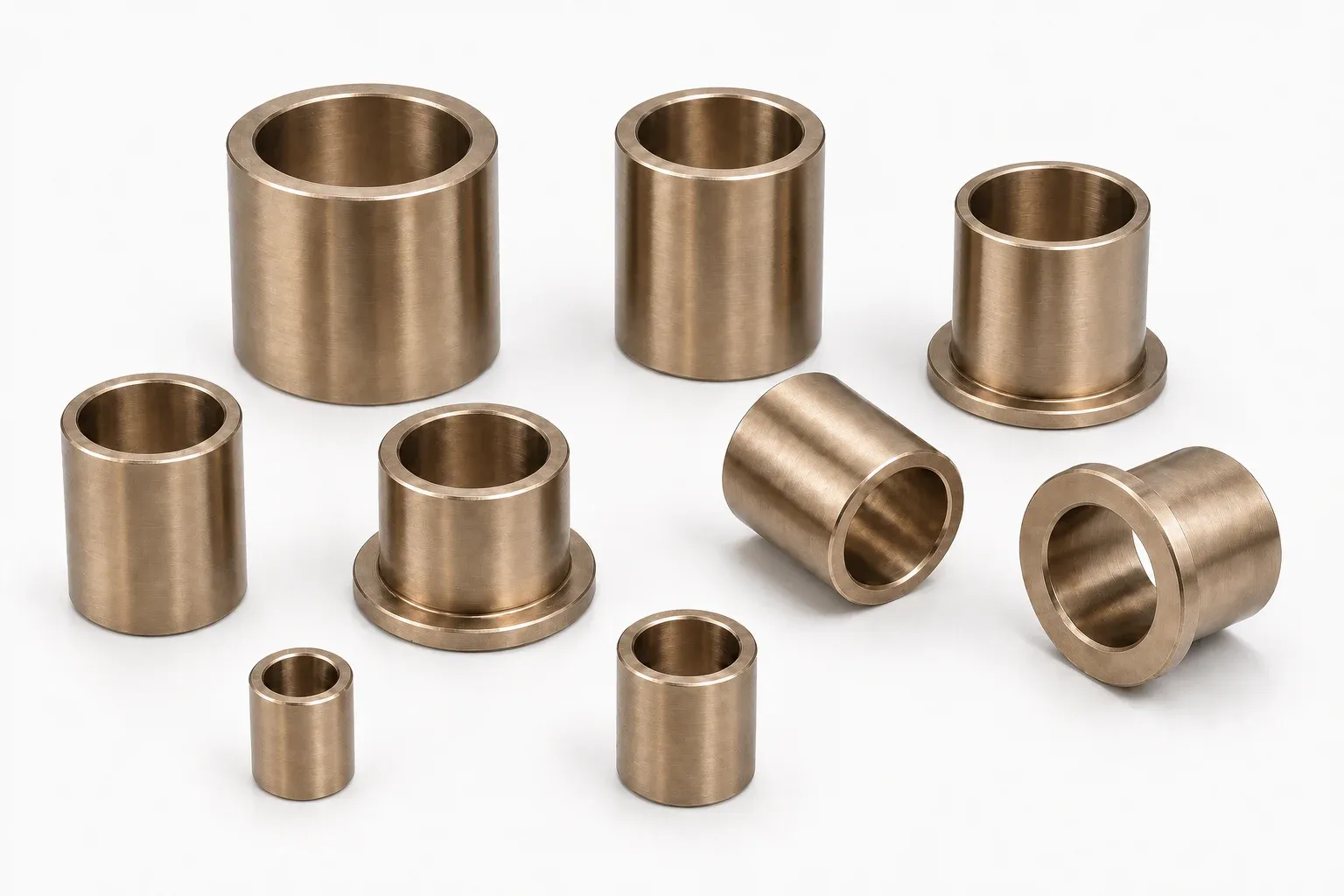
Cast bronze flanged
ISO 4379 Type F. Greased, 45 N/mm² static; heavy flange takes thrust and locating screws.
Greased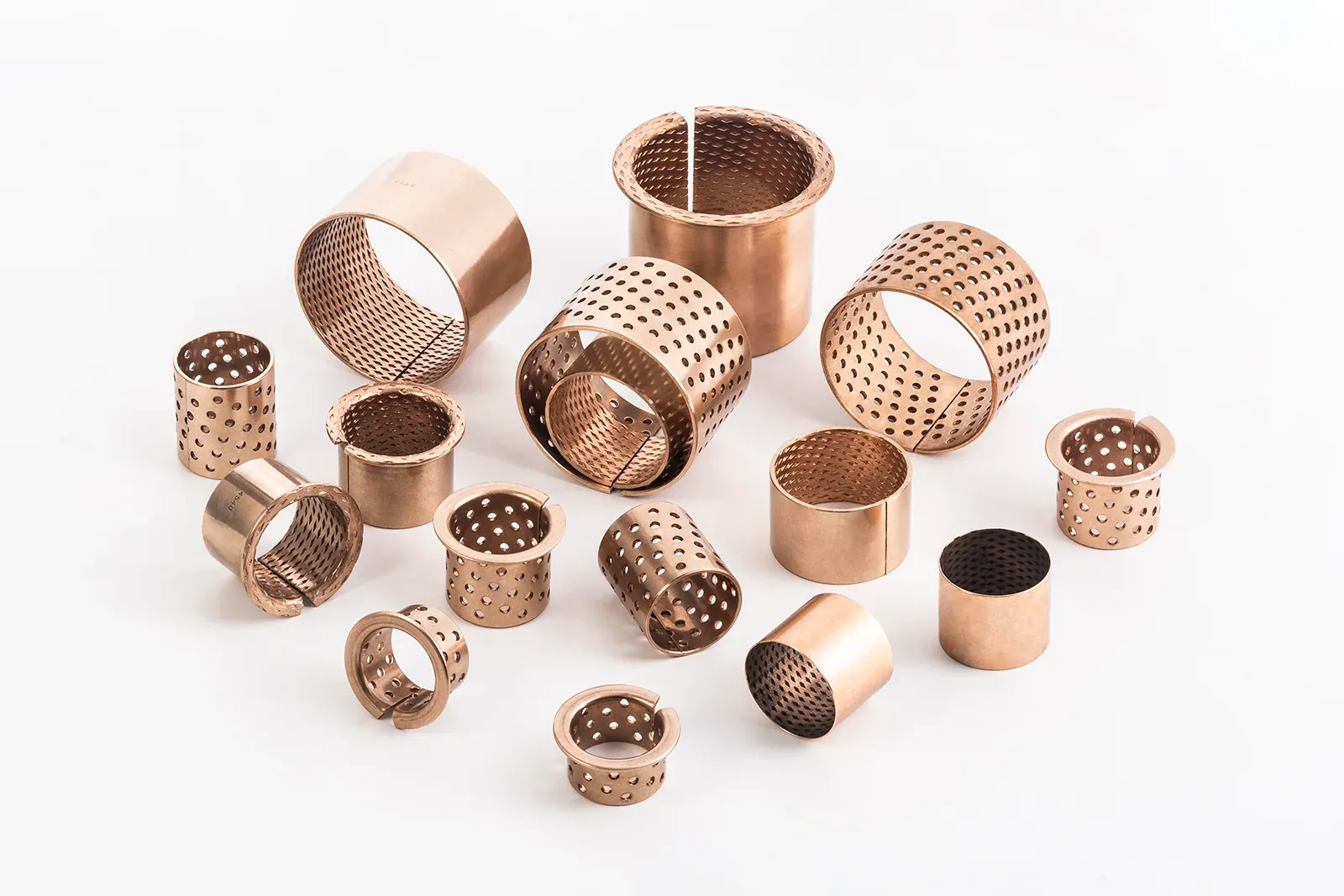
Wrapped bronze flanged
Formed from CuSn8 strip with lubricant pockets, ISO 3547 form. Thin wall, 120 N/mm² static.
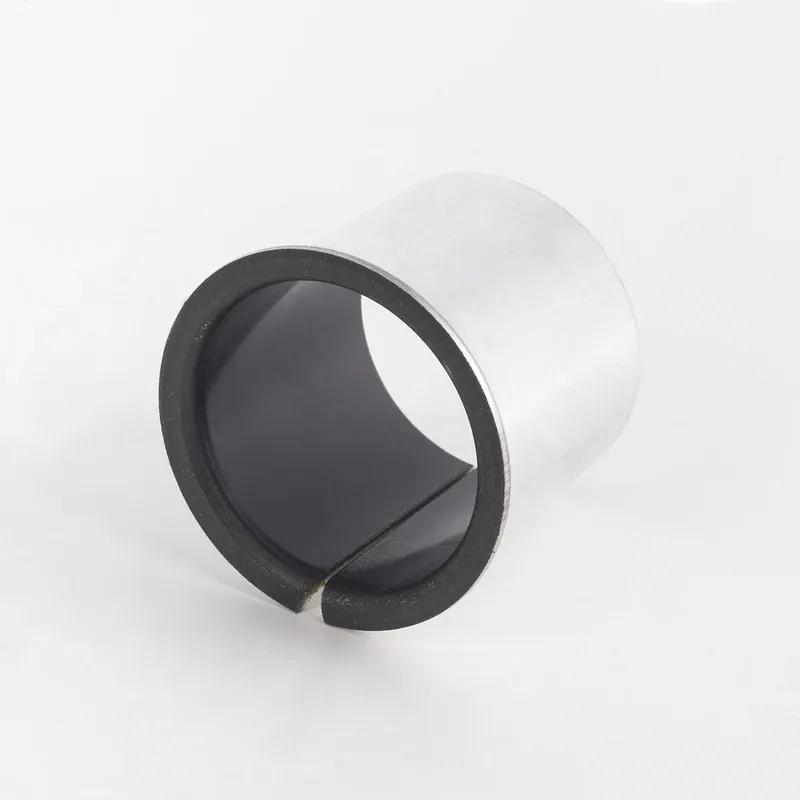
GreasedPTFE composite flanged
Steel-backed PTFE (JBM-10F): maintenance-free, 250 N/mm² static, −195 to +280 °C.
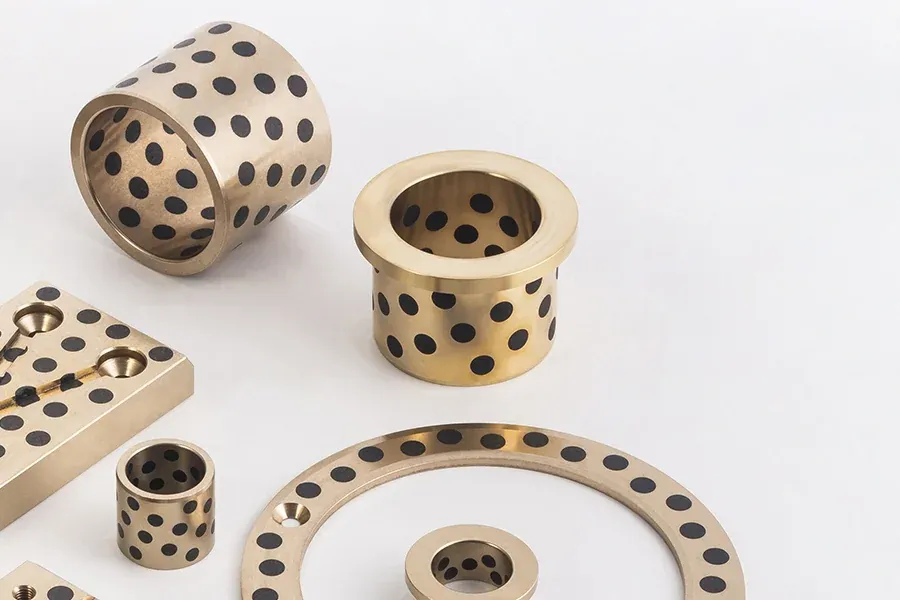
DryGraphite-plugged bronze flanged
Ø10–120 mm; solid-lubricant plugs for dry, hot or submerged joints.
Dry · hot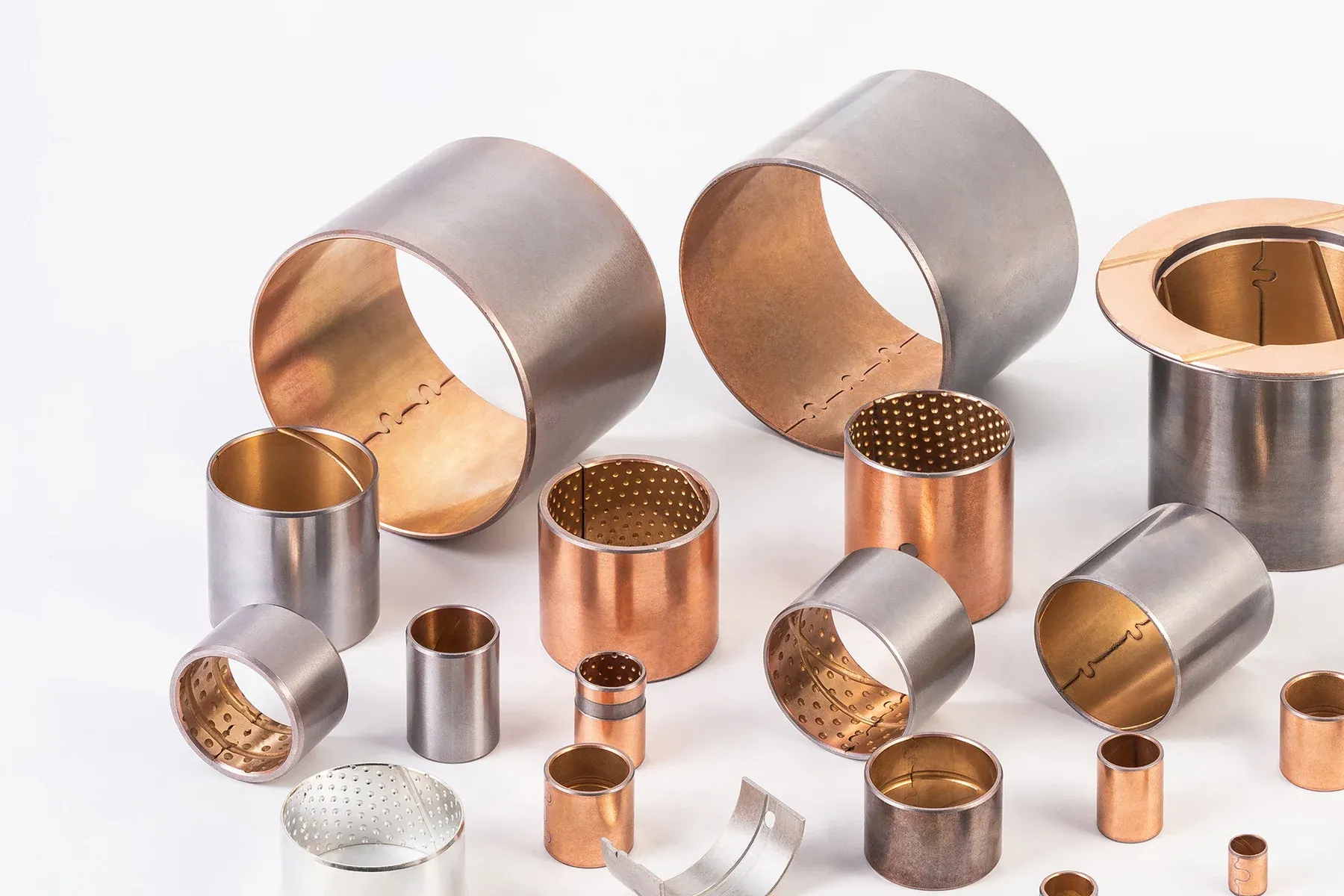
Bimetal flanged
Steel back with CuPb10Sn10 lining (JBM-800), for oil- or grease-lubricated engine and gearbox positions.
Lubricated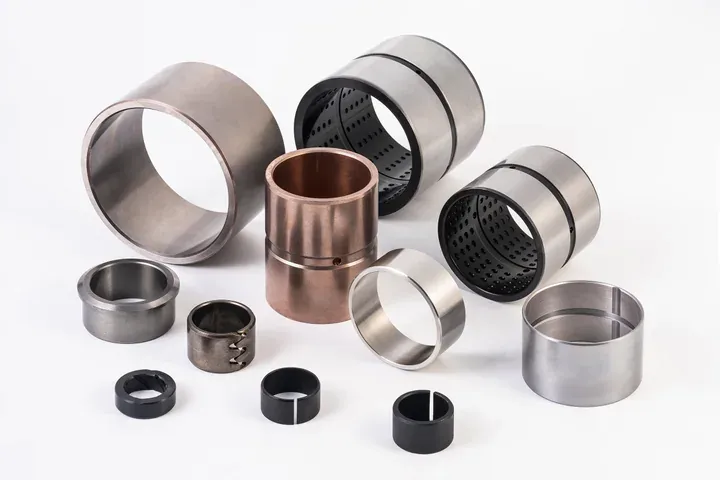
Hardened steel flanged
HRC 58–62 sleeve with a machined collar for pin joints that need axial location.
Heavy duty
What the flange does
Three jobs. First, axial location: a sleeve pressed into a through-bore can creep out under vibration or thermal cycling; the flange sits against the housing face and cannot. Second, thrust: the flange face is a plain thrust bearing for the axial component of the load, small on a thin flange, substantial on a heavy one. Third, fixing: on wrapped and thin-wall bushings, and on graphite-plugged bronze in gate hinges and mould guides, the flange is drilled for a screw or dowel so the bushing cannot rotate in a worn housing.
The flange also sets the orientation of the bushing at assembly, which matters when the bore has an oil hole or a split that must face a particular way.
Thin flange or heavy flange
ISO 4379 Type F cast bronze bushings come in two flange series. Series 1 has a flange 1–5 mm thick on the standard sleeve outside diameter; it locates the bushing and takes light thrust. Series 2 has a flange 3–15 mm thick on a larger outside diameter, so the wall and the flange are both heavier; it is the thrust bearing and the fixing face. Wrapped bronze and PTFE composite flanged bushings to ISO 3547 have a single thin flange formed from the strip, whose thrust capacity is that of the strip material over the flange area.
When the axial load is significant, calculate the flange as a thrust washer: axial force divided by the annular area between sleeve outside diameter and flange diameter, compared with the static load rating of the material.
| Type | Flange thickness t | Flange Ø F | Thrust duty | Fixing |
|---|---|---|---|---|
| ISO 4379 Type F Series 1 (cast bronze) | 1–5 mm | D + 2–10 mm | Light; location only | Not usual |
| ISO 4379 Type F Series 2 (cast bronze) | 3–15 mm | D + 2–10 mm on a larger D | Thrust bearing | Drilled for screw or pin on request |
| ISO 3547 flanged (wrapped bronze, PTFE composite) | = strip thickness | Per ISO 3547 table | Light to moderate | Notch or hole on request |
| Graphite-plugged bronze flanged | To drawing | To drawing | Thrust with plugs in the flange face | Counterbored holes on request |
| Hardened steel flanged | To drawing | To drawing | Heavy, slow, greased | To drawing |
D = sleeve outside diameter. ISO ranges are those printed in the standards; forms marked “to drawing” are machined to the customer specification.
Sizes
Cast bronze flanged bushings follow ISO 4379 Type F, Ø6–200 mm bore, in the same bores, outside diameters and lengths as the cylindrical series; the full table with flange dimensions is on the bronze bushing size chart. Wrapped bronze and PTFE composite flanged bushings follow the ISO 3547 flanged form in the Ø10–300 mm and Ø10–280 mm shaft ranges respectively. Graphite-plugged bronze flanged bushings are standard from Ø10 to Ø120 mm bore. Everything else, including inch sizes, is machined to drawing.
For the ISO 4379 flanged dimension table (D, F, t, lengths, undercut) see the bronze bushing size chart.
Installation and fits
A flanged bushing is pressed in from the flange side until the flange seats on a clean, square housing face; press on the flange, never on the sleeve end, or the flange root cracks. The housing bore is H7 as for a plain sleeve. Leave a small chamfer or undercut at the flange root on the housing so the flange seats flat; ISO 4379 gives the undercut u for each size.
On thin-wall wrapped types the flange is formed with a radius at the root; the housing face should be relieved to match or the bushing sits on the radius and the sleeve is left short in the bore. Where the flange takes thrust, the mating shaft collar needs the same finish as the shaft (Ra 0.8 µm or better) and a lubrication path to the flange face.
What to put in the enquiry
Six items let us quote within 12 hours.
Sleeve dimensions
Bore × outside diameter × total length, with tolerances or the drawing.
Flange
Flange diameter and thickness; whether the length includes the flange.
Axial load
Thrust force and whether it is continuous or occasional; it sizes the flange.
Material
Bronze, PTFE composite, graphite bronze, bimetal or steel, or state the duty and let us propose.
Fixing and orientation
Screw holes, pin, notch; position of oil hole or split relative to the flange.
Quantity
Sample, batch and annual quantity. Samples are free; no minimum order.
Where flanged bushings are used
Anywhere a sleeve needs positive axial location or carries thrust as well as radial load.


Frequently asked questions
What is the difference between a flanged bushing and a sleeve bushing?
A sleeve bushing is a plain cylinder held only by its press fit. A flanged bushing has an integral collar at one end that locates it axially against the housing face, carries thrust and can be drilled for a fixing screw. Bore, outside diameter, material and fits are otherwise the same.
How much thrust can the flange take?
Treat the flange as a thrust washer: axial force ÷ annular flange area, compared with the static load rating of the material (45 N/mm² greased cast bronze, 120 N/mm² wrapped CuSn8, 250 N/mm² PTFE composite). Thin Series 1 flanges are for location; use a Series 2 heavy flange or a separate thrust washer for real thrust.
Is the length quoted with or without the flange?
ISO 4379 and ISO 3547 quote the total length including the flange, and so do we unless your drawing says otherwise. State it on the enquiry to avoid a bushing that is one flange thickness too short.
Can you make a flanged bushing in inch sizes or a non-standard flange?
Yes. Cast bronze, graphite bronze and steel flanged bushings are machined to drawing in any size the bar allows. Wrapped types need tooling for a new flange diameter and are quoted with a minimum batch.
Do flanged bushings need a thrust washer as well?
Only if the axial load exceeds what the flange area can carry, or if thrust acts in both directions; then a washer on the far side or a washer pair is used.
Send the sleeve size, the flange and the thrust load.
We confirm the material and flange series and quote within 12 hours. Samples are free; there is no minimum order.